Department of Otolaryngology-Head and Neck Surgery, Oregon Health and Science University, Portland, Oregon, U.S.A; Oregon Hearing Research Center, Oregon Health and Science University, Portland, Oregon, U.S.A.
Laryngoscope. 2014 May;124(5):1229-35. doi: 10.1002/lary.24349. Epub 2013 Oct 2.
OBJECTIVES/HYPOTHESIS: The genetic factors leading to a predisposition to otitis media are not well understood. The objective of the current study was to develop a tag-single nucleotide polymorphism (SNP) panel to determine if there is an association between candidate gene polymorphisms and the development of chronic otitis media with effusion.
A 1:1 case/control design of 100 cases and 100 controls was used. The study was limited to the chronic otitis media with effusion phenotype to increase the population homogeneity.
A panel of 192 tag-SNPs was selected. Saliva for DNA extraction was collected from 100 chronic otitis media with effusion cases and 100 controls. After quality control, 100 case and 79 control samples were available for hybridization. Genomic DNA from each subject was hybridized to the SNP probes, and genotypes were generated. Quality control across all samples and SNPs reduced the final SNPs used for analysis to 170. Each SNP was then analyzed for statistical association with chronic otitis media with effusion.
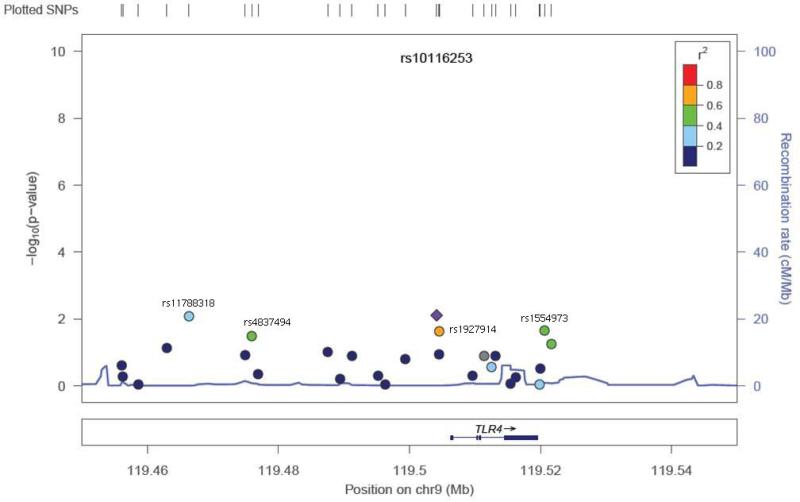
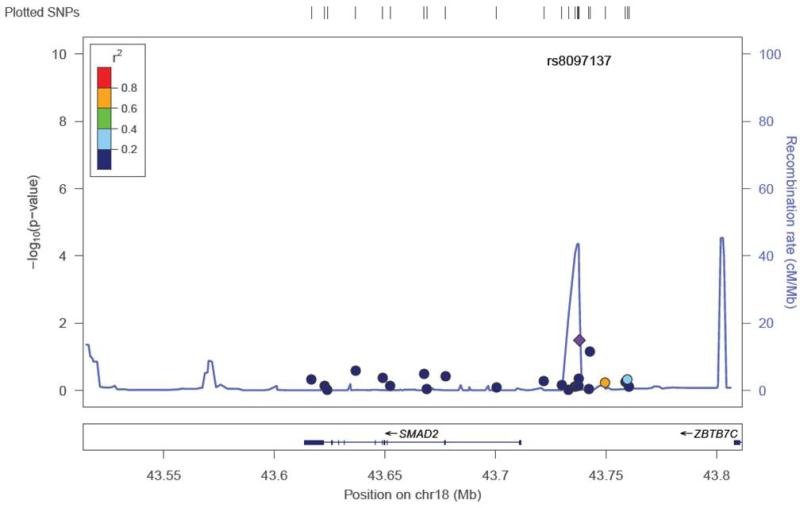
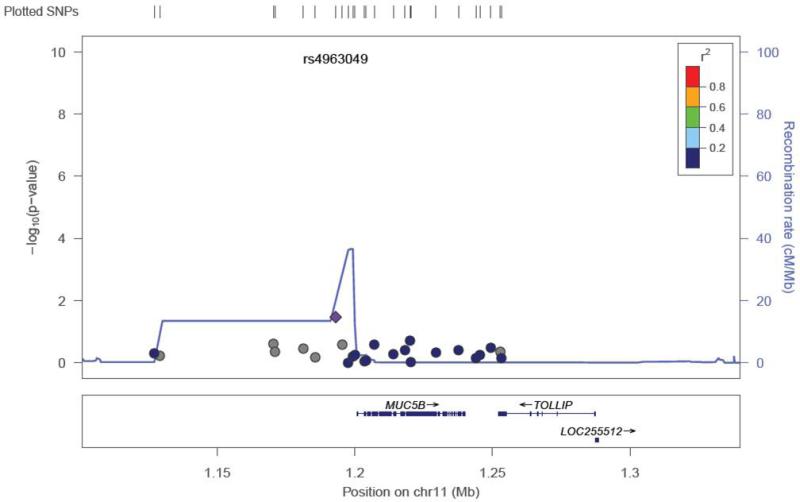
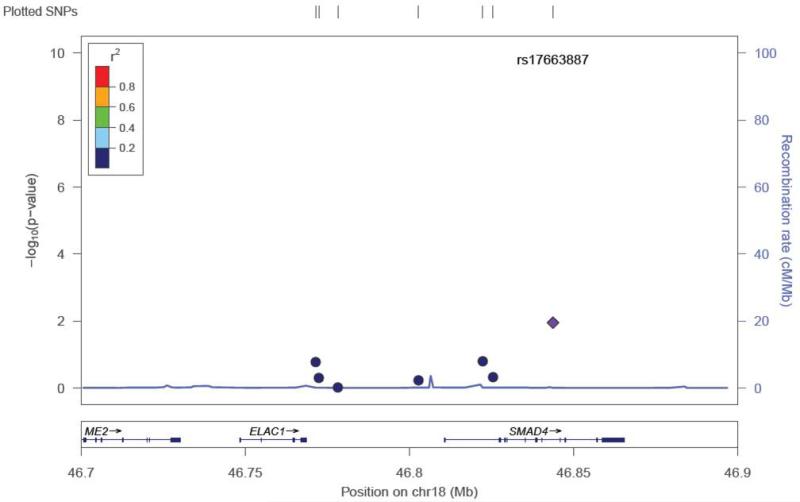
Eight SNPs from four genes had an unadjusted P value of <.05 for association with the chronic otitis media with effusion phenotype (TLR4, MUC5B, SMAD2, SMAD4); five of these polymorphisms were in the TLR4 gene.
Even though these results need to be replicated in a novel population, the presence of five SNPs in the TLR4 gene having association with chronic otitis media with effusion in our study population lends evidence for the possible role of this gene in the susceptibility to otitis media.
目的/假设:导致中耳炎易感性的遗传因素尚未得到很好的理解。本研究的目的是开发一个标签-单核苷酸多态性(SNP)面板,以确定候选基因多态性与慢性分泌性中耳炎的发展之间是否存在关联。
采用 1:1 的病例对照设计,纳入 100 例病例和 100 例对照。研究仅限于慢性分泌性中耳炎表型,以增加人群同质性。
选择了 192 个标签-SNP。从 100 例慢性分泌性中耳炎病例和 100 例对照中采集唾液用于 DNA 提取。经过质量控制,100 例病例和 79 例对照样本可用于杂交。每位受试者的基因组 DNA 与 SNP 探针杂交,并生成基因型。对所有样本和 SNP 进行质量控制,最终用于分析的 SNP 减少到 170 个。然后分析每个 SNP 与慢性分泌性中耳炎的统计学关联。
四个基因的 8 个 SNP 与慢性分泌性中耳炎表型的关联具有未经调整的 P 值<0.05(TLR4、MUC5B、SMAD2、SMAD4);其中 5 个多态性位于 TLR4 基因中。
尽管这些结果需要在新的人群中复制,但我们研究人群中 TLR4 基因的五个 SNP 与慢性分泌性中耳炎相关,这为该基因在中耳炎易感性中的可能作用提供了证据。