Department of Medicine III, RWTH University Hospital Aachen, Pauwelsstraße 30, 52074 Aachen, Germany.
Mediators Inflamm. 2013;2013:413826. doi: 10.1155/2013/413826. Epub 2013 Jun 27.
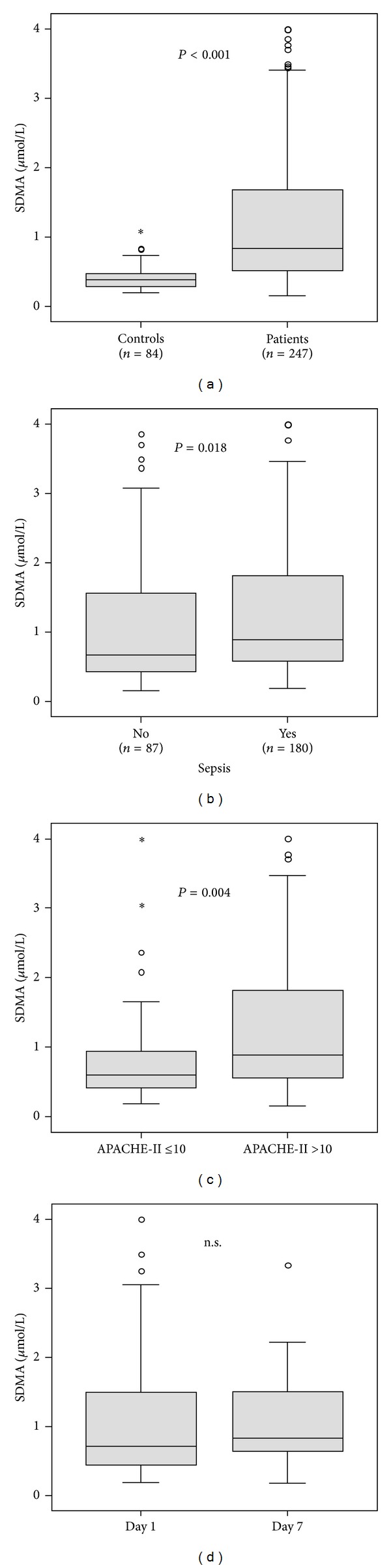
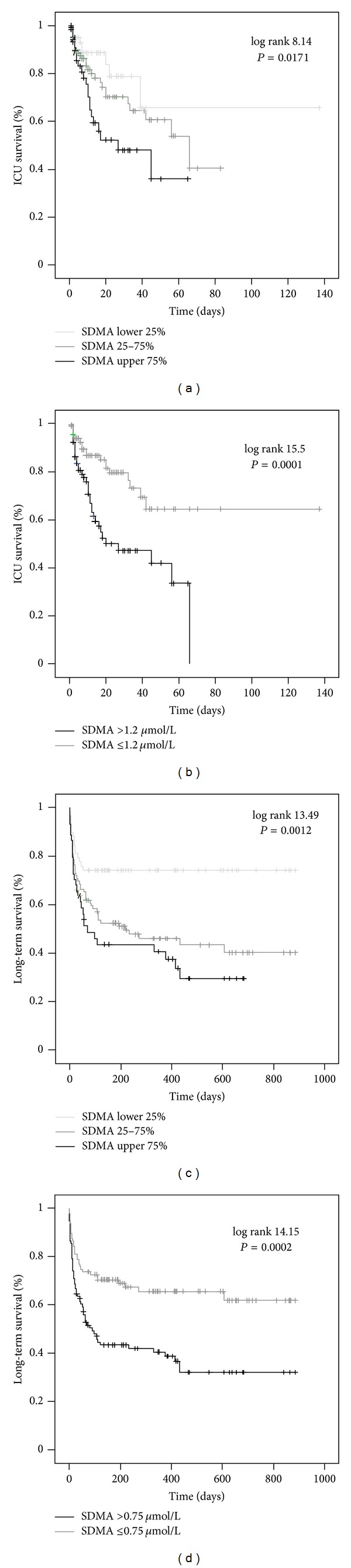
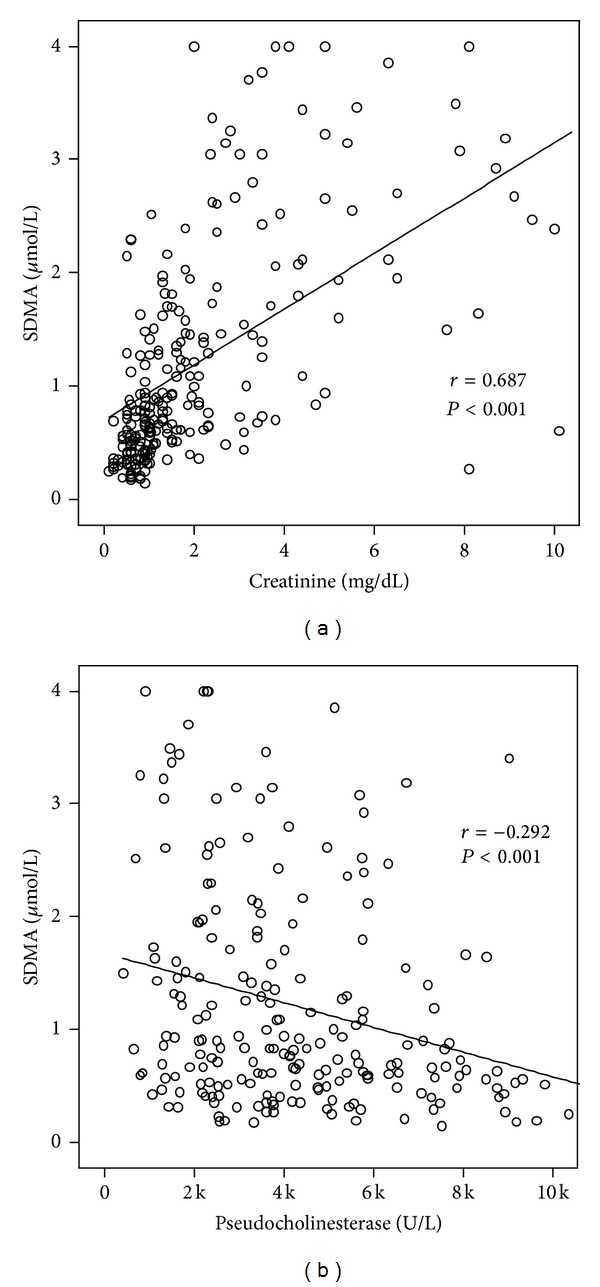
In systemic inflammation and sepsis, endothelial activation and microvascular dysfunction are characteristic features that promote multiorgan failure. As symmetric dimethylarginine (SDMA) impacts vascular tension and integrity via modulating nitric oxide (NO) pathways, we investigated circulating SDMA in critical illness and sepsis. 247 critically ill patients (160 with sepsis, 87 without sepsis) were studied prospectively upon admission to the medical intensive care unit (ICU) and on day 7, in comparison to 84 healthy controls. SDMA serum levels were significantly elevated in critically ill patients at admission to ICU compared to controls and remained stably elevated during the first week of ICU treatment. The highest SDMA levels were found in patients with sepsis. SDMA levels closely correlated with disease severity scores, biomarkers of inflammation, and organ failure (renal, hepatic, and circulatory). We identified SDMA serum concentrations at admission as an independent prognostic biomarker in critically ill patients not only for short-term mortality at the ICU but also for unfavourable long-term survival. Thus, the significant increase of circulating SDMA in critically ill patients indicates a potential pathogenic involvement in endothelial dysfunction during sepsis and may be useful for mortality risk stratification at the ICU.
在全身炎症和败血症中,内皮细胞激活和微血管功能障碍是促进多器官衰竭的特征性特征。由于对称二甲基精氨酸(SDMA)通过调节一氧化氮(NO)途径影响血管张力和完整性,我们研究了危重病和败血症患者的循环 SDMA。前瞻性研究了 247 名入住重症监护病房(ICU)的危重病患者(160 例败血症,87 例无败血症)和第 7 天,与 84 名健康对照相比。与对照组相比,入住 ICU 时危重病患者的 SDMA 血清水平明显升高,在 ICU 治疗的第一周内仍保持稳定升高。败血症患者的 SDMA 水平最高。SDMA 水平与疾病严重程度评分、炎症标志物和器官衰竭(肾脏、肝脏和循环)密切相关。我们发现,入院时的 SDMA 血清浓度不仅是 ICU 短期死亡率的独立预后生物标志物,也是 ICU 不良长期生存的独立预后生物标志物。因此,危重病患者循环 SDMA 的显著增加表明其在败血症期间内皮功能障碍的潜在发病机制,并且可能对 ICU 死亡率分层有用。