Cancer Research UK London Research Institute, Clare Hall Laboratories, South Mimms, United Kingdom.
PLoS One. 2013 Jul 30;8(7):e69986. doi: 10.1371/journal.pone.0069986. Print 2013.
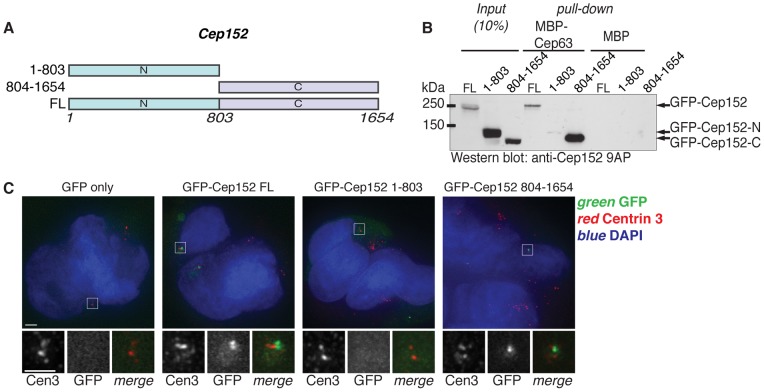
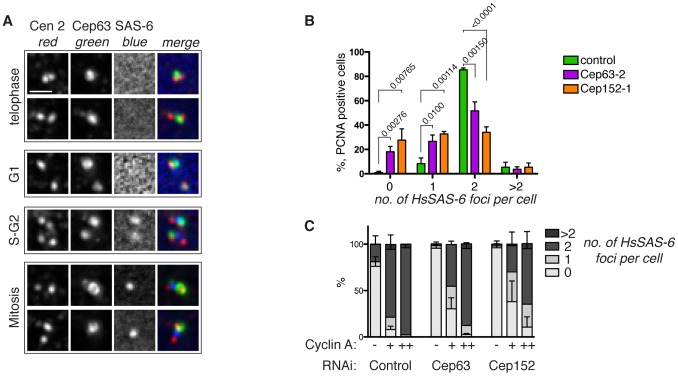
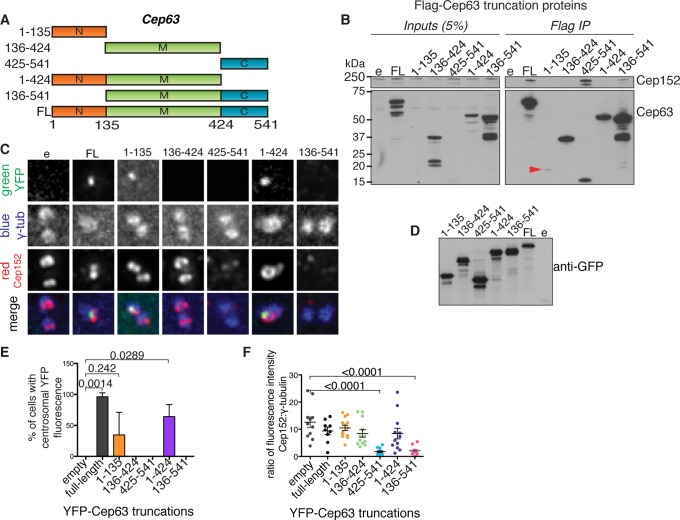
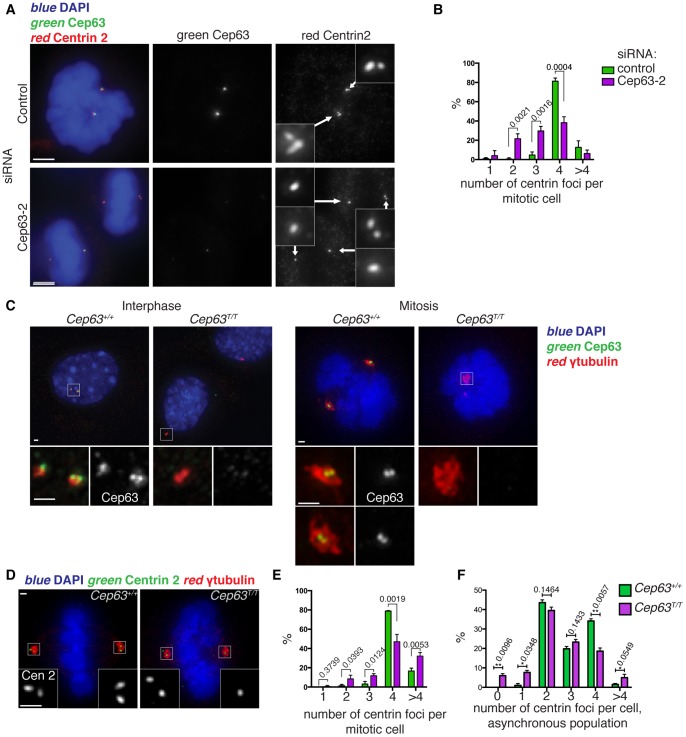
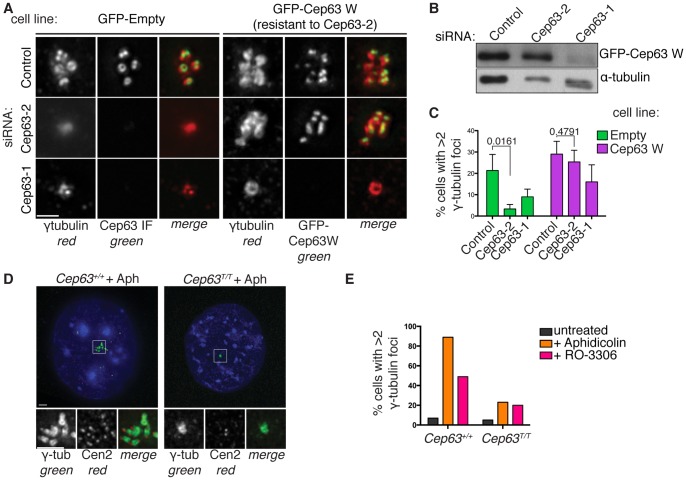
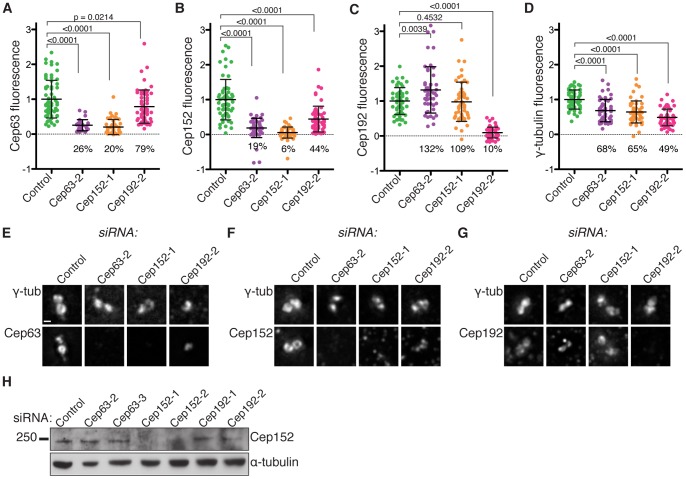
Centrosomes consist of two centrioles embedded in pericentriolar material and function as the main microtubule organising centres in dividing animal cells. They ensure proper formation and orientation of the mitotic spindle and are therefore essential for the maintenance of genome stability. Centrosome function is crucial during embryonic development, highlighted by the discovery of mutations in genes encoding centrosome or spindle pole proteins that cause autosomal recessive primary microcephaly, including Cep63 and Cep152. In this study we show that Cep63 functions to ensure that centriole duplication occurs reliably in dividing mammalian cells. We show that the interaction between Cep63 and Cep152 can occur independently of centrosome localisation and that the two proteins are dependent on one another for centrosomal localisation. Further, both mouse and human Cep63 and Cep152 cooperate to ensure efficient centriole duplication by promoting the accumulation of essential centriole duplication factors upstream of SAS-6 recruitment and procentriole formation. These observations describe the requirement for Cep63 in maintaining centriole number in dividing mammalian cells and further establish the order of events in centriole formation.
中心体由嵌入中心粒周围物质的两个中心粒组成,在有丝分裂的动物细胞中充当主要微管组织中心。它们确保了有丝分裂纺锤体的正确形成和定向,因此对于维持基因组稳定性至关重要。中心体的功能在胚胎发育中至关重要,这一点在发现编码中心体或纺锤体极蛋白的基因突变导致常染色体隐性原发性小头畸形时得到了强调,其中包括 Cep63 和 Cep152。在这项研究中,我们表明 Cep63 能够确保在有丝分裂的哺乳动物细胞中可靠地发生中心粒复制。我们表明 Cep63 和 Cep152 之间的相互作用可以独立于中心体定位发生,并且这两种蛋白质彼此依赖于中心体定位。此外,小鼠和人 Cep63 和 Cep152 合作,通过促进必需的中心粒复制因子在上游募集和前中心粒形成之前的积累,来确保有效的中心粒复制。这些观察结果描述了 Cep63 在维持有丝分裂的哺乳动物细胞中中心粒数量方面的必要性,并进一步确定了中心粒形成过程中的事件顺序。