Department of Psychology, Psychological Assessment and Health Psychology, University of Konstanz, Konstanz, Germany.
PLoS One. 2013 Jul 31;8(7):e69996. doi: 10.1371/journal.pone.0069996. Print 2013.
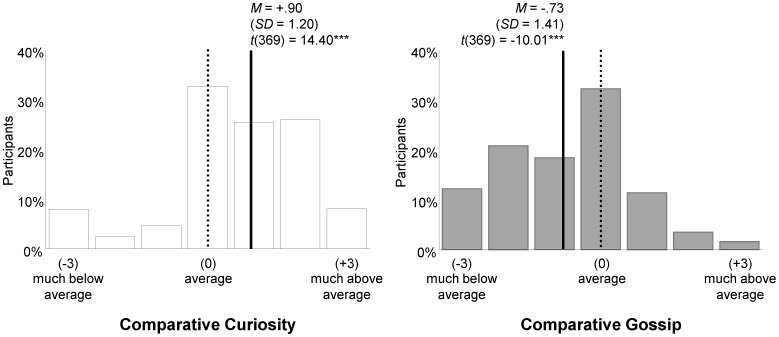
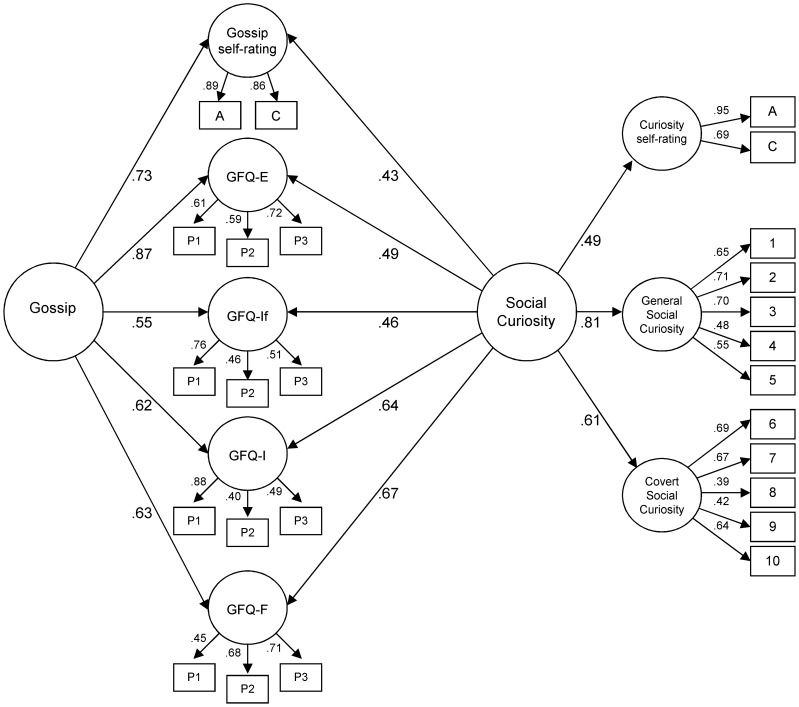
The present online-questionnaire study examined two fundamental social behaviors, social curiosity and gossip, and their interrelations in an English (n = 218) and a German sample (n = 152). Analyses showed that both samples believed that they are less gossipy but more curious than their peers. Multidimensional SEM of self and trait conceptions indicated that social curiosity and gossip are related constructs but with different patterns of social functions. Gossip appears to serve predominantly entertainment purposes whereas social curiosity appears to be more driven by a general interest in gathering information about how other people feel, think, and behave and the need to belong. Relationships to other personality traits (N, E, O) provided additional evidence for divergent validity. The needs for gathering and disseminating social information might represent two interlinked but different drives of cultural learning.
本在线问卷调查研究考察了两种基本的社交行为,即社交好奇心和八卦,以及它们在英语(n=218)和德语样本(n=152)中的相互关系。分析表明,两个样本都认为他们比同龄人更不八卦,但更有好奇心。自我和特质观念的多维 SEM 表明,社交好奇心和八卦是相关的结构,但具有不同的社会功能模式。八卦似乎主要服务于娱乐目的,而社交好奇心似乎更多地是由对了解他人感受、想法和行为的一般信息的兴趣以及归属感的需要驱动的。与其他人格特质(N、E、O)的关系提供了发散有效性的额外证据。收集和传播社会信息的需求可能代表了两种相互关联但不同的文化学习驱动力。