Unit of Biomedical Radiation Sciences, Rudbeck Laboratory, Uppsala University, Uppsala, Sweden.
PLoS One. 2013 Aug 1;8(8):e70028. doi: 10.1371/journal.pone.0070028. Print 2013.
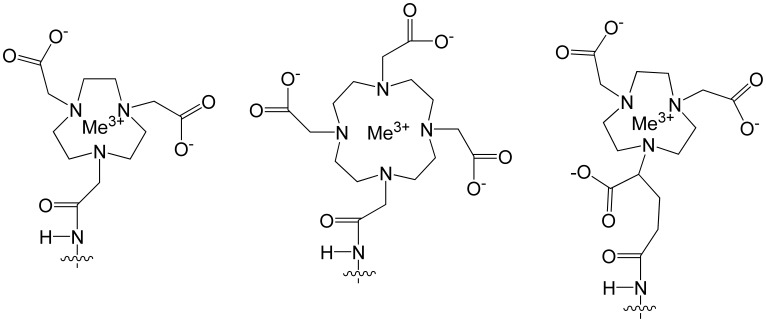
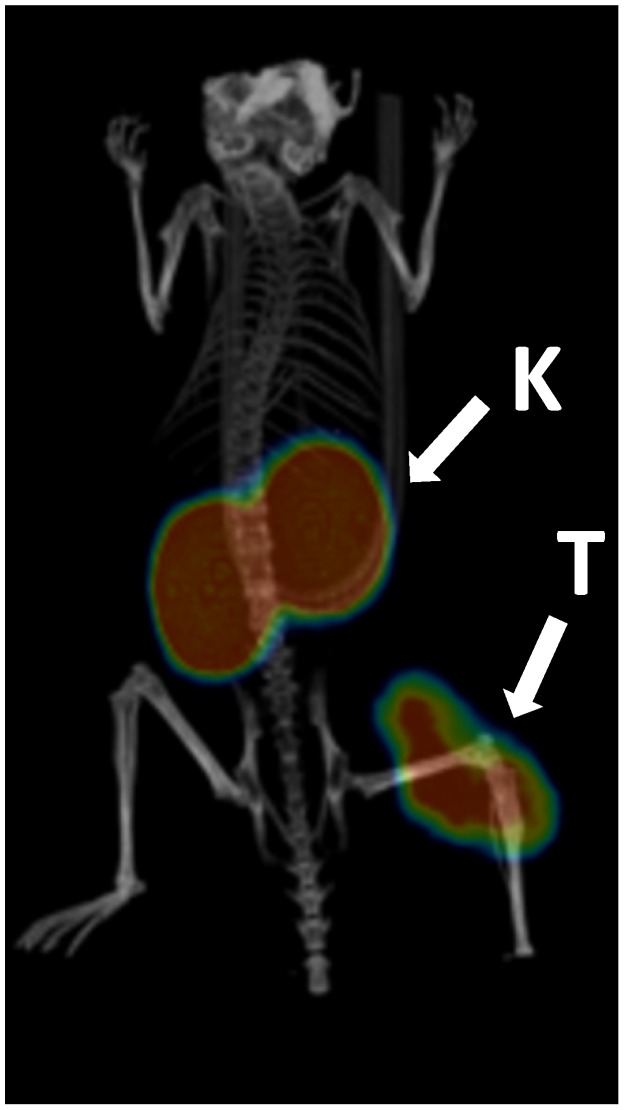
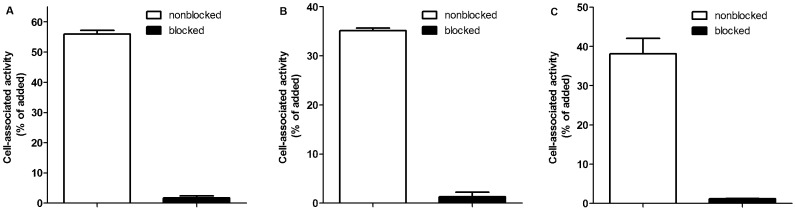
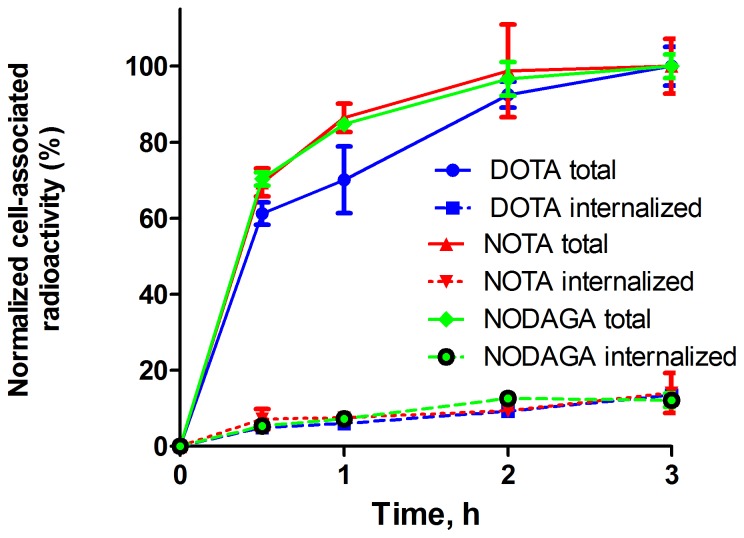
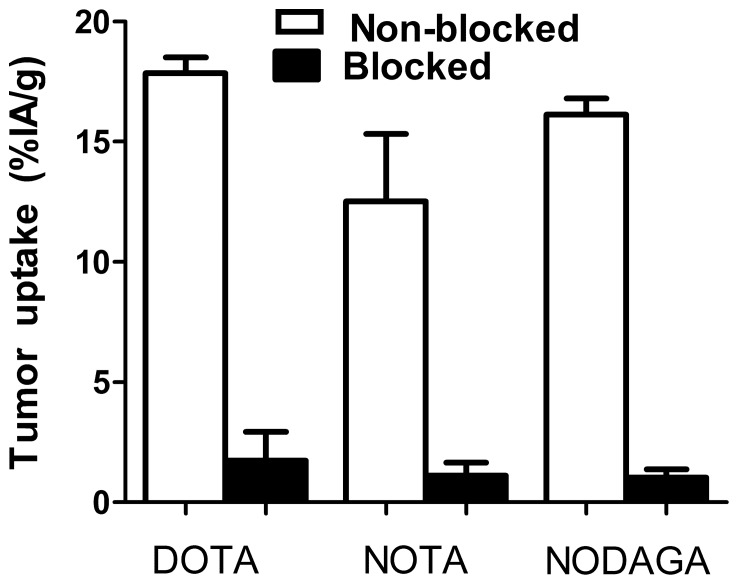
Affibody molecules are a class of small (7 kDa) non-immunoglobulin scaffold-based affinity proteins, which have demonstrated substantial potential as probes for radionuclide molecular imaging. The use of positron emission tomography (PET) would further increase the resolution and quantification accuracy of Affibody-based imaging. The rapid in vivo kinetics of Affibody molecules permit the use of the generator-produced radionuclide (68)Ga (T1/2=67.6 min). Earlier studies have demonstrated that the chemical nature of chelators has a substantial influence on the biodistribution properties of Affibody molecules. To determine an optimal labeling approach, the macrocyclic chelators 1,4,7,10-tetraazacylododecane-1,4,7,10-tetraacetic acid (DOTA), 1,4,7-triazacyclononane-N,N,N-triacetic acid (NOTA) and 1-(1,3-carboxypropyl)-1,4,7- triazacyclononane-4,7-diacetic acid (NODAGA) were conjugated to the N-terminus of the synthetic Affibody molecule ZHER2:S1 targeting HER2. Affibody molecules were labeled with (68)Ga, and their binding specificity and cellular processing were evaluated. The biodistribution of (68)Ga-DOTA-ZHER2:S1, (68)Ga-NOTA-ZHER2:S1 and (68)Ga-NODAGA-ZHER2:S1, as well as that of their (111)In-labeled counterparts, was evaluated in BALB/C nu/nu mice bearing HER2-expressing SKOV3 xenografts. The tumor uptake for (68)Ga-DOTA-ZHER2:S1 (17.9 ± 0.7%IA/g) was significantly higher than for both (68)Ga-NODAGA-ZHER2:S1 (16.13 ± 0.67%IA/g) and (68)Ga-NOTA-ZHER2:S1 (13 ± 3%IA/g) at 2 h after injection. (68)Ga-NODAGA-ZHER2:S1 had the highest tumor-to-blood ratio (60 ± 10) in comparison with both (68)Ga-DOTA-ZHER2:S1 (28 ± 4) and (68)Ga-NOTA-ZHER2:S1 (42 ± 11). The tumor-to-liver ratio was also higher for (68)Ga-NODAGA-ZHER2:S1 (7 ± 2) than the DOTA and NOTA conjugates (5.5 ± 0.6 vs.3.3 ± 0.6). The influence of chelator on the biodistribution and targeting properties was less pronounced for (68)Ga than for (111)In. The results of this study demonstrate that macrocyclic chelators conjugated to the N-terminus have a substantial influence on the biodistribution of HER2-targeting Affibody molecules labeled with (68)Ga.This can be utilized to enhance the imaging contrast of PET imaging using Affibody molecules and improve the sensitivity of molecular imaging. The study demonstrated an appreciable difference of chelator influence for (68)Ga and (111)In.
亲和体分子是一类小的(7 kDa)非免疫球蛋白支架基亲和力蛋白,已被证明作为放射性核素分子成像的探针具有很大的潜力。正电子发射断层扫描(PET)的使用将进一步提高基于亲和体的成像的分辨率和定量准确性。亲和体分子的快速体内动力学允许使用发生器产生的放射性核素(68)Ga(T1/2=67.6 min)。早期的研究表明,螯合剂的化学性质对亲和体分子的生物分布性质有很大的影响。为了确定最佳的标记方法,将大环螯合剂 1,4,7,10-四氮杂环十二烷-1,4,7,10-四乙酸(DOTA)、1,4,7-三氮杂环壬烷-N,N,N-三乙酸(NOTA)和 1-(1,3-羧基丙基)-1,4,7-三氮杂环壬烷-4,7-二乙酸(NODAGA)与针对 HER2 的合成亲和体分子 ZHER2:S1 的 N-末端连接。亲和体分子用(68)Ga 标记,并评估其结合特异性和细胞处理。在荷 HER2 表达 SKOV3 异种移植物的 BALB/C nu/nu 小鼠中评估了(68)Ga-DOTA-ZHER2:S1、(68)Ga-NOTA-ZHER2:S1 和(68)Ga-NODAGA-ZHER2:S1 的生物分布情况,以及它们的(111)In-标记物的生物分布情况。注射后 2 小时,(68)Ga-DOTA-ZHER2:S1(17.9±0.7%IA/g)的肿瘤摄取量明显高于(68)Ga-NODAGA-ZHER2:S1(16.13±0.67%IA/g)和(68)Ga-NOTA-ZHER2:S1(13±3%IA/g)。与(68)Ga-DOTA-ZHER2:S1(28±4)和(68)Ga-NOTA-ZHER2:S1(42±11)相比,(68)Ga-NODAGA-ZHER2:S1 的肿瘤与血液比(60±10)也更高。(68)Ga-NODAGA-ZHER2:S1 的肿瘤与肝脏比(7±2)也高于 DOTA 和 NOTA 缀合物(5.5±0.6 vs.3.3±0.6)。与(111)In 相比,螯合剂对(68)Ga 标记的 HER2 靶向亲和体分子的生物分布和靶向特性的影响较小。这项研究表明,与 N 末端连接的大环螯合剂对(68)Ga 标记的靶向 HER2 的亲和体分子的生物分布有很大的影响。这可用于增强使用亲和体分子进行 PET 成像的成像对比度,并提高分子成像的灵敏度。该研究表明,(68)Ga 和(111)In 的螯合剂影响有明显差异。