Key Laboratory of Regenerative Biology, South China Institute for Stem Cell Biology and Regenerative Medicine, Guangzhou Institutes of Biomedicine and Health, University of Chinese Academy of Sciences, Guangzhou, Guangdong, China.
PLoS One. 2013 Aug 6;8(8):e70629. doi: 10.1371/journal.pone.0070629. Print 2013.
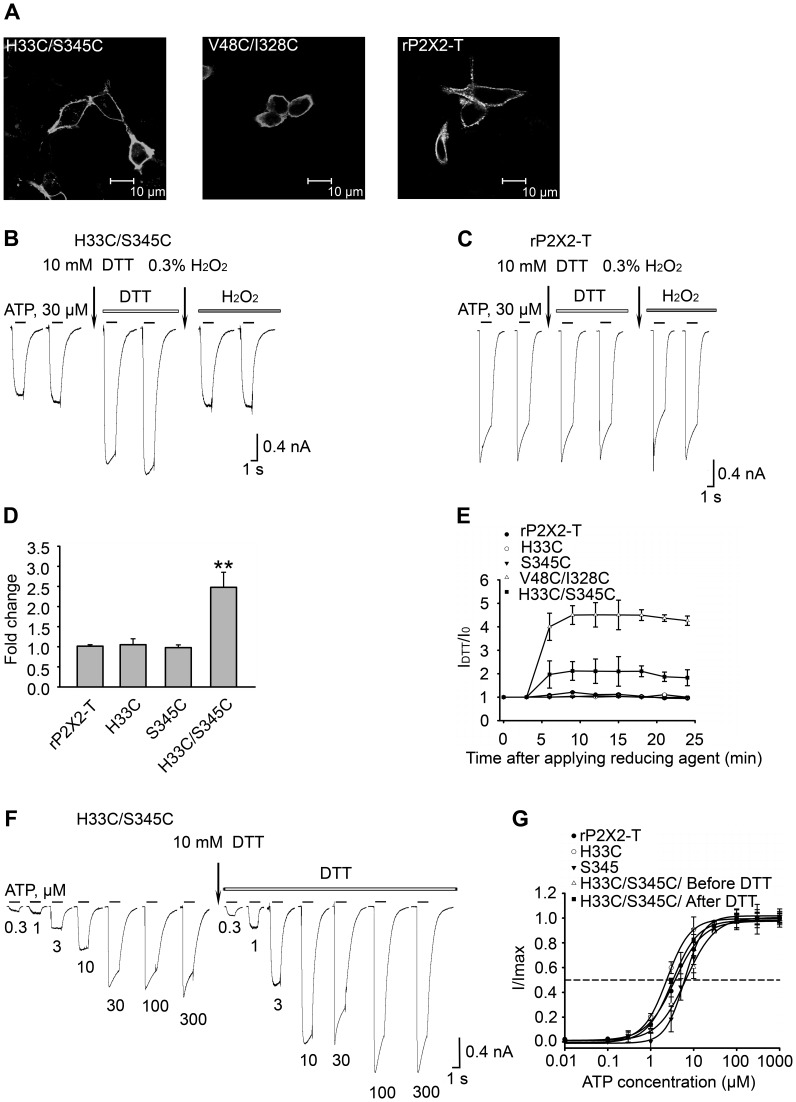
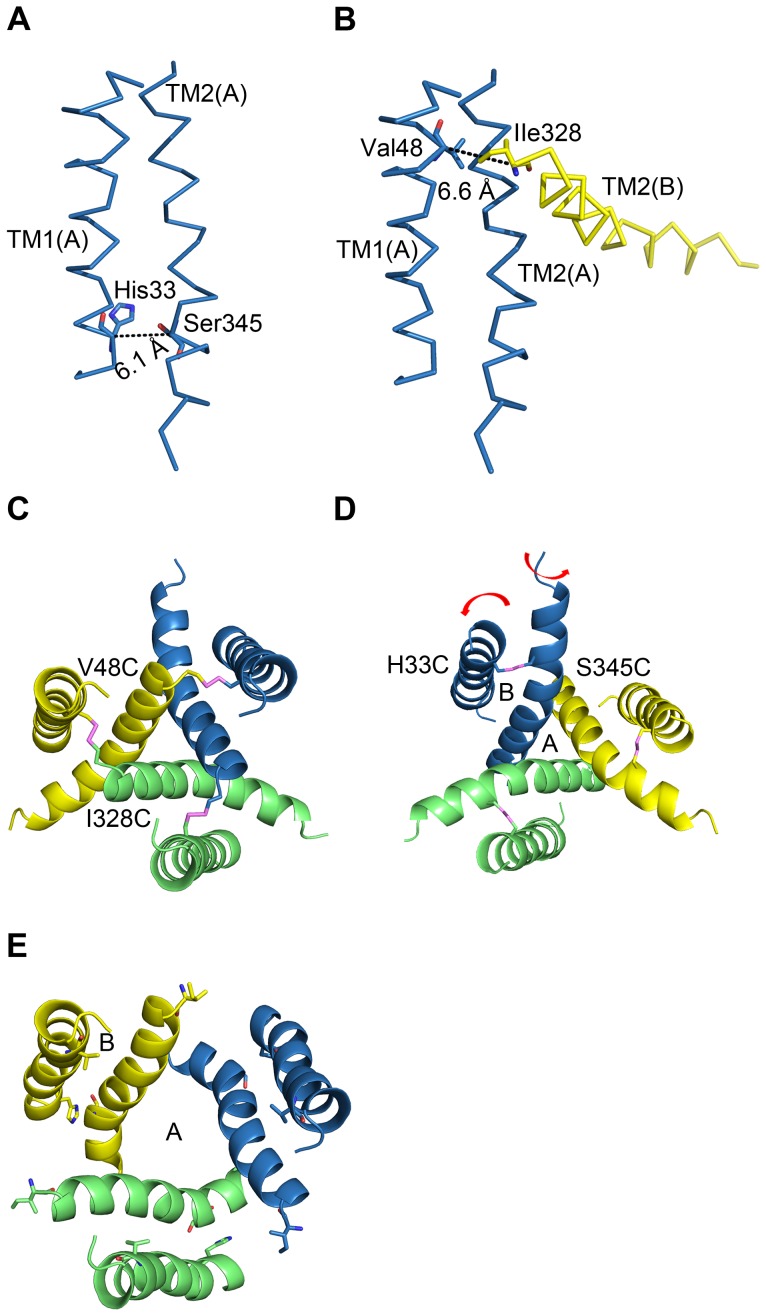
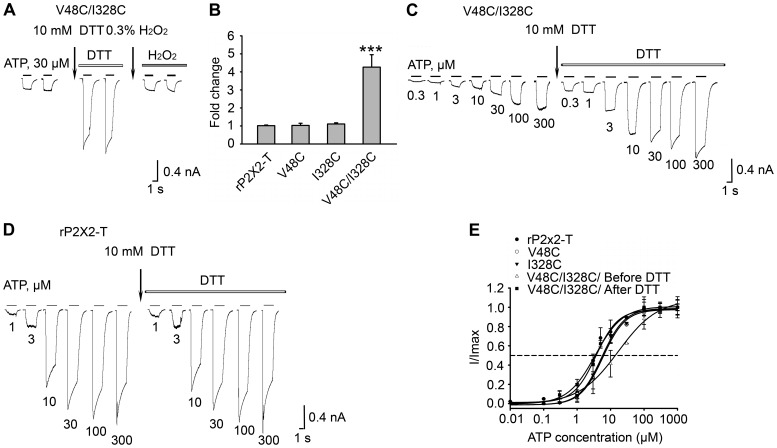
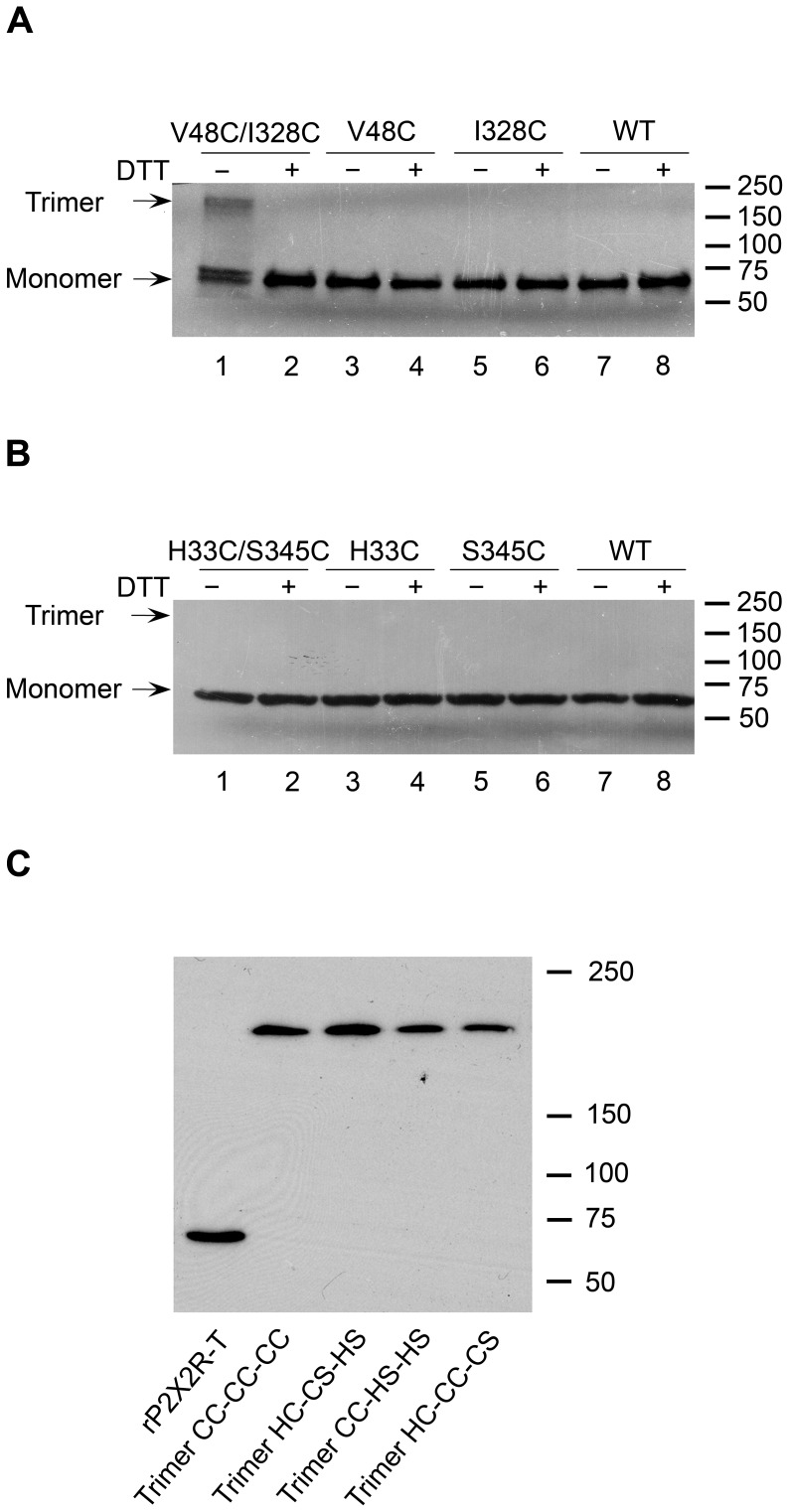
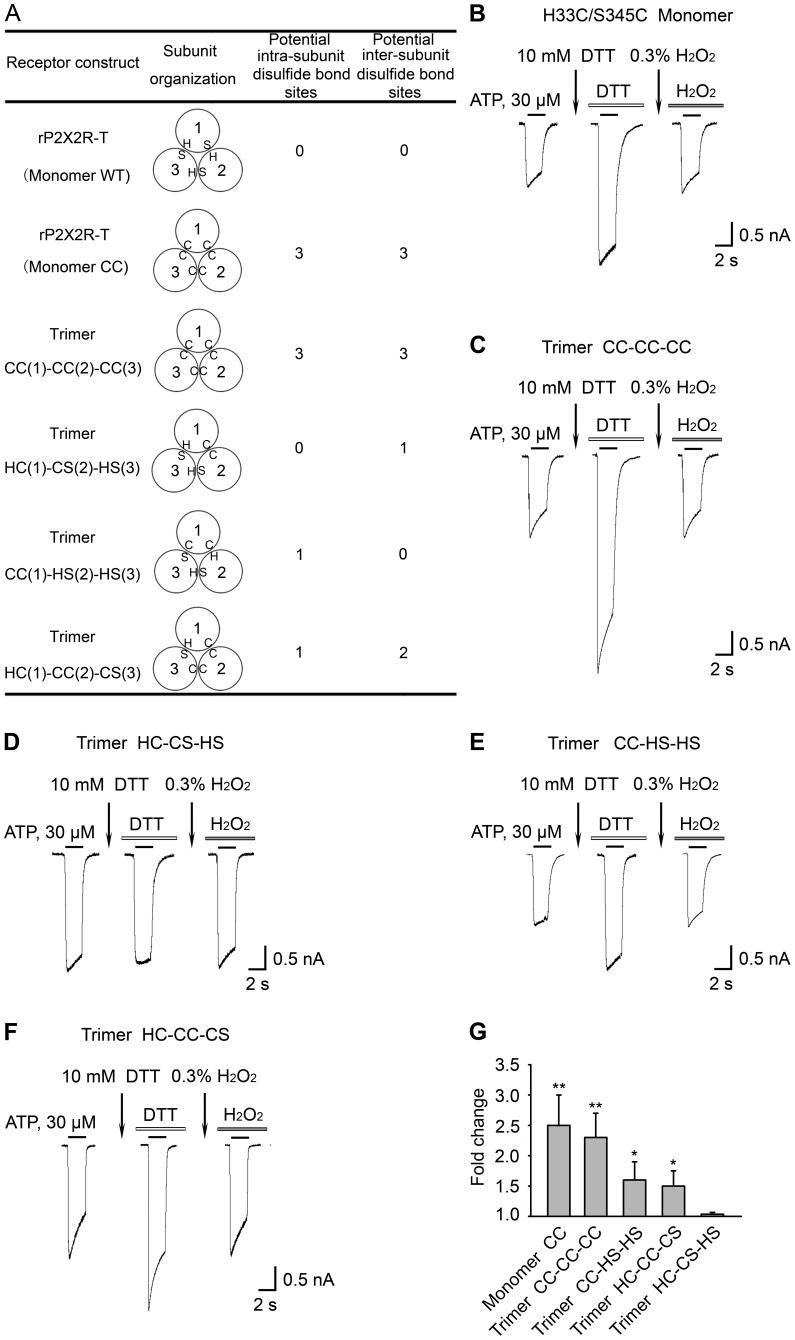
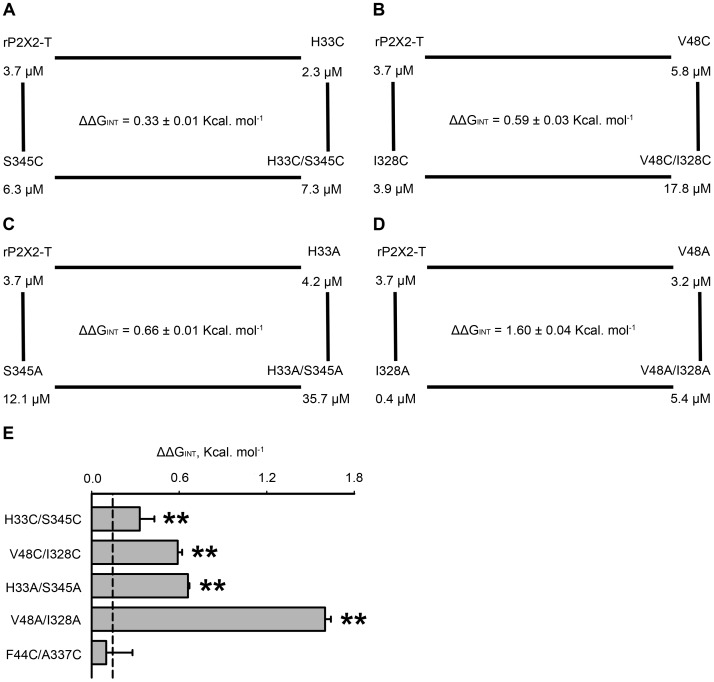
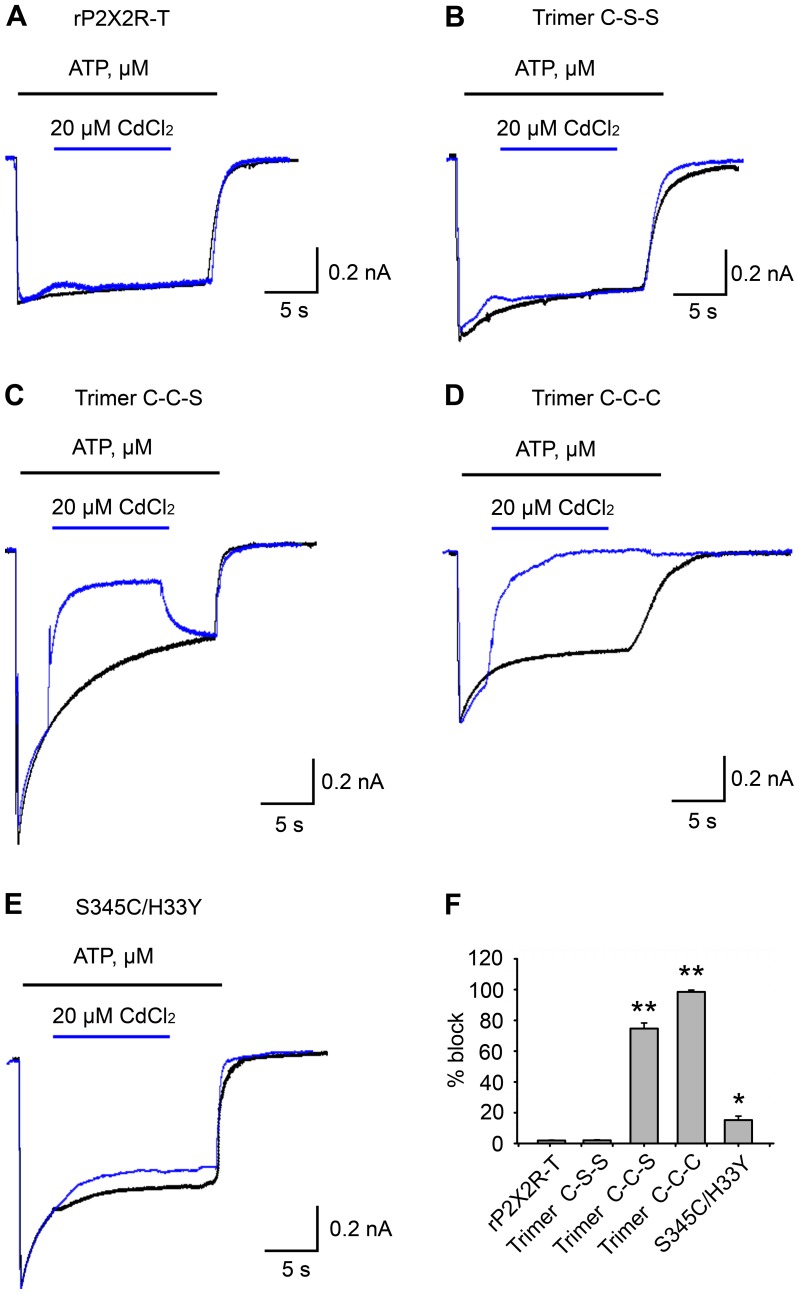
The transition from the closed to open state greatly alters the intra- and inter-subunit interactions of the P2X receptor (P2XR). The interactions that occur in the transmembrane domain of the P2X2R remain unclear. We used substituted cysteine mutagenesis disulfide mapping to identify pairs of residues that are in close proximity within the transmembrane domain of rP2X2R and compared our results to the predicted positions of these amino acids obtained from a rat P2X2R homology model of the available open and closed zebrafish P2X4R structures. Alternations in channel function were measured as a change in the ATP-gated current before and after exposure to dithiothreitol. Thirty-six pairs of double mutants of rP2X2R expressed in HEK293 cells produced normal functioning channels. Thirty-five pairs of these mutants did not exhibit a functionally detectable disulfide bond. The double mutant H33C/S345C formed redox-dependent cross-links in the absence of ATP. Dithiothreitol ruptured the disulfide bond of H33C/S345C and induced a 2 to 3-fold increase in current. The EC50 for H33C/S345C before dithiothreitol treatment was ~2-fold higher than that after dithiothreitol treatment. Dithiothreitol reduced the EC50 to wild-type levels. Furthermore, expression of trimeric concatamer receptors with Cys mutations at some but not all six positions showed that the more disulfide bond formation sites within the concatamer, the greater current potentiation after dithiothreitol incubation. Immunoblot analysis of H33C/S345C revealed one monomer band under nonreducing conditions strongly suggesting that disulfide bonds are formed within single subunits (intra-subunit) and not between two subunits (inter-subunit). Taken together, these data indicate that His33 and Ser345 are proximal to each other across an intra-subunit interface. The relative movement between the first transmembrane and the second transmembrane in the intra-subunit is likely important for transmitting the action of ATP binding to the opening of the channel.
从关闭状态到开放状态的转变极大地改变了 P2X 受体(P2XR)的亚基内和亚基间相互作用。P2X2R 跨膜域中发生的相互作用仍不清楚。我们使用取代的半胱氨酸突变体二硫键作图来鉴定 rP2X2R 跨膜域中紧密接近的残基对,并将我们的结果与从可用的开放和闭合斑马鱼 P2X4R 结构的大鼠 P2X2R 同源模型获得的这些氨基酸的预测位置进行比较。通道功能的改变表现为暴露于二硫苏糖醇前后 ATP 门控电流的变化。在 HEK293 细胞中表达的 rP2X2R 的 36 对双突变体产生正常功能的通道。这些突变体中有 35 对没有表现出功能上可检测的二硫键。在没有 ATP 的情况下,双突变体 H33C/S345C 形成氧化还原依赖性交联。二硫苏糖醇破坏 H33C/S345C 的二硫键,并诱导电流增加 2 到 3 倍。二硫苏糖醇处理前 H33C/S345C 的 EC50 比二硫苏糖醇处理后高约 2 倍。二硫苏糖醇将 EC50 降低至野生型水平。此外,在一些但不是所有六个位置具有 Cys 突变的三聚体串联受体的表达表明,串联体内形成更多的二硫键形成位点,二硫苏糖醇孵育后电流增强越大。非还原条件下 H33C/S345C 的免疫印迹分析强烈表明二硫键是在单个亚基内(亚基内)形成的,而不是在两个亚基之间(亚基间)形成的,显示出一个单体带。总之,这些数据表明 His33 和 Ser345 彼此靠近,位于亚基内界面。亚基内的第一跨膜和第二跨膜之间的相对运动对于将 ATP 结合的作用传递到通道的打开可能很重要。