Dardinger Center for Neuro-Oncology and Neurosciences, Department of Neurological Surgery, James Cancer Hospital/Solove Research Institute, the Ohio State University, Columbus, Ohio, United States of America.
PLoS One. 2013 Aug 2;8(8):e71932. doi: 10.1371/journal.pone.0071932. Print 2013.
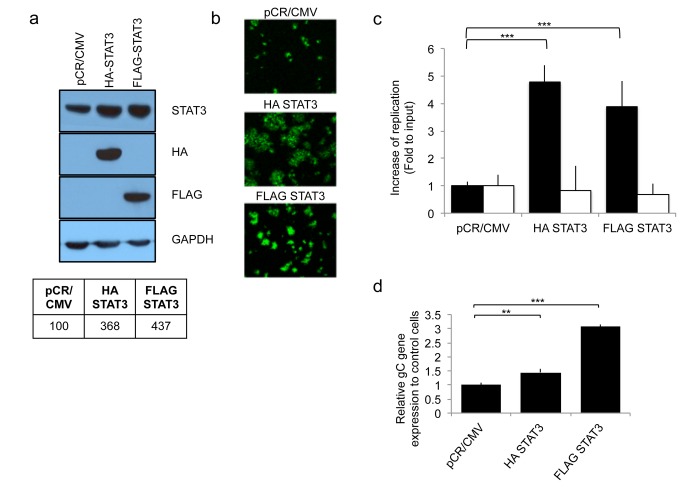
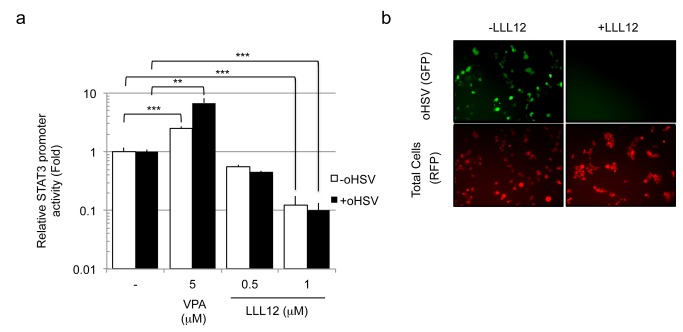
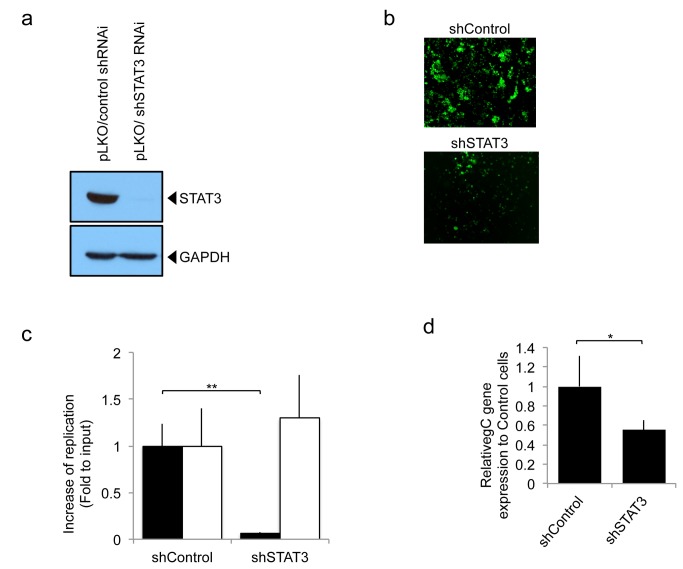
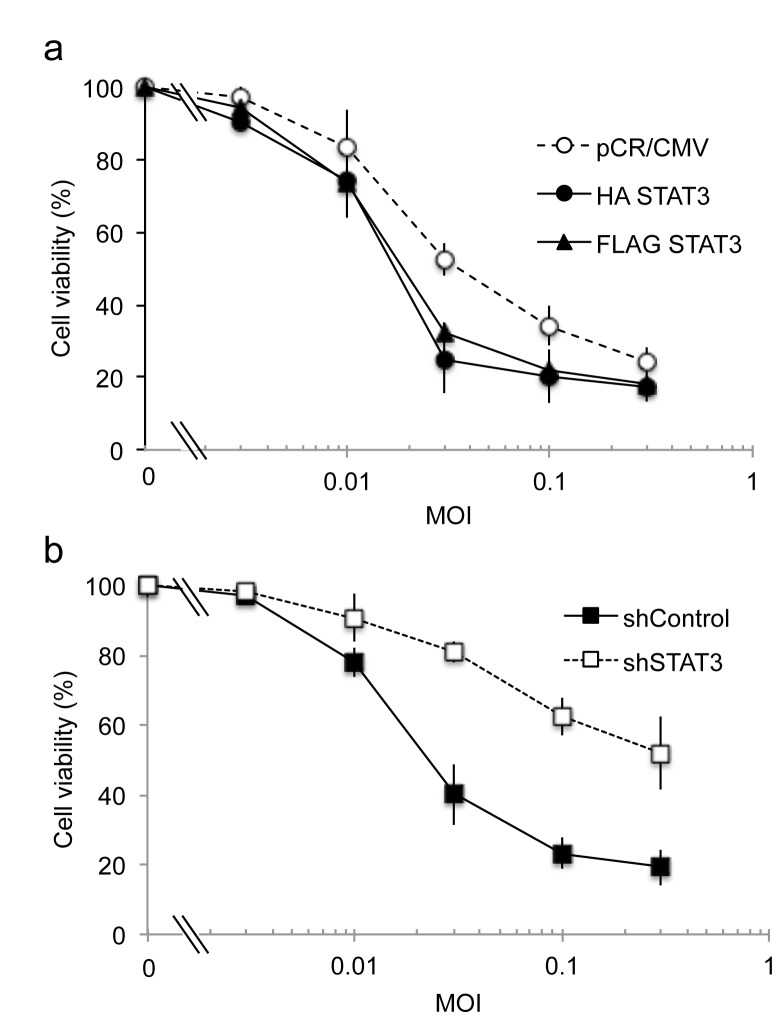
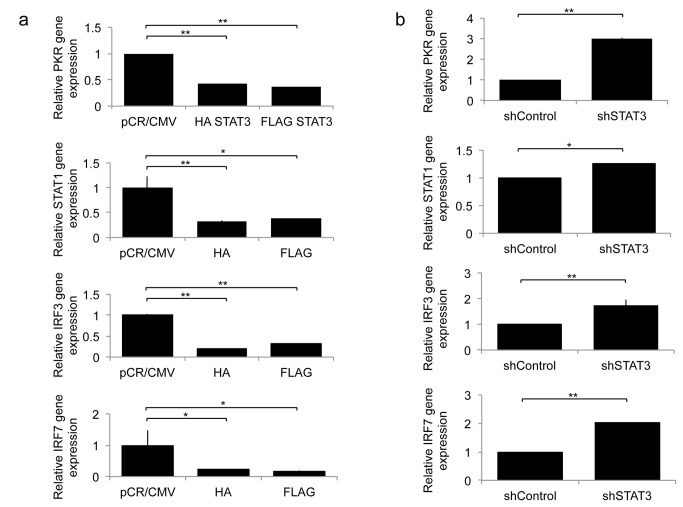
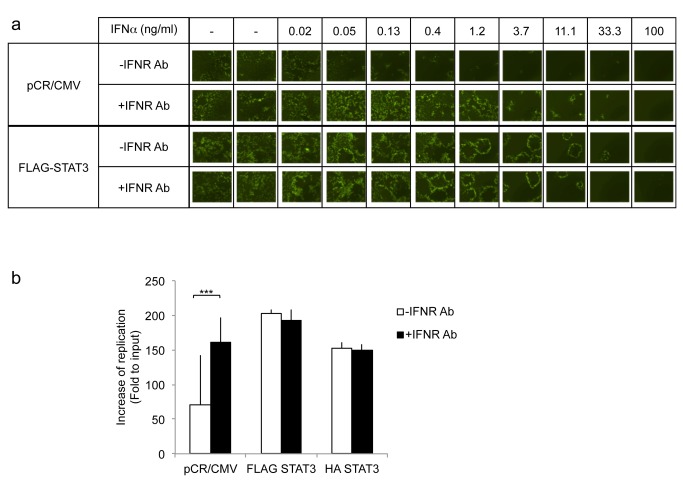
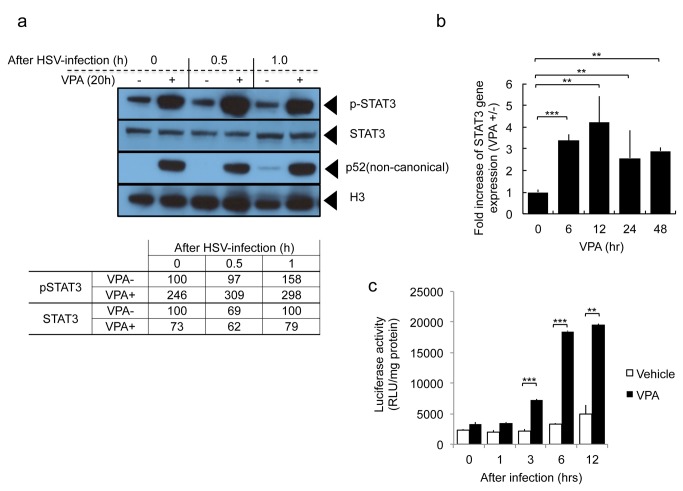
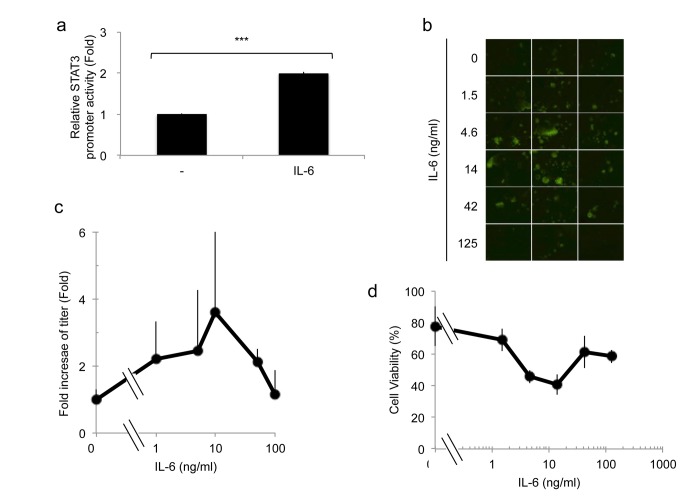
Recent studies report that STAT3 signaling is a master regulator of mesenchymal transformation of gliomas and that STAT3 modulated genes are highly expressed in the mesenchymal transcriptome of gliomas. A currently studied experimental treatment for gliomas consists of intratumoral injection of oncolytic viruses (OV), such as oncolytic herpes simplex virus type 1 (oHSV). We have described one particular oHSV (rQNestin34.5) that exhibits potent anti-glioma activity in animal models. Here, we hypothesized that alterations in STAT3 signaling in glioma cells may affect the replicative ability of rQNestin34.5. In fact, human U251 glioma cells engineered to either over-express STAT3 or with genetic down-regulation of STAT3 supported oHSV replication to a significantly higher or lesser degree, respectively, when compared to controls. Administration of pharmacologic agents that increase STAT3 phosphorylation/activation (Valproic Acid) or increase STAT3 levels (Interleukin 6) also significantly enhanced oHSV replication. Instead, administration of inhibitors of STAT3 phosphorylation/activation (LLL12) significantly reduced oHSV replication. STAT3 led to a reduction in interferon signaling in oHSV infected cells and inhibition of interferon signaling abolished the effect of STAT3 on oHSV replication. These data thus indicate that STAT3 signaling in malignant gliomas enhances oHSV replication, likely by inhibiting the interferon response in infected glioma cells, thus suggesting avenues for possible potentiation of oncolytic virotherapy.
最近的研究报告表明,STAT3 信号是胶质母细胞瘤间充质转化的主要调节因子,STAT3 调节的基因在胶质母细胞瘤的间充质转录组中高度表达。目前正在研究的胶质母细胞瘤实验治疗方法包括肿瘤内注射溶瘤病毒(OV),如溶瘤单纯疱疹病毒 1 型(oHSV)。我们已经描述了一种特殊的 oHSV(rQNestin34.5),它在动物模型中表现出强烈的抗神经胶质瘤活性。在这里,我们假设胶质母细胞瘤细胞中 STAT3 信号的改变可能会影响 rQNestin34.5 的复制能力。事实上,与对照相比,过表达 STAT3 的人 U251 神经胶质瘤细胞或基因敲低 STAT3 的人 U251 神经胶质瘤细胞分别支持 oHSV 复制的程度显著增加或降低。此外,给予增加 STAT3 磷酸化/激活的药物(丙戊酸)或增加 STAT3 水平的药物(白细胞介素 6)也显著增强了 oHSV 的复制。相反,给予 STAT3 磷酸化/激活抑制剂(LLL12)显著降低了 oHSV 的复制。STAT3 导致感染的 oHSV 细胞中的干扰素信号减少,而抑制干扰素信号消除了 STAT3 对 oHSV 复制的影响。这些数据表明,恶性神经胶质瘤中的 STAT3 信号增强了 oHSV 的复制,可能是通过抑制感染的神经胶质瘤细胞中的干扰素反应,从而为溶瘤病毒治疗的可能增强提供了途径。