Departamento de Sanidad Animal (Anatomía Patológica), Instituto de Ganadería de Montaña (CSIC-ULE), Facultad de Veterinaria, Universidad de León, Campus de Vegazana s/n, León 24071, Spain.
BMC Vet Res. 2013 Aug 9;9:156. doi: 10.1186/1746-6148-9-156.
Lissencephaly is a rare developmental brain disorder in veterinary and human medicine associated with defects in neuronal migration leading to a characteristic marked reduction or absence of the convolutional pattern of the cerebral hemispheres. In many human cases the disease has a genetic basis. In sheep, brain malformations, mainly cerebellar hypoplasia and forms of hydrocephalus, are frequently due to in utero viral infections. Although breed-related malformations of the brain have been described in sheep, breed-related lissencephaly has not been previously recorded in a peer reviewed publication.
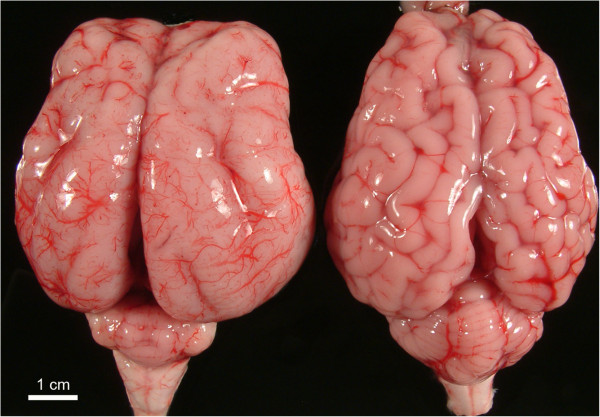
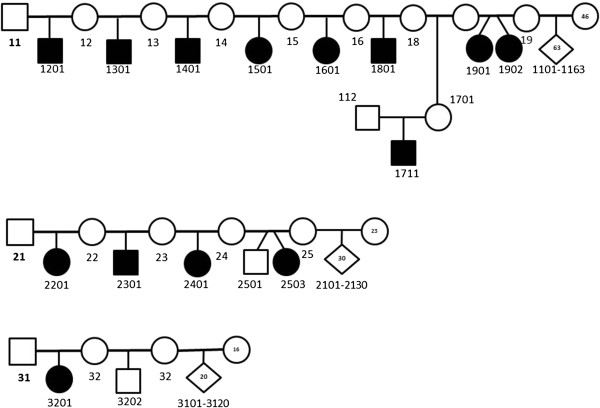
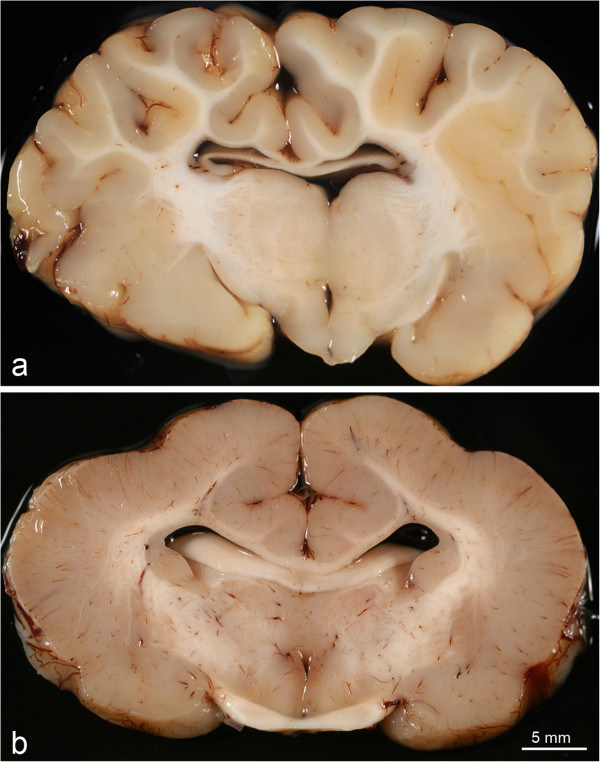
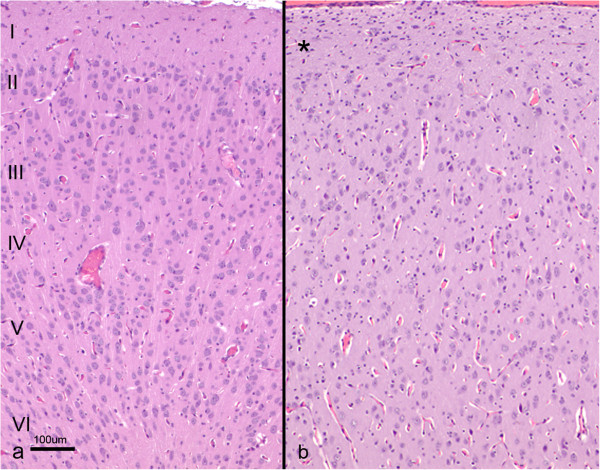
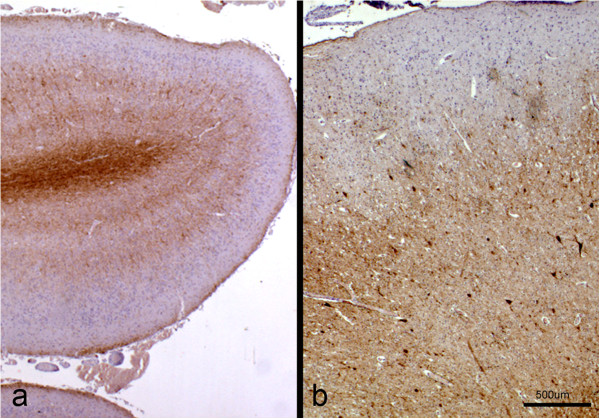
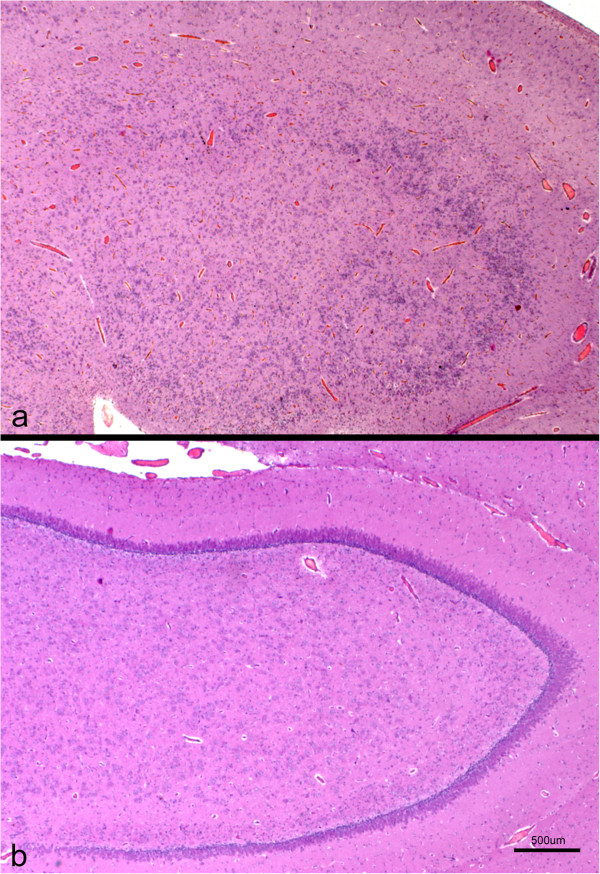
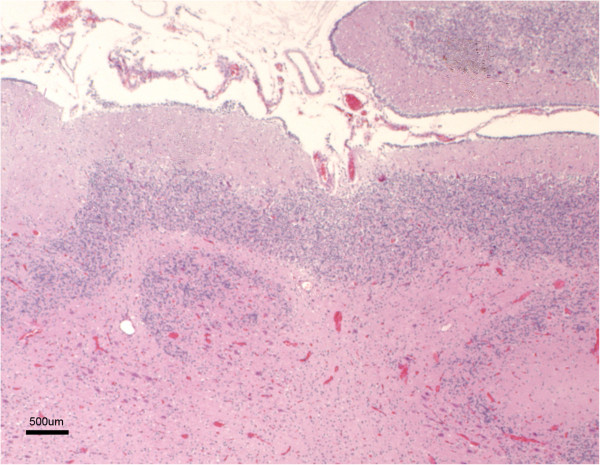
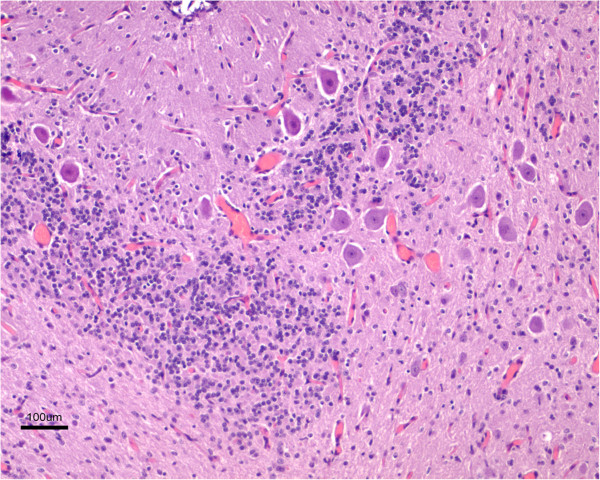
Here we report neuropathological findings in 42 newborn lambs from a pure Churra breed flock, with clinical signs of weakness, inability to walk, difficulty in sucking and muscular rigidity observed immediately after birth. All the lambs showed near-total agyria with only a rudimentary formation of few sulci and gyri, and a severe cerebellar hypoplasia. On coronal section, the cerebral grey matter was markedly thicker than that of age-matched unaffected lambs and the ventricular system was moderately dilated. Histologically, the normal layers of the cerebral cortex were disorganized and, using an immunohistochemical technique against neurofilaments, three layers were identified instead of the six present in normal brains. The hippocampus was also markedly disorganised and the number and size of lobules were reduced in the cerebellum. Heterotopic neurons were present in different areas of the white matter. The remainder of the brain structures appeared normal. The pathological features reported are consistent with the type LCH-b (lissencephaly with cerebellar hypoplasia group b) defined in human medicine. No involvement of pestivirus or bluetongue virus was detected by immunohistochemistry. An analysis of pedigree data was consistent with a monogenic autosomal recessive pattern inheritance.
The study describes the clinical and pathological findings of lissencephaly with cerebellar hypoplasia in Churra lambs for which an autosomal recessive inheritance was the most likely cause. Histopathological features observed in the cerebral cortex and hippocampus are consistent with a possible failure in neuronal migration during brain development. This report suggests that lissencephaly should be considered in the differential diagnosis of congenital neurological disease in newborn lambs showing weakness, inability to walk and difficulty sucking.
无脑回畸形是兽医和人类医学中一种罕见的发育性脑疾病,与神经元迁移缺陷有关,导致大脑半球的脑回模式明显减少或缺失。在许多人类病例中,该疾病具有遗传基础。在绵羊中,脑畸形主要是小脑发育不良和各种脑积水,通常是由于宫内病毒感染引起的。尽管已经描述了与绵羊品种相关的脑畸形,但在同行评议的出版物中尚未记录到与品种相关的无脑回畸形。
在这里,我们报告了来自纯种 Churra 羊群的 42 只新生羔羊的神经病理学发现,这些羔羊在出生后立即出现虚弱、无法行走、吮吸困难和肌肉僵硬等临床症状。所有羔羊均表现为近完全无脑回,仅存在少数脑回和脑沟的雏形,并且小脑严重发育不良。冠状切片显示,大脑灰质明显比同龄未受影响的羔羊厚,脑室系统中度扩张。组织学上,大脑皮质的正常层排列紊乱,使用针对神经丝的免疫组织化学技术,可识别出 6 层而不是正常大脑中的 3 层。海马体也明显紊乱,小脑的小叶数量和大小减少。在白质的不同区域存在异位神经元。其余的脑结构看起来正常。报道的病理特征与人类医学中定义的 LCH-b 型(伴小脑发育不良的无脑回畸形)一致。免疫组织化学未检测到瘟病毒或蓝舌病病毒的感染。系谱数据分析与常染色体隐性遗传模式一致。
本研究描述了 Churra 羔羊的伴小脑发育不良的无脑回畸形的临床和病理发现,最有可能的病因是常染色体隐性遗传。大脑皮质和海马体的组织病理学特征与大脑发育过程中神经元迁移失败一致。本报告表明,在表现为虚弱、无法行走和吮吸困难的新生羔羊中,应考虑将无脑回畸形作为先天性神经疾病的鉴别诊断。