Onemda VicHealth Koori Health Unit, Centre for Health and Society, Melbourne School of Population & Global Health, The University of Melbourne, Carlton, VIC 3010, Australia.
Int J Environ Res Public Health. 2013 Aug 9;10(8):3518-42. doi: 10.3390/ijerph10083518.
Effective interventions to improve population and individual health require environmental change as well as strategies that target individual behaviours and clinical factors. This is the basis of implementing an ecological approach to health programs and health promotion. For Aboriginal People and Torres Strait Islanders, colonisation has made the physical and social environment particularly detrimental for health.
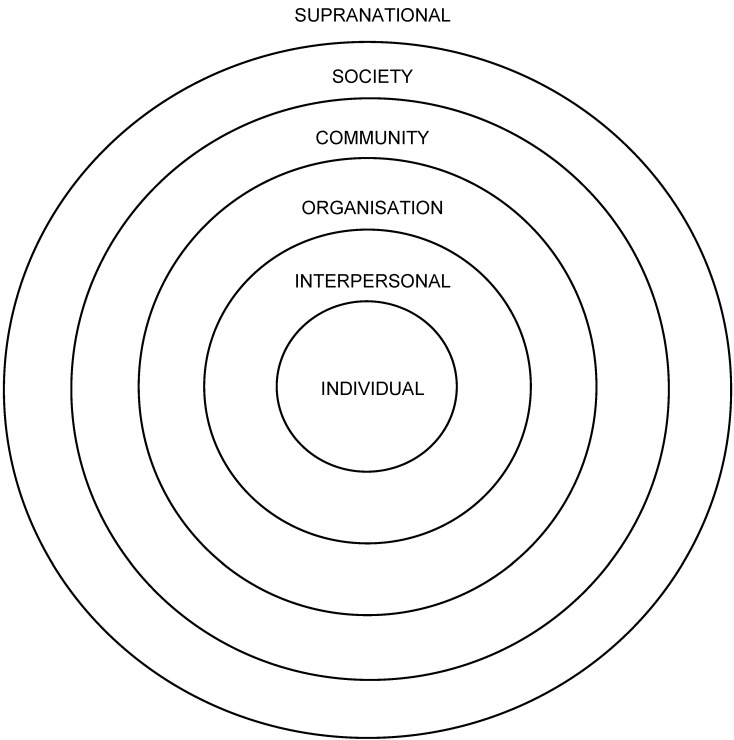
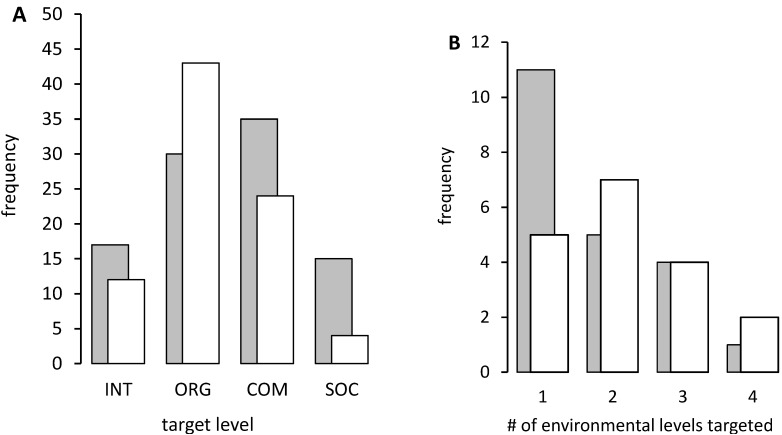
We conducted a literature review to identify Aboriginal health interventions that targeted environmental determinants of health, identifying 21 different health programs. Program activities that targeted environmental determinants of health included: Caring for Country; changes to food supply and/or policy; infrastructure for physical activity; housing construction and maintenance; anti-smoking policies; increased workforce capacity; continuous quality improvement of clinical systems; petrol substitution; and income management. Targets were categorised according to Miller's Living Systems Theory. Researchers using an Indigenous community based perspective more often identified interpersonal and community-level targets than were identified using a Western academic perspective.
Although there are relatively few papers describing interventions that target environmental determinants of health, many of these addressed such determinants at multiple levels, consistent to some degree with an ecological approach. Interpretation of program targets sometimes differed between academic and community-based perspectives, and was limited by the type of data reported in the journal articles, highlighting the need for local Indigenous knowledge for accurate program evaluation.
While an ecological approach to Indigenous health is increasingly evident in the health research literature, the design and evaluation of such programs requires a wide breadth of expertise, including local Indigenous knowledge.
要改善人群和个人健康,有效的干预措施不仅需要针对个人行为和临床因素的策略,还需要进行环境改变。这是将健康计划和促进健康的生态方法付诸实施的基础。对原住民和托雷斯海峡岛民来说,殖民化使他们的物质和社会环境特别不利于健康。
我们进行了文献回顾,以确定针对健康的环境决定因素的原住民健康干预措施,确定了 21 个不同的健康计划。针对健康的环境决定因素的计划活动包括:关爱国家;改变食物供应和/或政策;增加体育活动基础设施;住房建设和维护;反吸烟政策;增加劳动力能力;临床系统的持续质量改进;替代汽油;以及收入管理。根据米勒的生命系统理论对目标进行了分类。使用基于土著社区视角的研究人员比使用西方学术视角的研究人员更经常确定人际和社区层面的目标。
尽管描述针对健康的环境决定因素的干预措施的论文相对较少,但其中许多论文在多个层面上解决了这些决定因素,在某种程度上与生态方法一致。学术和基于社区的观点对项目目标的解释有时存在差异,并且受到期刊文章中报告的数据类型的限制,这突出表明需要当地土著知识来进行准确的项目评估。
虽然生态方法在原住民健康研究文献中越来越明显,但此类计划的设计和评估需要广泛的专业知识,包括当地土著知识。