Neuroscience Research Institute, Peking University, Beijing, PR China.
PLoS One. 2013 Aug 5;8(8):e70921. doi: 10.1371/journal.pone.0070921. Print 2013.
Chronicity of pain is one of the most interesting questions in chronic pain study. Clinical and experimental data suggest that supraspinal areas responsible for negative emotions such as depression and anxiety contribute to the chronicity of pain. The amygdala is suspected to be a potential structure for the pain chronicity due to its critical role in processing negative emotions and pain information.
This study aimed to investigate whether amygdala or its subregions, the basolateral amygdala (BLA) and the central medial amygdala (CeA), contributes to the pain chronicity in the spared nerve injury (SNI)-induced neuropathic pain model of rats.
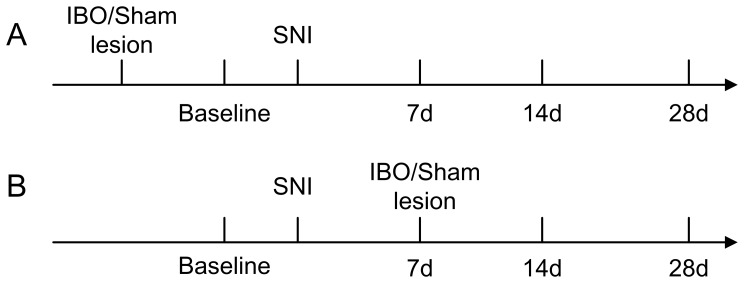
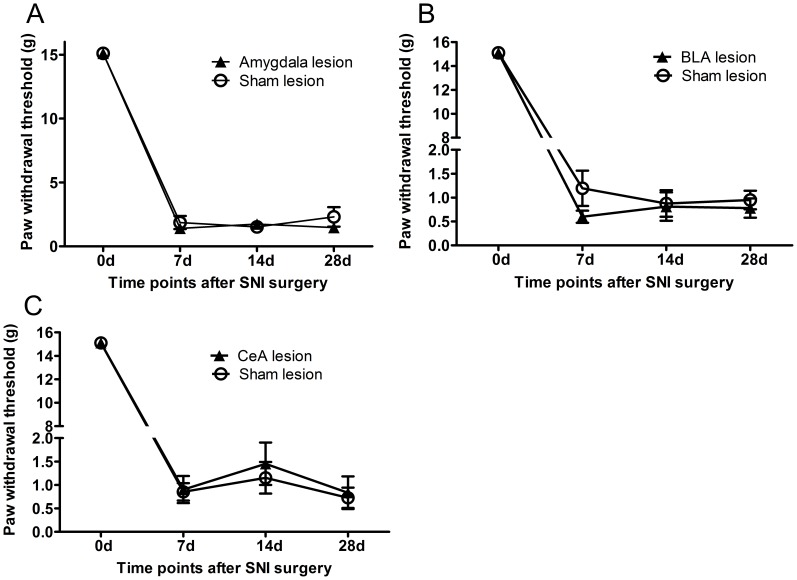
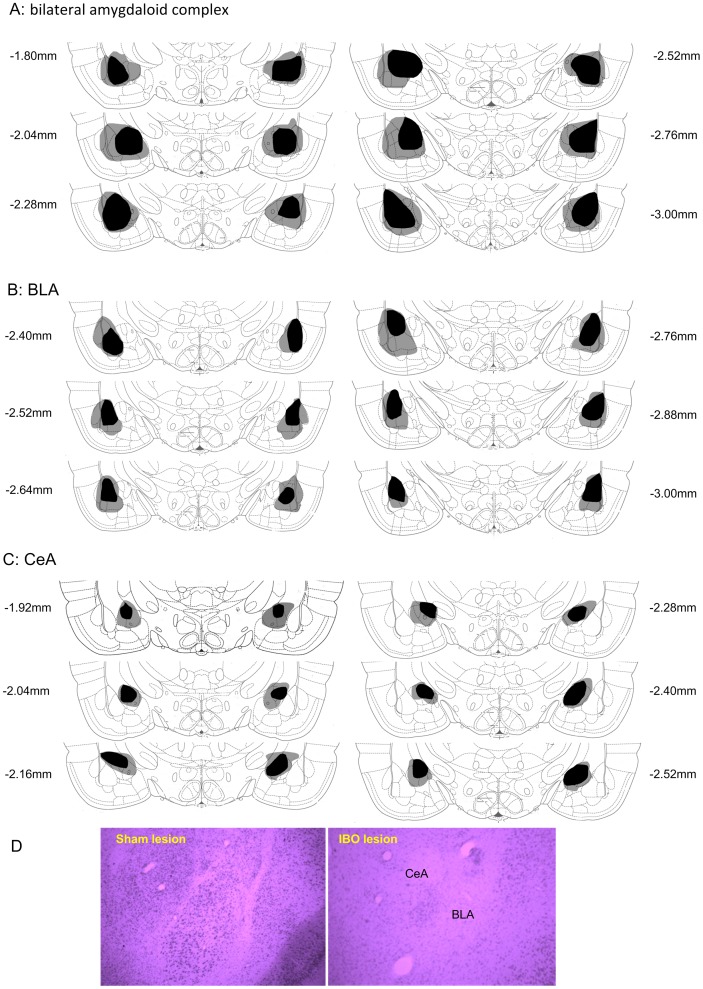
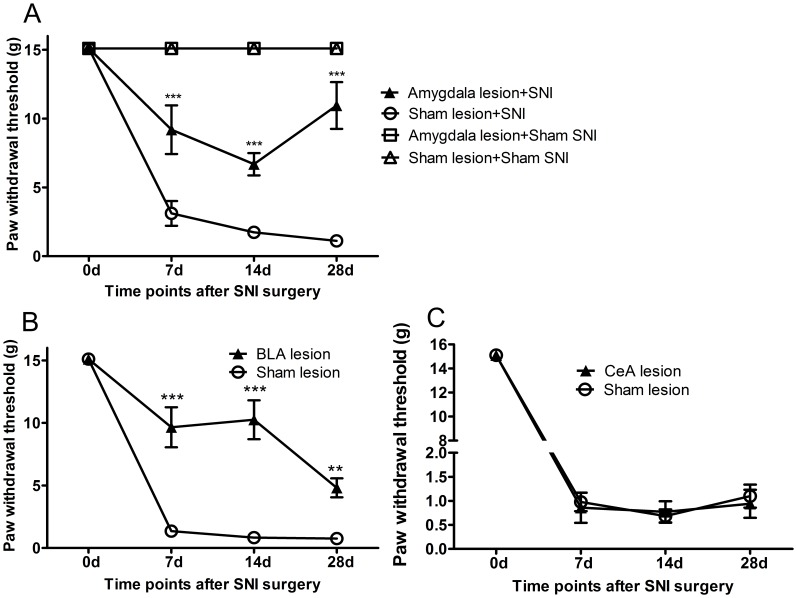
METHODOLOGY/PRINCIPAL FINDINGS: (1) Before the establishment of the SNI-induced neuropathic pain model of rats, lesion of the amygdaloid complex with stereotaxic injection of ibotenic acid (IBO) alleviated mechanical allodynia significantly at days 7 and 14, even no mechanical allodynia at day 28 after SNI; Lesion of the BLA, but not the CeA had similar effects; (2) however, 7 days after SNI when the neuropathic pain model was established, lesion of the amygdala complex or the BLA or the CeA, mechanical allodynia was not affected.
These results suggest that BLA activities in the early stage after nerve injury might be crucial to the development of pain chronicity, and amygdala-related negative emotions and pain-related memories could promote pain chronicity.
疼痛的慢性化是慢性疼痛研究中最有趣的问题之一。临床和实验数据表明,负责抑郁和焦虑等负面情绪的中枢神经系统区域有助于疼痛的慢性化。杏仁核被怀疑是疼痛慢性化的潜在结构,因为它在处理负面情绪和疼痛信息方面起着关键作用。
本研究旨在探讨杏仁核或其亚区(外侧杏仁核和中央杏仁核)是否参与大鼠 spared nerve injury(SNI)诱导的神经病理性疼痛模型中的疼痛慢性化。
方法/主要发现:(1)在建立大鼠 SNI 诱导的神经病理性疼痛模型之前,立体定向注射IBO 损毁杏仁核复合体可显著缓解机械性痛觉过敏,在 SNI 后 7 天和 14 天,甚至在 28 天也没有机械性痛觉过敏;损毁外侧杏仁核,但不是中央杏仁核,也有类似的效果;(2)然而,在 SNI 后 7 天建立神经病理性疼痛模型时,损毁杏仁核复合体、外侧杏仁核或中央杏仁核均不影响机械性痛觉过敏。
这些结果表明,神经损伤后早期杏仁核的活动可能对疼痛慢性化的发展至关重要,与杏仁核相关的负面情绪和疼痛相关的记忆可能促进疼痛慢性化。