Key Laboratory of Acupuncture and Neurology of Zhejiang Province, Department of Neurobiology and Acupuncture Research, The Third Clinical Medical College, Zhejiang Chinese Medical University, No. 548, Binwen Road, Binjiang DistrictZhejiang Province, Hangzhou City, China.
Department of Anatomy, Cell Biology and Physiology, Stark Neurosciences Research Institute, Indiana University School of Medicine, Indianapolis, IN, USA.
Mol Neurobiol. 2022 Sep;59(9):5299-5311. doi: 10.1007/s12035-022-02911-6. Epub 2022 Jun 13.
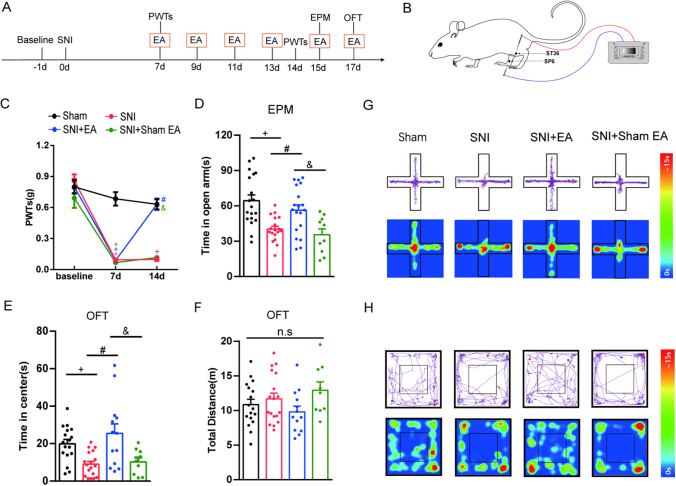
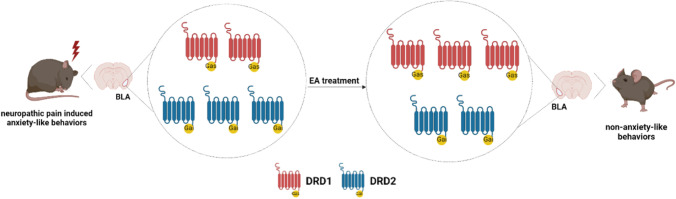
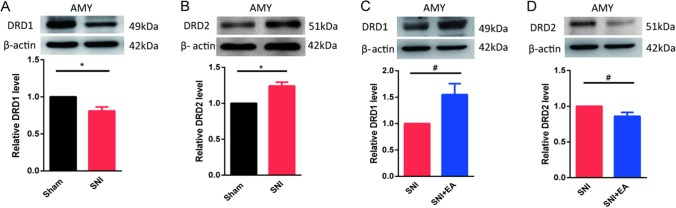
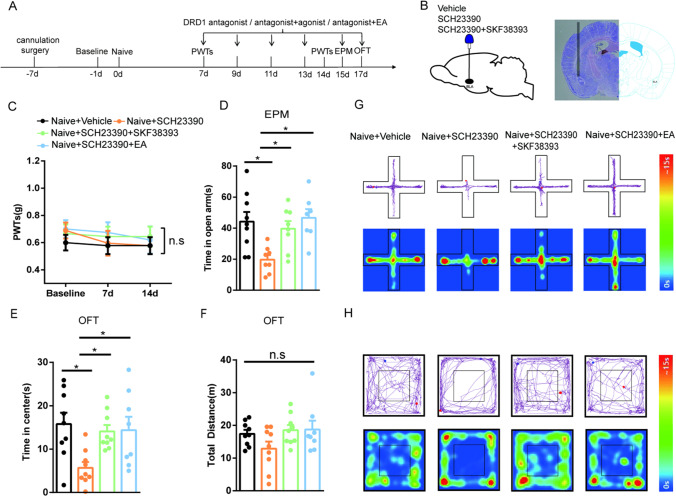
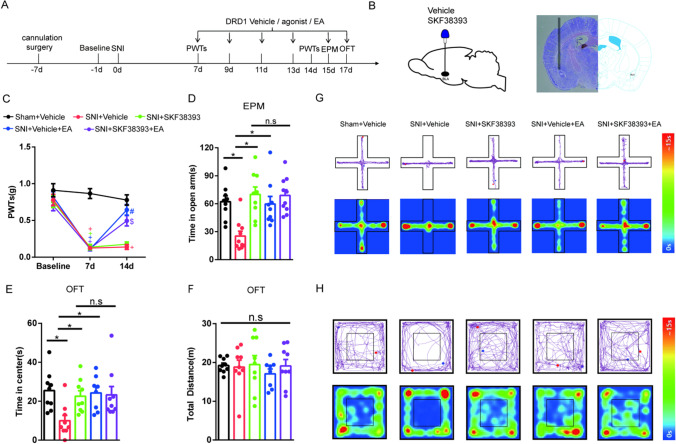
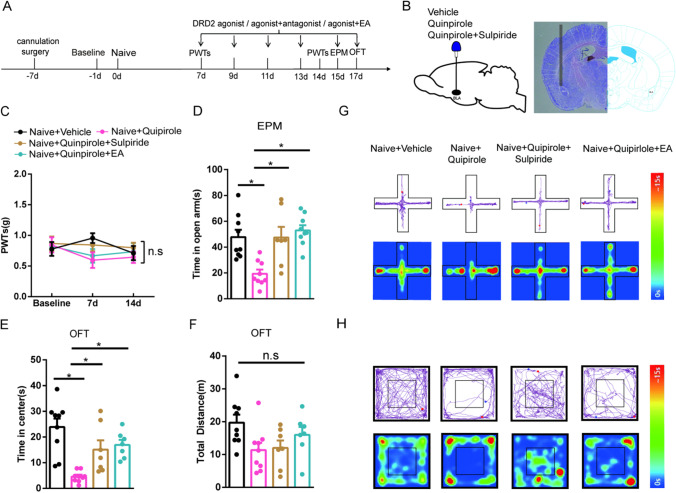
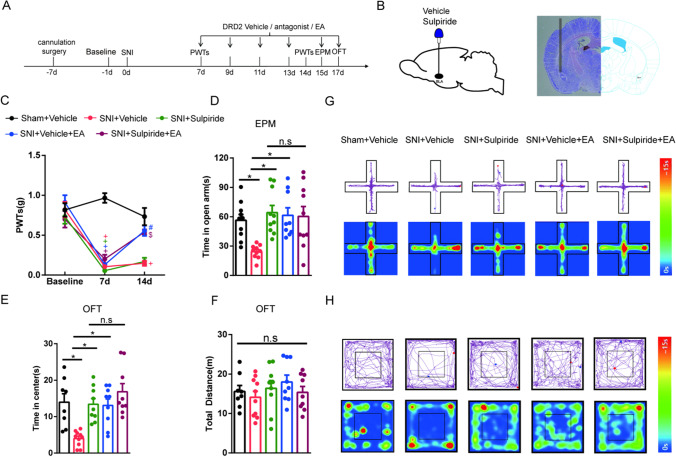
Chronic pain, such as neuropathic pain, causes anxiety and other negative emotions, which aggravates the pain sensation and increases the risk of chronic pain over time. Dopamine receptor D1 (DRD1) and dopamine receptor D2 (DRD2) in the basolateral amygdala (BLA) have been implicated in mediating anxiety-related behaviors, but their potential roles in the BLA in neuropathic pain-induced anxiety have not been examined. Electroacupuncture (EA) is commonly used to treat chronic pain and emotional disorders, but it is still unclear whether EA plays a role in analgesia and anxiety relief through DRD1 and DRD2 in the BLA. Here, we used western blotting to examine the expression of DRD1 and DRD2 and pharmacological regulation combined with behavioral testing to detect anxiety-like behaviors. We observed that injection of the DRD1 antagonist SCH23390 or the DRD2 agonist quinpirole into the BLA contributed to anxiety-like behaviors in naive mice. EA also activated DRD1 or inhibited DRD2 in the BLA to alleviate anxiety-like behaviors. To further demonstrate the role of DRD1 and DRD2 in the BLA in spared nerve injury (SNI) model-induced anxiety-like behaviors, we injected the DRD1 agonist SKF38393 or the DRD2 antagonist sulpiride into the BLA. We found that both activation of DRD1 and inhibition of DRD2 could alleviate SNI-induced anxiety-like behaviors, and EA had a similar effect of alleviating anxiety. Additionally, neither DRD1 nor DRD2 in the BLA affected SNI-induced mechanical allodynia, but EA did. Overall, our work provides new insights into the mechanisms of neuropathic pain-induced anxiety and a possible explanation for the effect of EA treatment on anxiety caused by chronic pain.
慢性疼痛,如神经病理性疼痛,会引起焦虑和其他负面情绪,从而加剧疼痛感觉,并随着时间的推移增加慢性疼痛的风险。外侧杏仁核(BLA)中的多巴胺受体 D1(DRD1)和多巴胺受体 D2(DRD2)已被牵连介导与焦虑相关的行为,但它们在神经病理性疼痛引起的焦虑中的潜在作用尚未被研究。电针(EA)常用于治疗慢性疼痛和情绪障碍,但尚不清楚 EA 是否通过 BLA 中的 DRD1 和 DRD2 发挥镇痛和缓解焦虑的作用。在这里,我们使用 Western blot 检测 DRD1 和 DRD2 的表达,并结合药理调节和行为测试检测焦虑样行为。我们观察到,将 DRD1 拮抗剂 SCH23390 或 DRD2 激动剂喹吡罗注入 BLA 会导致幼稚小鼠出现焦虑样行为。EA 还激活 BLA 中的 DRD1 或抑制 DRD2 以减轻焦虑样行为。为了进一步证明 BLA 中的 DRD1 和 DRD2 在 spared nerve injury(SNI)模型引起的焦虑样行为中的作用,我们将 DRD1 激动剂 SKF38393 或 DRD2 拮抗剂 sulpiride 注入 BLA。我们发现,DRD1 的激活和 DRD2 的抑制都可以减轻 SNI 引起的焦虑样行为,而 EA 具有类似的缓解焦虑的作用。此外,BLA 中的 DRD1 或 DRD2 均不影响 SNI 引起的机械性痛觉过敏,但 EA 会影响。总的来说,我们的工作为神经病理性疼痛引起的焦虑的机制提供了新的见解,并为 EA 治疗慢性疼痛引起的焦虑的效果提供了可能的解释。