Heart Foundation Research Centre, Griffith Health Institute, Griffith University, Gold Coast, Australia.
PLoS One. 2013 Aug 5;8(8):e71219. doi: 10.1371/journal.pone.0071219. Print 2013.
The effect of exercise-induced lactate production on red blood cell deformability and other blood rheological changes is controversial, given heavy-exercise induces biochemical processes (e.g., oxidative stress) known to perturb haemorheology. The aim of the present study was to examine the haemorheological response to a short-duration cycling protocol designed to increase blood lactate concentration, but of duration insufficient to induce significant oxidative stress.
Male cyclists and triathletes (n = 6; 27±7 yr; body mass index: 23.7±3.0 kg/m²; peak oxygen uptake 4.02±0.51 L/min) performed unloaded (0 W), moderate-intensity, and heavy-intensity cycling. Blood was sampled at rest and during the final minute of each cycling bout. Blood chemistry, blood viscosity, red blood cell aggregation and red blood cell deformability were measured.
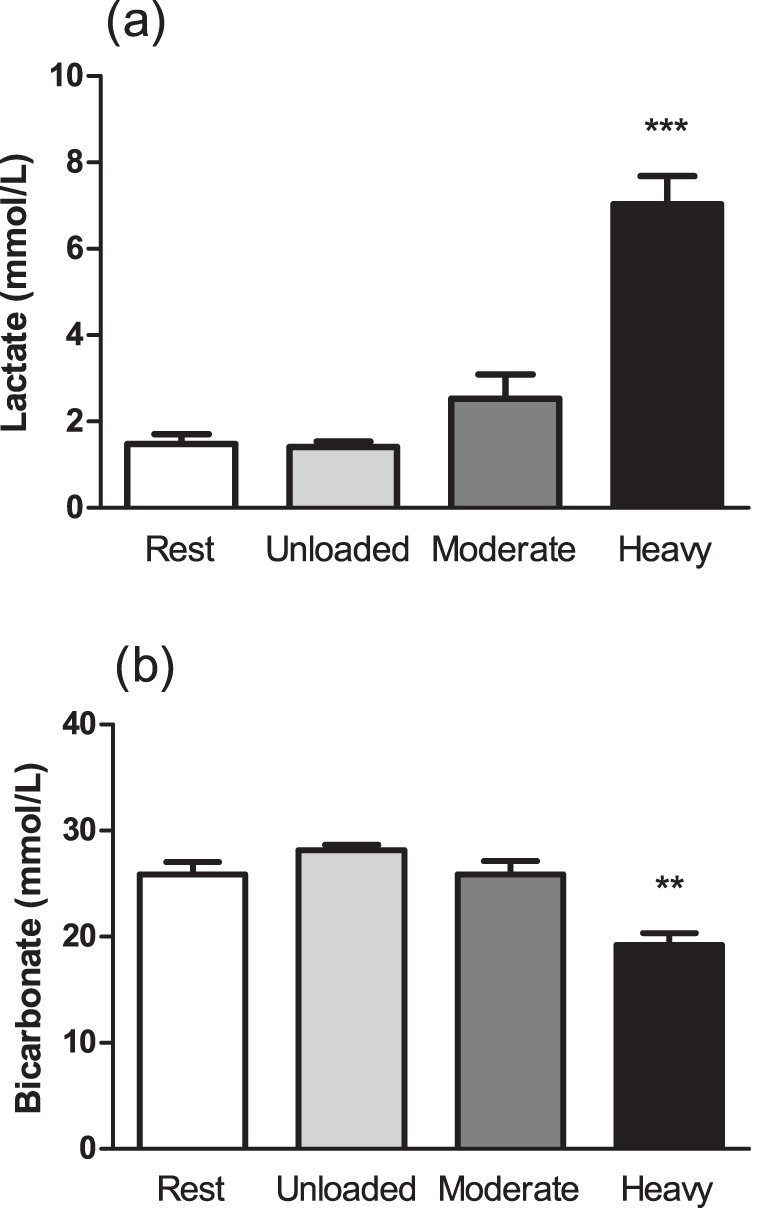
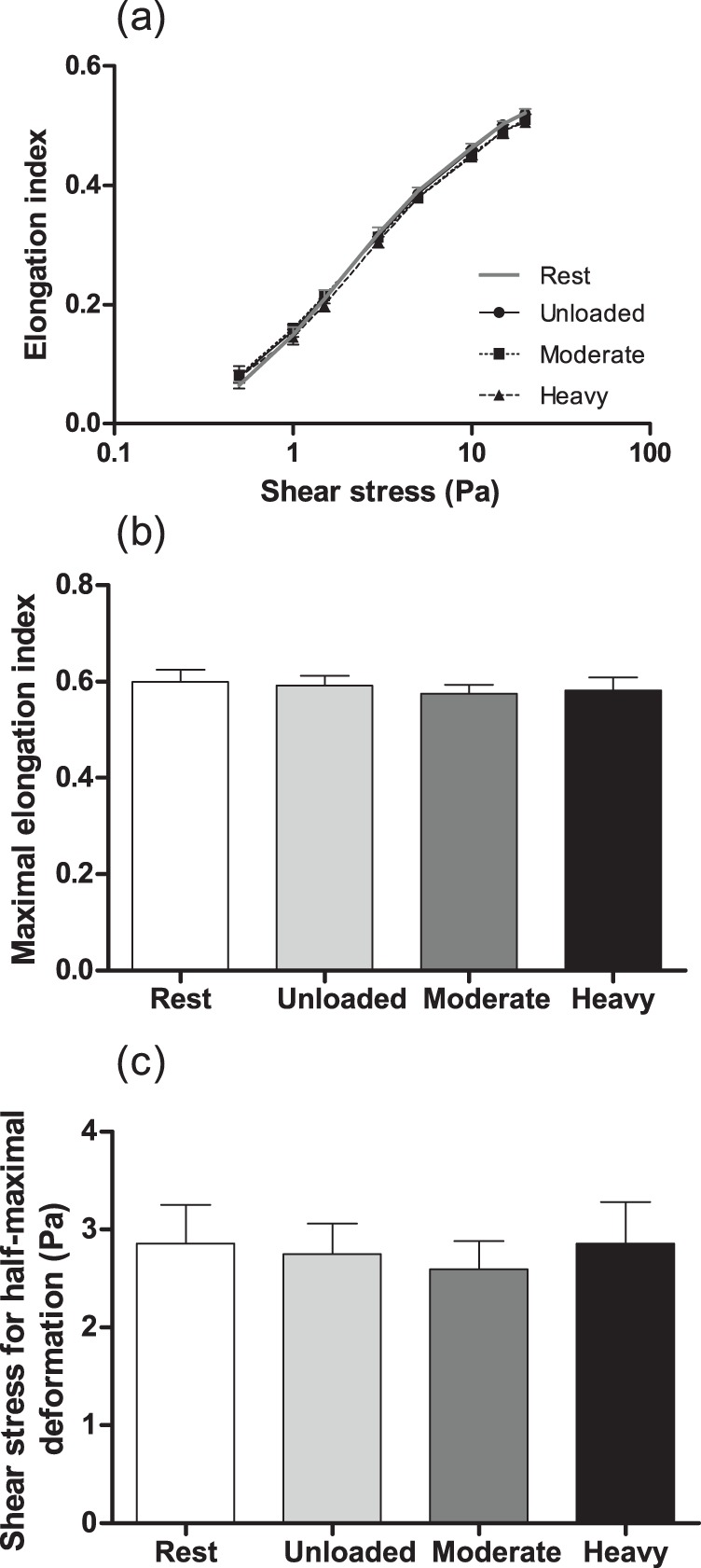
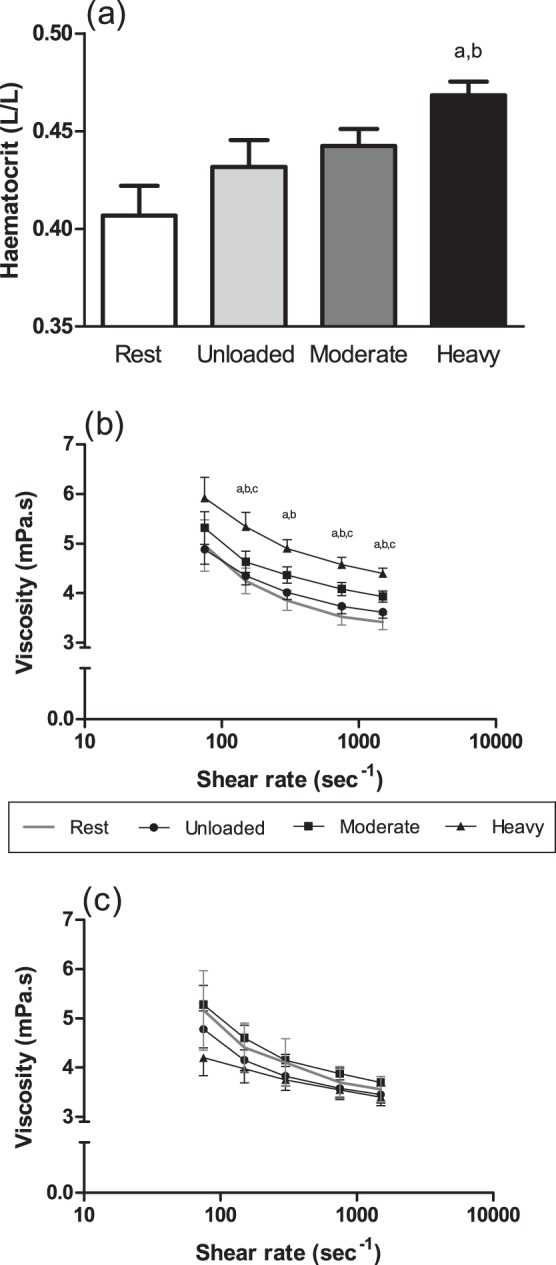
Blood lactate concentration increased significantly during heavy-intensity cycling, when compared with all other conditions. Methaemoglobin fraction did not change during any exercise bout when compared with rest. Blood viscosity at native haematocrit increased during heavy-intensity cycling at higher-shear rates when compared with rest, unloaded and moderate-intensity cycling. Heavy-intensity exercise increased the amplitude of red blood cell aggregation in native haematocrit samples when compared with all other conditions. Red blood cell deformability was not changed by exercise.
Acute exercise perturbs haemorheology in an intensity dose-response fashion; however, many of the haemorheological effects appear to be secondary to haemoconcentration, rather than increased lactate concentration.
运动引起的乳酸产生对红细胞变形能力和其他血液流变学变化的影响存在争议,因为剧烈运动引发的生化过程(如氧化应激)已知会扰乱血液流变学。本研究的目的是检查短时间骑行方案引起的血液流变学反应,该方案旨在增加血液乳酸浓度,但持续时间不足以引起明显的氧化应激。
男性自行车运动员和三项全能运动员(n=6;27±7 岁;体重指数:23.7±3.0 kg/m²;峰值摄氧量 4.02±0.51 L/min)进行无负荷(0 W)、中等强度和高强度骑行。在休息时和每次骑行结束的最后一分钟采集血液样本。测量血液化学、血液粘度、红细胞聚集和红细胞变形能力。
与其他所有条件相比,高强度骑行时血液乳酸浓度显著升高。与休息时相比,在任何运动过程中,高铁血红蛋白分数都没有变化。与休息、无负荷和中等强度骑行相比,在较高剪切率下,原生红细胞比容时的血液粘度在高强度骑行时增加。与其他所有条件相比,高强度运动增加了原生红细胞比容样本中红细胞聚集的幅度。红细胞变形能力不受运动影响。
急性运动以强度剂量反应的方式扰乱血液流变学;然而,许多血液流变学效应似乎是由于血液浓缩而不是乳酸浓度增加引起的。