Department of General Surgery, Shanghai First People's Hospital, Shanghai Jiao Tong University, Organ Transplantation Center of Shanghai, Shanghai, China.
PLoS One. 2013 Aug 6;8(8):e71251. doi: 10.1371/journal.pone.0071251. Print 2013.
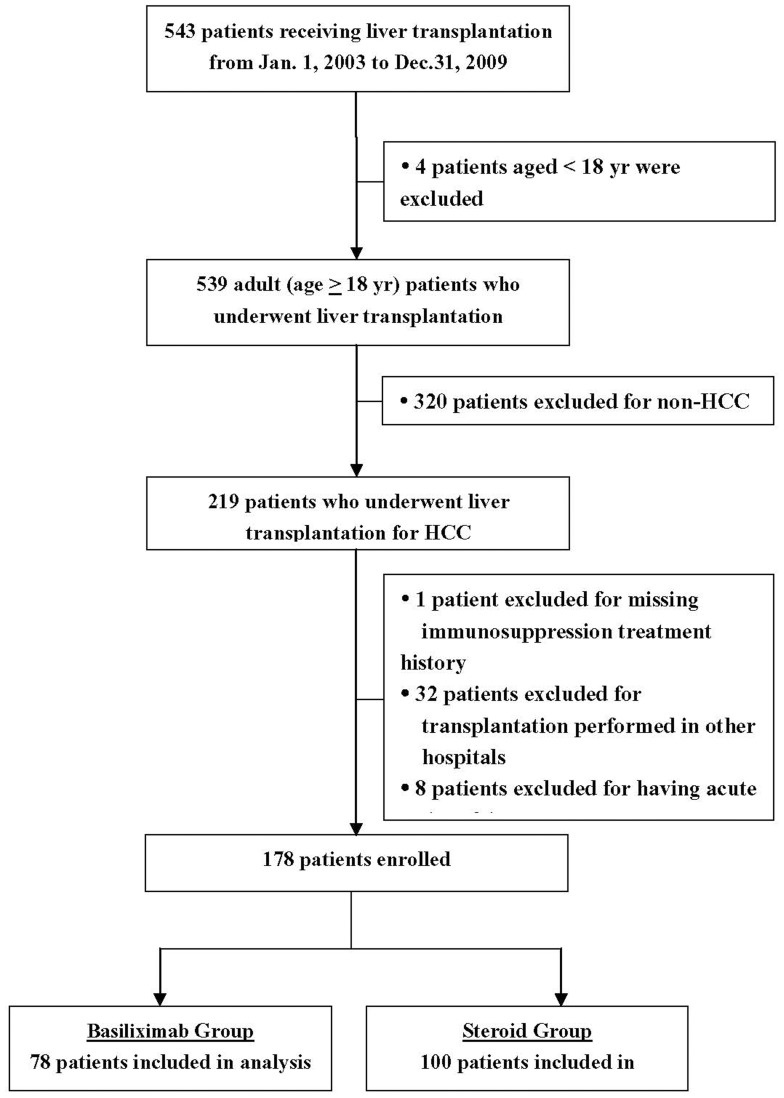
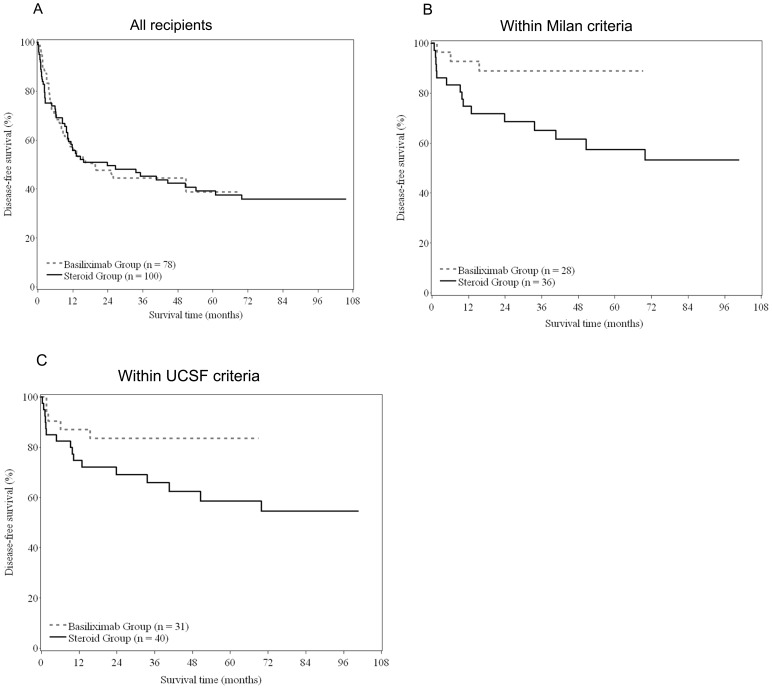
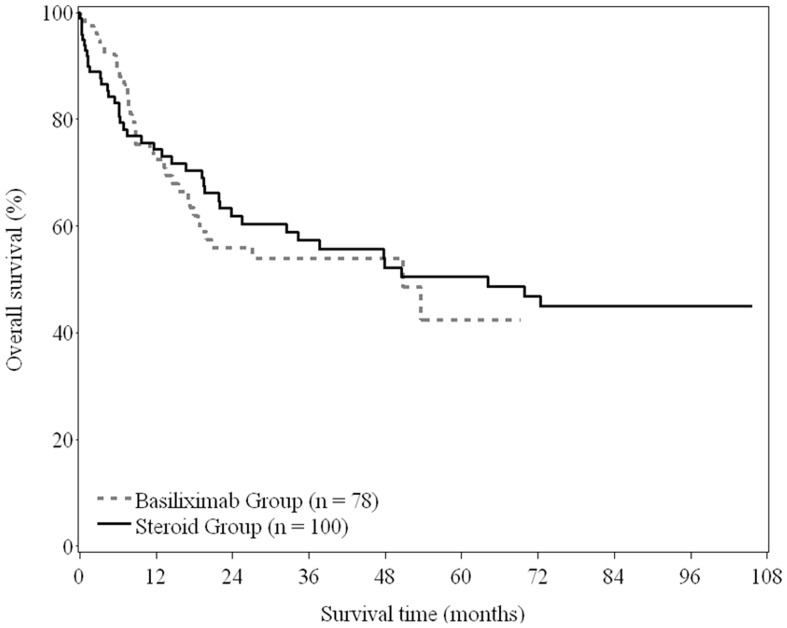
Immunosuppression therapy following liver transplantation often includes steroids. However, extended corticosteroid therapy is associated with numerous complications. This study evaluated the efficacy and safety of using basiliximab in place of a corticosteroid for immunosuppression following liver transplantation for hepatocellular carcinoma (HCC) in Chinese patients. The records of 178 patients with HCC who underwent orthotopic liver transplantation from January 2003 to December 2009 were retrospectively reviewed. All patients received immunosuppression therapy that contained either basiliximab (n = 78) or steroids (n = 100) in addition to tacrolimus and mycophenolate mofetil. Assessments included complications related to liver transplantation, occurrence of steroid side effects, recurrence of HCC, and patient and graft survival. A smaller proportion of patients receiving basiliximab compared with steroids experienced de novo diabetes (38.7% vs. 91.0%, respectively) or long-term de novo diabetes mellitus (7.7% vs. 38.0%, respectively) (both, P<0.0001). The median overall and disease free survival was similar between basiliximab (50.8 months and 19.6 months, respectively) and steroid treated patients (64.2 months and 23.8 months, respectively). The 5-year overall survival and disease free survival rates was also similar between the basiliximab (42.5% and 38.9%, respectively) and steroid (50.5% and 39.2%) groups (all, P>0.730). However, in patients who met the Milan criteria basiliximab was associated with greater 5-year overall survival rate as compared with steroid therapy (88.9% vs. 57.4%, respectively, P = 0.022). These findings provide further evidence of the negative impact of steroids as a part of immunosuppression therapy following liver transplantation for HCC.
肝移植后常采用免疫抑制疗法,其中包括使用类固醇。然而,长期应用皮质类固醇与多种并发症相关。本研究旨在评估在接受肝移植治疗肝细胞癌(HCC)的中国患者中,使用巴利昔单抗替代皮质类固醇进行免疫抑制治疗的疗效和安全性。回顾性分析 2003 年 1 月至 2009 年 12 月期间接受原位肝移植的 178 例 HCC 患者的病历资料。所有患者均接受包含巴利昔单抗(n=78)或皮质类固醇(n=100)的免疫抑制治疗,同时使用他克莫司和吗替麦考酚酯。评估内容包括与肝移植相关的并发症、类固醇副作用的发生、HCC 复发以及患者和移植物的存活率。与接受皮质类固醇治疗的患者相比,接受巴利昔单抗治疗的患者新发糖尿病(38.7% vs. 91.0%)和长期新发糖尿病(7.7% vs. 38.0%)的比例更小(均 P<0.0001)。巴利昔单抗组和皮质类固醇组的中位总生存时间和无病生存时间分别为 50.8 个月和 19.6 个月(P=0.489)和 64.2 个月和 23.8 个月(P=0.012)。巴利昔单抗组和皮质类固醇组的 5 年总生存率和无病生存率也相似(分别为 42.5%和 38.9%,P>0.730)和(分别为 50.5%和 39.2%,P>0.730)。然而,在符合米兰标准的患者中,与皮质类固醇治疗相比,巴利昔单抗治疗的 5 年总生存率更高(88.9% vs. 57.4%,P=0.022)。这些结果进一步证实了皮质类固醇作为 HCC 肝移植后免疫抑制治疗的一部分所带来的负面影响。