Treiber Christoph Daniel, Salzer Marion, Breuss Martin, Ushakova Lyubov, Lauwers Mattias, Edelman Nathaniel, Keays David Anthony
Centre for Neural Circuits and Behaviour; University of Oxford; Oxford, UK.
Commun Integr Biol. 2013 Jul 1;6(4):e24859. doi: 10.4161/cib.24859. Epub 2013 May 10.
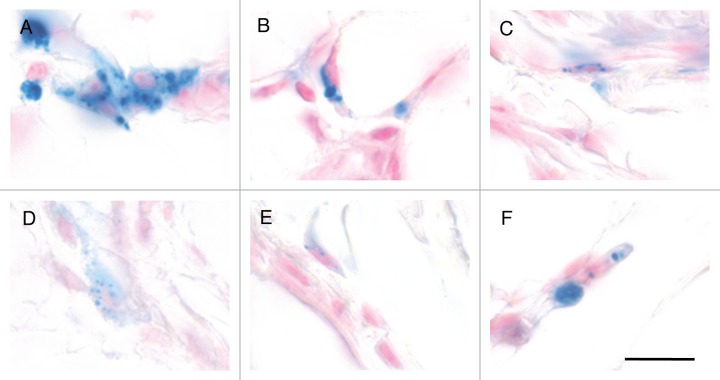
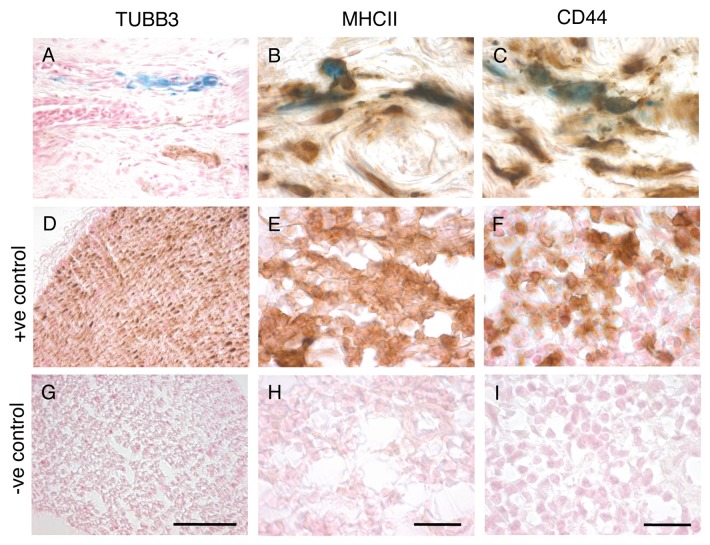
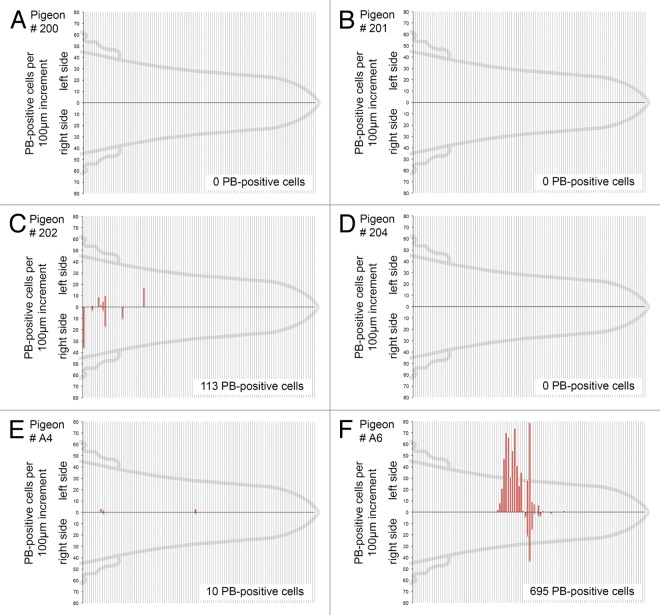
The cells that are responsible for detecting magnetic fields in animals remain undiscovered. Previous studies have proposed that pigeons employ a magnetic sense system that consists of six bilateral patches of magnetite containing dendrites located in the rostral subepidermis of the upper beak. We have challenged this hypothesis arguing that clusters of iron-rich cells in this region are macrophages, not magnetosensitive neurons. Here we present additional data in support of this conclusion. We have undertaken high resolution anatomical mapping of iron-rich cells in the rostral upper beak of pigeons, excluding the possibility that a conserved six-loci magnetic sense system exists. In addition we have extended our immunohistochemical studies to a second cohort of pigeons, confirming that iron rich cells in the upper beak are positive for MHCII and CD44, which are expressed by macrophages. We argue that it is important to critically assess conclusions that have been made in the past, while keeping an open mind as the search for the magnetoreceptor continues.
负责检测动物磁场的细胞尚未被发现。先前的研究提出,鸽子采用一种磁感系统,该系统由位于上喙喙端皮下的六个双边磁铁矿斑块组成,这些斑块含有树突。我们对这一假设提出了质疑,认为该区域富含铁的细胞簇是巨噬细胞,而非磁敏神经元。在此,我们提供更多数据以支持这一结论。我们对鸽子喙端上喙中富含铁的细胞进行了高分辨率解剖绘图,排除了存在保守的六位点磁感系统的可能性。此外,我们将免疫组织化学研究扩展至另一组鸽子,证实上喙中富含铁的细胞对巨噬细胞表达的MHCII和CD44呈阳性。我们认为,在继续寻找磁感受器的同时,批判性地评估过去得出的结论并保持开放的心态很重要。