Evidence-Based Medicine/Drug & Therapeutics Committee Resource, London Health Sciences Centre, Pharmacy Department, University Hospital , London, ON , Canada.
PeerJ. 2013 Aug 6;1:e114. doi: 10.7717/peerj.114. Print 2013.
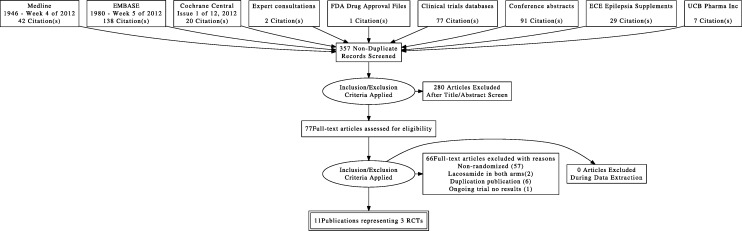
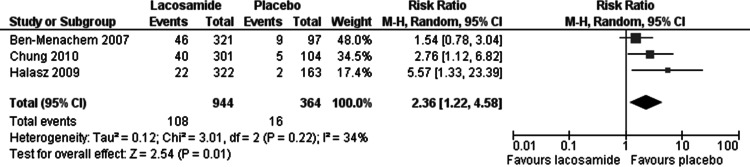
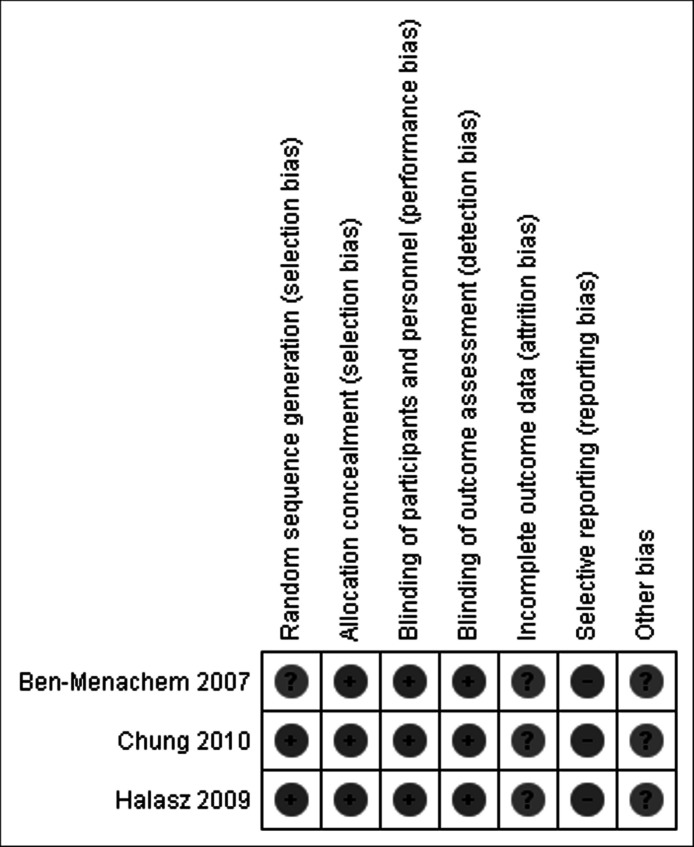
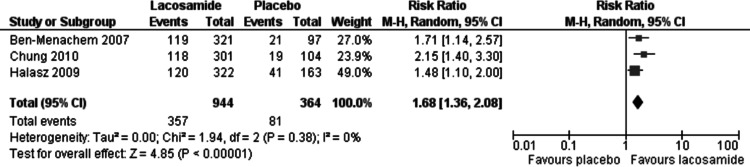
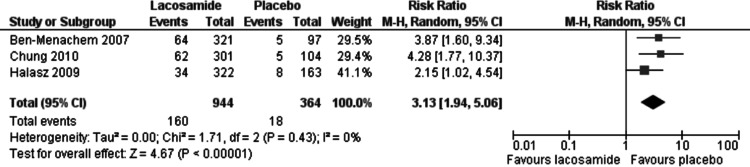
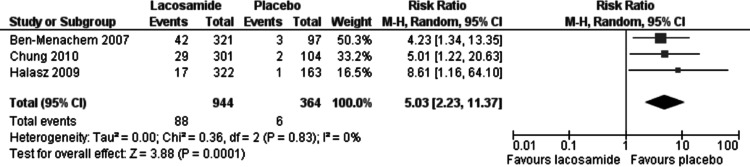
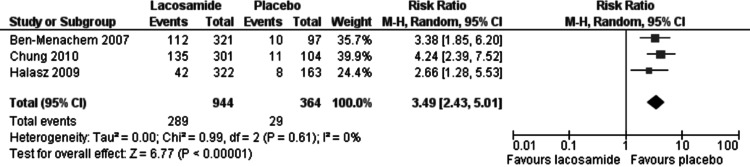
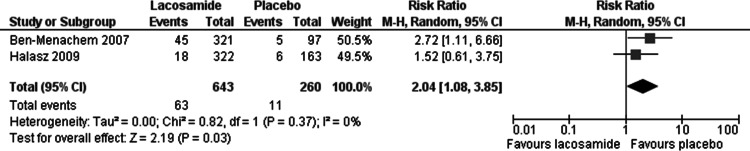
Background. The relative efficacy and safety of lacosamide as adjunctive therapy compared to other antiepileptic drugs has not been well established. Objective. To determine if lacosamide provides improved efficacy and safety, reduced length of hospital stay and improved quality of life compared with other anti-epileptic therapies for adults with partial-onset seizures. Data Sources. A systematic review of the medical literature using Medline (1946-Week 4, 2012), EMBASE (1980-Week 3, 2012), Cochrane Central Register of Controlled Trials (Issue 1 of 12, January 2012). Additional studies were identified (through to February 7, 2012) by searching bibliographies, the FDA drug approval files, clinical trial registries and major national and international neurology meeting abstracts. No restrictions on publication status or language were applied. Study Selection. Randomized controlled trials of lacosamide in adults with partial-onset seizures were included. Data Extraction. Study selection, extraction and risk of bias assessment were performed independently by two authors. Authors of studies were contacted for missing data. Data Synthesis. All pooled analyses used the random effects model. Results. Three trials (1311 patients) met inclusion criteria. Lacosamide increased the 50% responder rate compared to placebo (RR 1.68 [95% CI 1.36 to 2.08]; I(2) = 0%). Discontinuation due to adverse events was statistically significantly higher in the lacosamide arm (RR3.13 [95% CI 1.94 to 5.06]; I(2) = 0%). Individual adverse events (ataxia, dizziness, fatigue, and nausea) were also significantly higher in the lacosamide group. Limitations. All dosage arms from the included studies were pooled to make a single pair-wise comparison to placebo. Selective reporting of outcomes was found in all of the included RCTs. Conclusions. Lacosamide as adjunctive therapy in patients with partial-onset seizures increases the 50% responder rate but with significantly more adverse events compared to the placebo.
与其他抗癫痫药物相比,拉科酰胺作为辅助治疗的相对疗效和安全性尚未得到充分证实。目的:确定拉科酰胺与其他抗癫痫治疗相比,是否能提高成人部分发作性癫痫的疗效和安全性,缩短住院时间,提高生活质量。数据来源:使用 Medline(1946 年第 4 周-2012 年)、EMBASE(1980 年第 3 周-2012 年)、Cochrane 对照试验中心注册库(2012 年 1 月第 1 期)对医学文献进行系统评价。通过检索参考文献、美国食品药品监督管理局药物批准档案、临床试验登记处和主要的国家和国际神经病学会议摘要,在 2012 年 2 月 7 日前确定了其他研究(至 2012 年 2 月 7 日)。未对出版物状态或语言进行限制。研究选择:纳入了拉科酰胺治疗成人部分发作性癫痫的随机对照试验。数据提取:两位作者独立进行了研究选择、提取和偏倚风险评估。对研究作者进行了缺失数据的联系。数据综合:所有汇总分析均采用随机效应模型。结果:三项试验(1311 例患者)符合纳入标准。与安慰剂相比,拉科酰胺增加了 50%应答率(RR1.68[95%CI1.36 至 2.08];I²=0%)。因不良事件而停药的风险在拉科酰胺组显著更高(RR3.13[95%CI1.94 至 5.06];I²=0%)。拉科酰胺组的个别不良事件(共济失调、头晕、疲劳和恶心)也显著更高。局限性:纳入研究的所有剂量组均被汇总为与安慰剂的单一配对比较。所有纳入的 RCT 均存在选择性报告结局。结论:拉科酰胺作为部分发作性癫痫的辅助治疗可提高 50%的应答率,但与安慰剂相比,不良反应发生率显著增加。