Institute of Pharmacology, University of Bern, Friedbühlstrasse 49, CH-3010 Bern, Switzerland.
Nat Commun. 2013;4:2130. doi: 10.1038/ncomms3130.
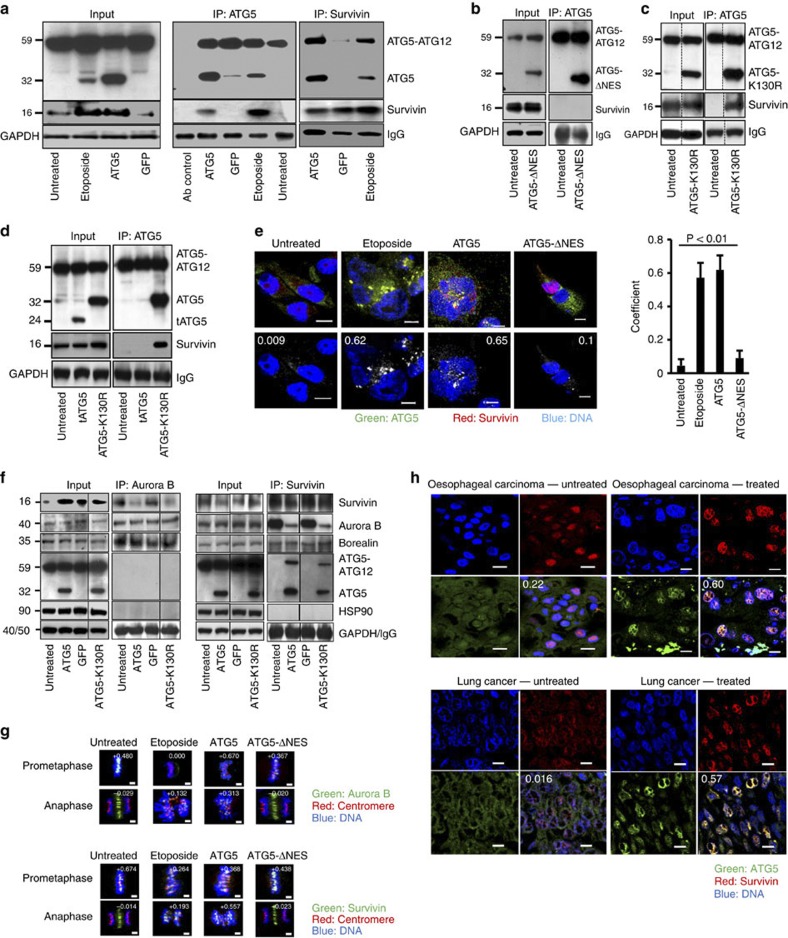
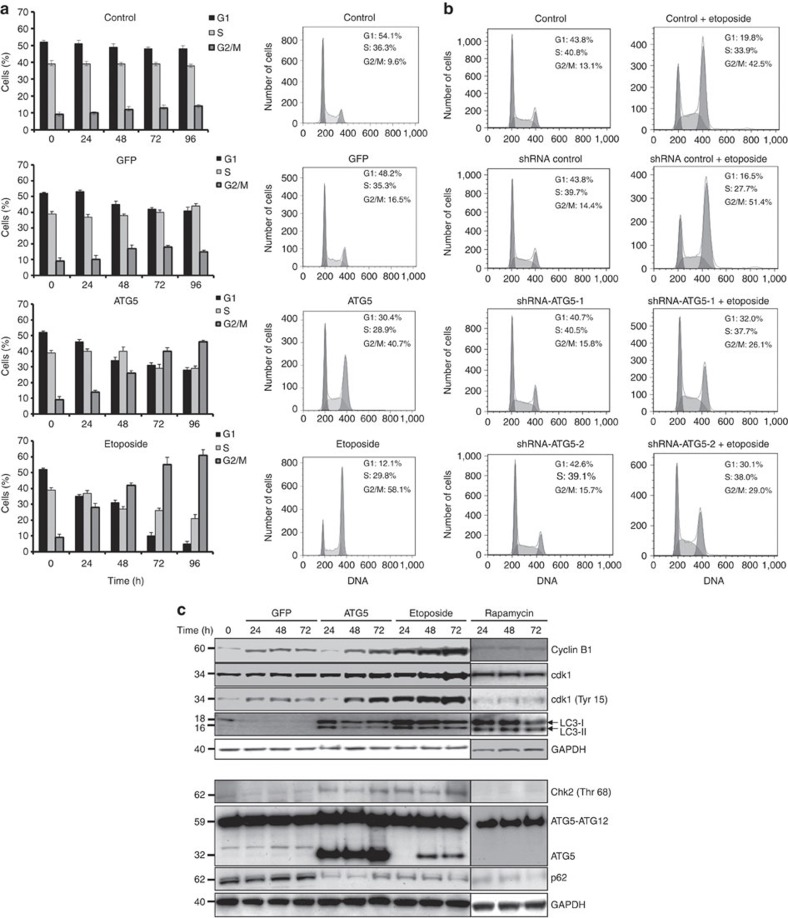
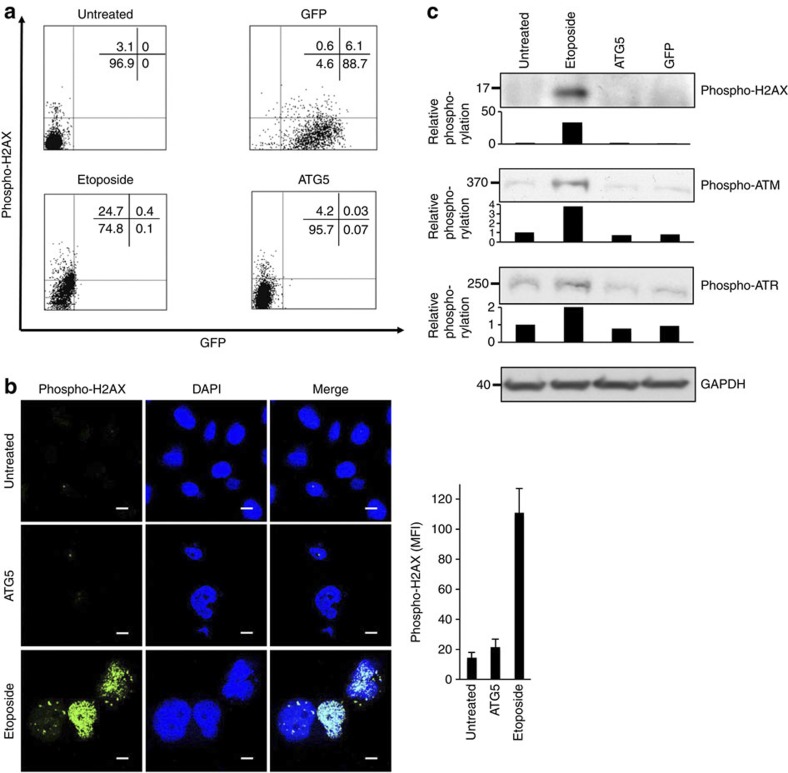
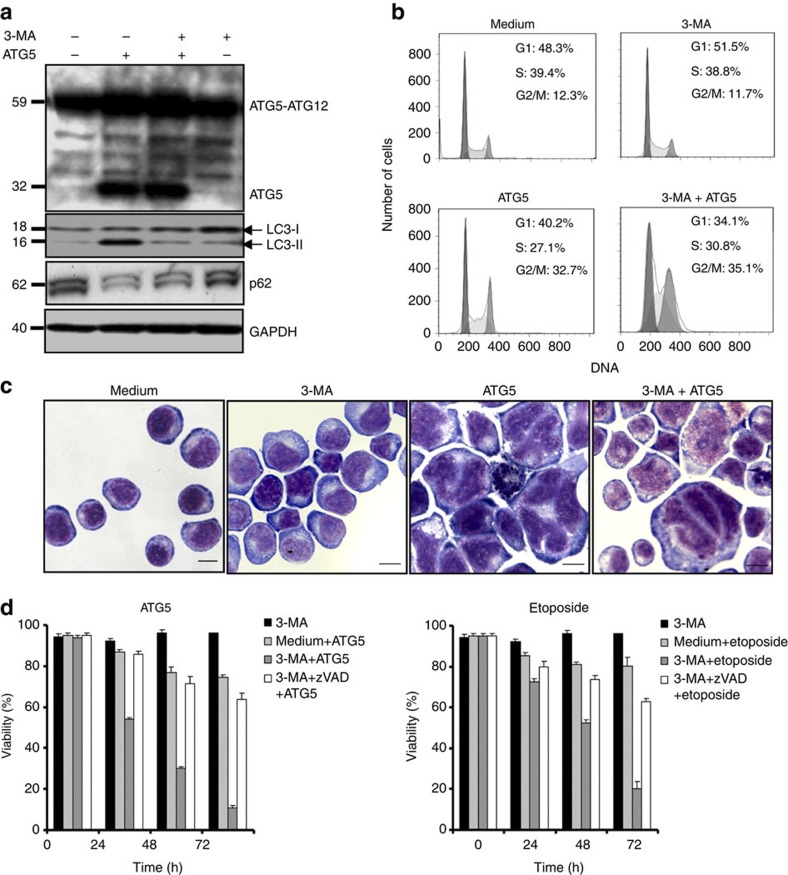
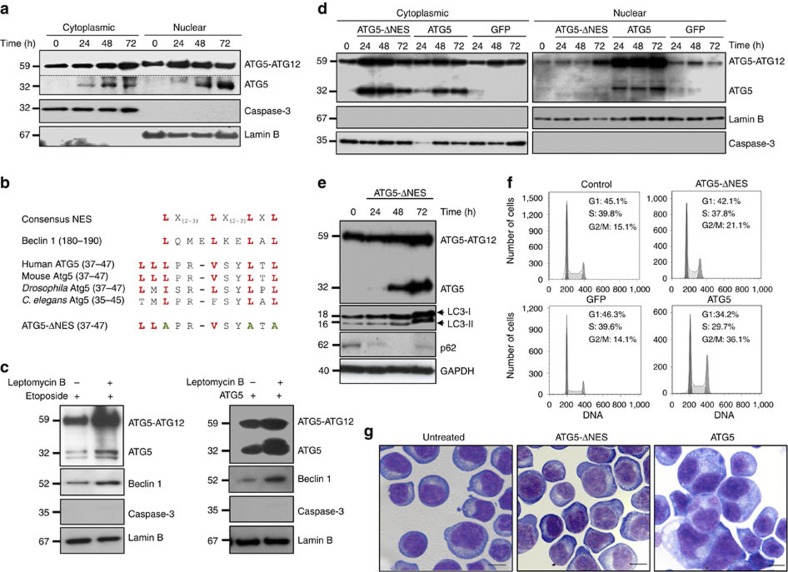
Anticancer drug therapy activates both molecular cell death and autophagy pathways. Here we show that even sublethal concentrations of DNA-damaging drugs, such as etoposide and cisplatin, induce the expression of autophagy-related protein 5 (ATG5), which is both necessary and sufficient for the subsequent induction of mitotic catastrophe. We demonstrate that ATG5 translocates to the nucleus, where it physically interacts with survivin in response to DNA-damaging agents both in vitro and in carcinoma tissues obtained from patients who had undergone radiotherapy and/or chemotherapy. As a consequence, elements of the chromosomal passenger complex are displaced during mitosis, resulting in chromosome misalignment and segregation defects. Pharmacological inhibition of autophagy does not prevent ATG5-dependent mitotic catastrophe, but shifts the balance to an early caspase-dependent cell death. Our data suggest a dual role for ATG5 in response to drug-induced DNA damage, where it acts in two signalling pathways in two distinct cellular compartments, the cytosol and the nucleus.
抗癌药物治疗会激活分子细胞死亡和自噬途径。在这里,我们表明,即使是亚致死浓度的 DNA 损伤药物,如依托泊苷和顺铂,也会诱导自噬相关蛋白 5(ATG5)的表达,这对于随后诱导有丝分裂灾难是必要且充分的。我们证明 ATG5 易位到细胞核,在那里它与 survivin 发生物理相互作用,以响应体外和来自接受放射治疗和/或化学治疗的患者的癌组织中的 DNA 损伤剂。因此,染色体乘客复合物的元件在有丝分裂过程中发生位移,导致染色体错位和分离缺陷。自噬的药理学抑制不会阻止 ATG5 依赖性有丝分裂灾难,但会将平衡转移到早期 caspase 依赖性细胞死亡。我们的数据表明 ATG5 在响应药物诱导的 DNA 损伤时具有双重作用,它在细胞质和细胞核两个不同的细胞区室中的两个信号通路中起作用。