Nanostructures Research Laboratory, Japan Fine Ceramics Center, 2-4-1 Mutsuno, Atsuta-ku, Nagoya, 456-8587 Japan.
Sci Rep. 2013;3:2457. doi: 10.1038/srep02457.
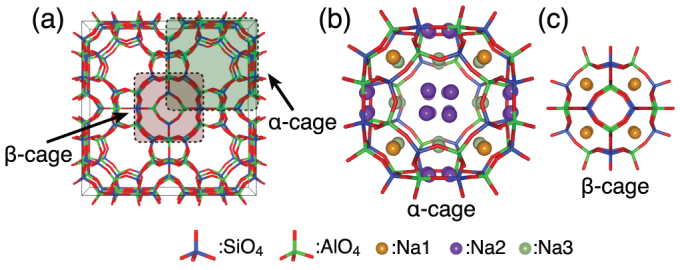
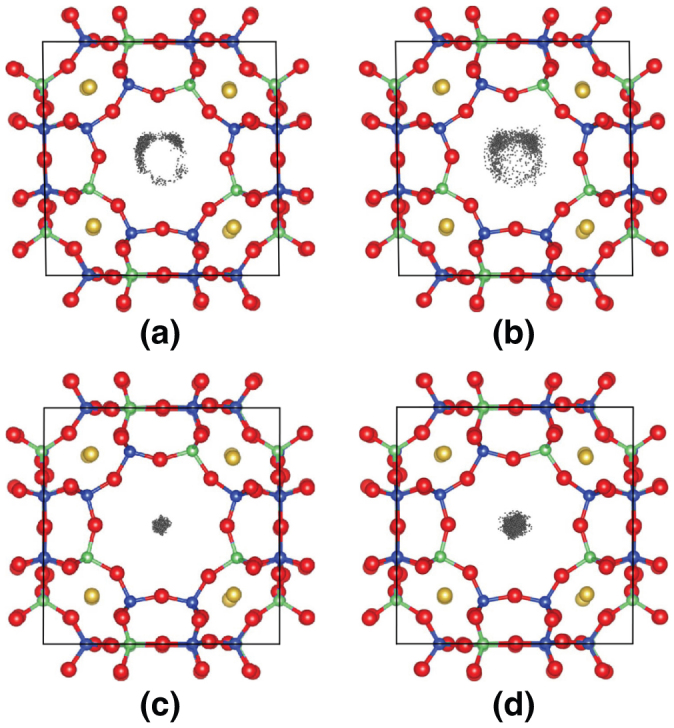
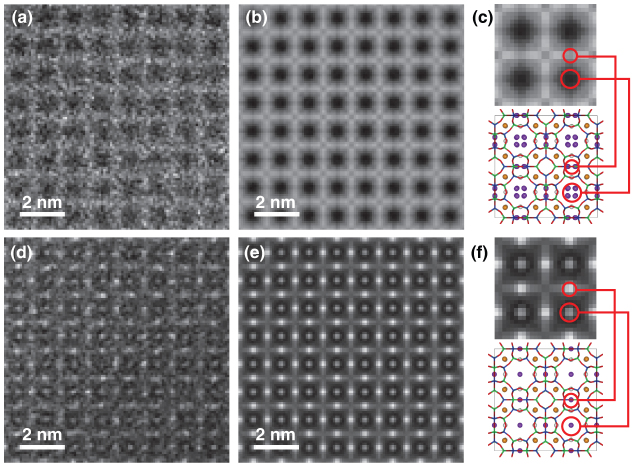
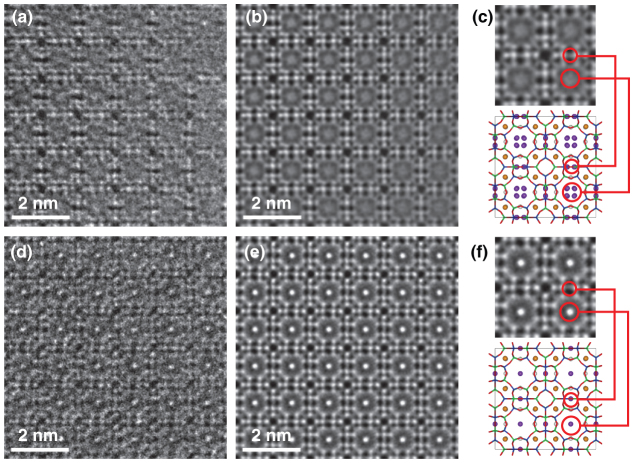
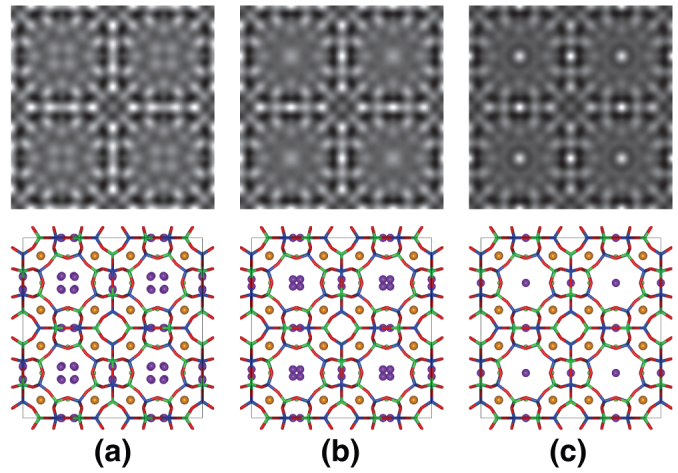
Zeolites have potential application as ion-exchangers, catalysts and molecular sieves. Zeolites are once again drawing attention in Japan as stable adsorbents and solidification materials of fission products, such as (137)Cs(+) from damaged nuclear-power plants. Although there is a long history of scientific studies on the crystal structures and ion-exchange properties of zeolites for practical application, there are still open questions, at the atomic-level, on the physical and chemical origins of selective ion-exchange abilities of different cations and detailed atomic structures of exchanged cations inside the nanoscale cavities of zeolites. Here, the precise locations of Cs(+) ions captured within A-type zeolite were analyzed using high-resolution electron microscopy. Together with theoretical calculations, the stable positions of absorbed Cs(+) ions in the nanocavities are identified, and the bonding environment within the zeolitic framework is revealed to be a key factor that influences the locations of absorbed cations.
沸石具有作为离子交换剂、催化剂和分子筛的潜在应用。沸石作为裂变产物(如受损核电站中的 137Cs(+))的稳定吸附剂和固化材料,再次引起了日本的关注。尽管对沸石的晶体结构和离子交换特性进行了长期的科学研究,以实现实际应用,但对于不同阳离子的选择性离子交换能力的物理和化学起源以及沸石纳米腔体内交换阳离子的详细原子结构,仍存在一些悬而未决的问题。在这里,使用高分辨率电子显微镜分析了捕获在 A 型沸石内的 Cs(+) 离子的确切位置。结合理论计算,确定了被吸收的 Cs(+) 离子在纳米腔体内的稳定位置,并揭示了沸石骨架内的键合环境是影响被吸收阳离子位置的关键因素。