Manitoba Centre for Proteomics and Systems Biology, Winnipeg, Manitoba R3E 3P4, Canada.
Cell Death Dis. 2013 Aug 15;4(8):e769. doi: 10.1038/cddis.2013.296.
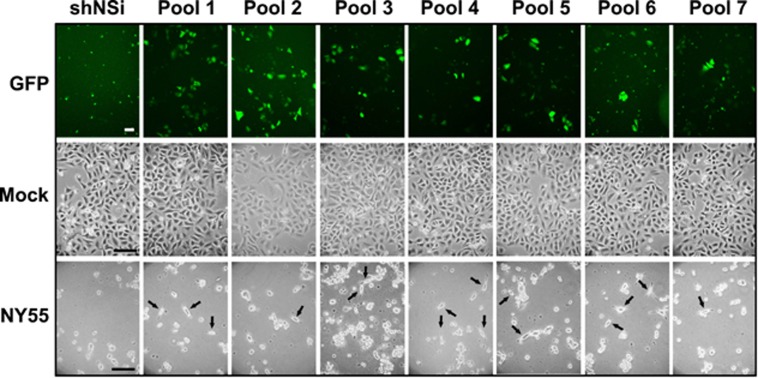
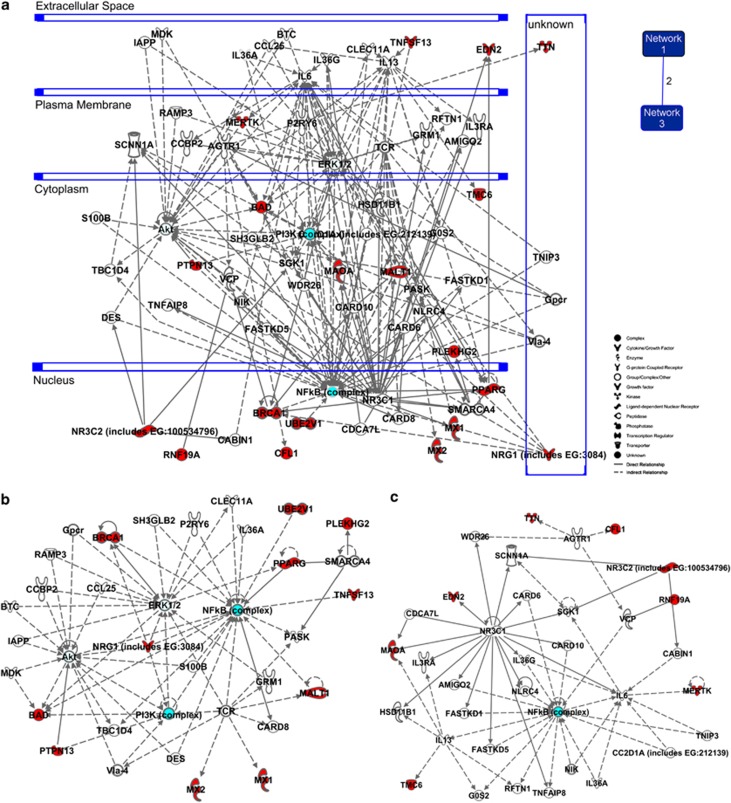
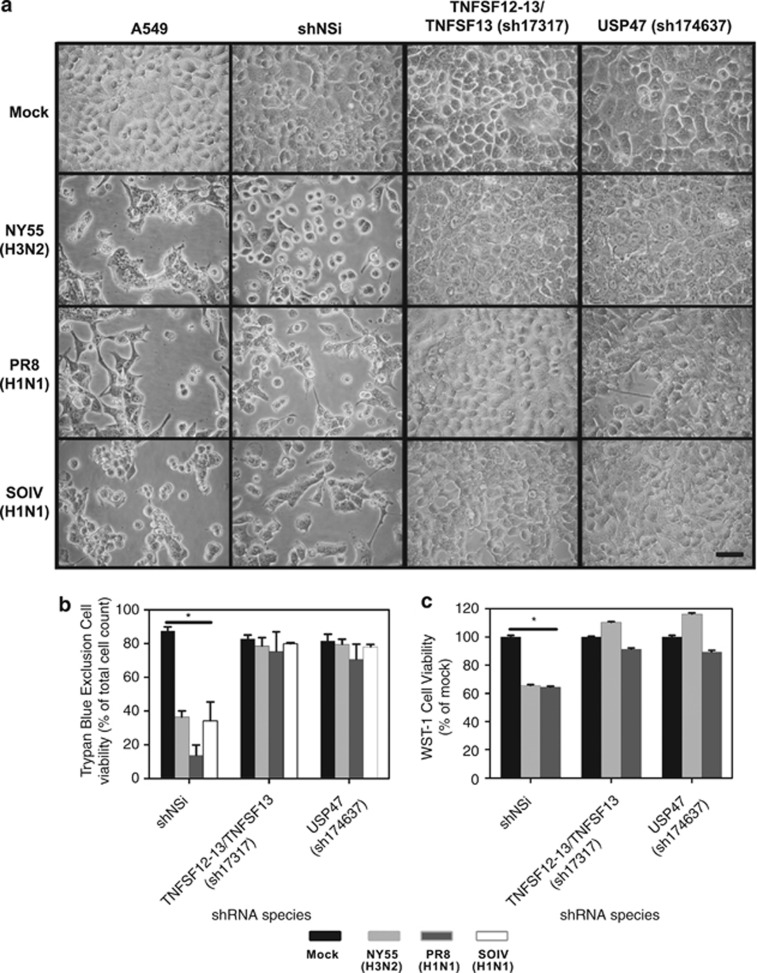
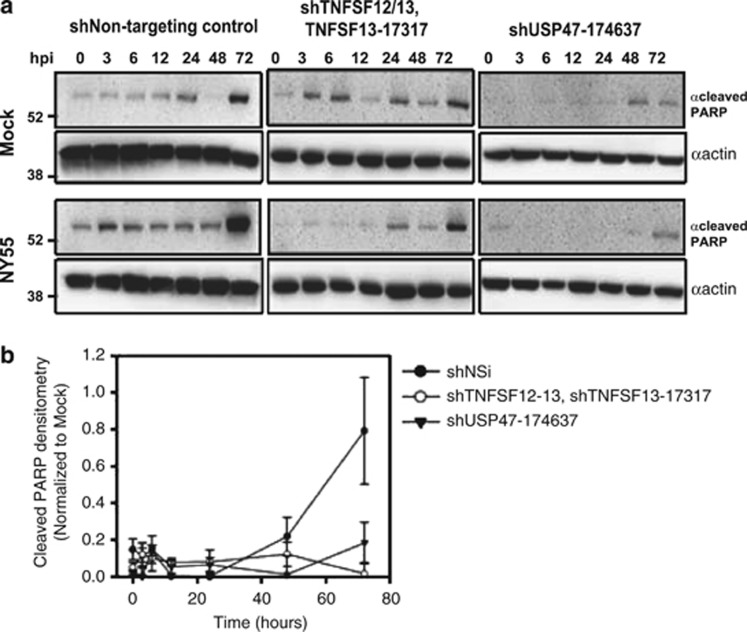
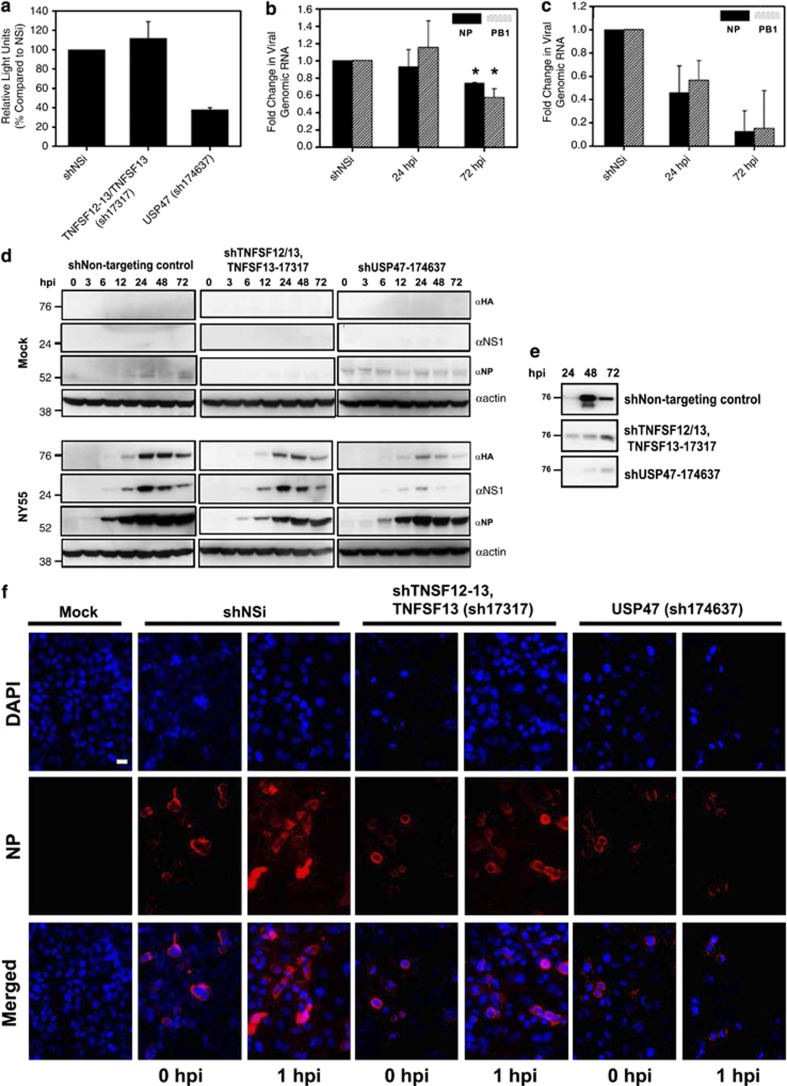
Cell death is a characteristic consequence of cellular infection by influenza virus. Mounting evidence indicates the critical involvement of host-mediated cellular death pathways in promoting efficient influenza virus replication. Furthermore, it appears that many signaling pathways, such as NF-κB, formerly suspected to solely promote cell survival, can also be manipulated to induce cell death. Current understanding of the cell death pathways involved in influenza virus-mediated cytopathology and in virus replication is limited. This study was designed to identify host genes that are required for influenza-induced cell death. The approach was to perform genome-wide lentiviral-mediated human gene silencing in A549 cells and determine which genes could be silenced to provide resistance to influenza-induced cell death. The assay proved to be highly reproducible with 138 genes being identified in independent screens. The results were independently validated using siRNA to each of these candidates. Graded protection was observed in this screen with the silencing of any of 19 genes, each providing > 85% protection. Three gene products, TNFSF13 (APRIL), TNFSF12-TNFSF13 (TWE-PRIL) and USP47, were selected because of the high levels of protection conferred by their silencing. Protein and mRNA silencing and protection from influenza-induced cell death was confirmed using multiple shRNA clones and siRNA, indicating the specificity of the effects. USP47 knockdown prevented proper viral entry into the host cell, whereas TNFSF12-13/TNFSF13 knockdown blocked a late stage in viral replication. This screening approach offers the means to identify a large number of potential candidates for the analysis of viral-induced cell death. These results may also have much broader applicability in defining regulatory mechanisms involved in cell survival.
细胞死亡是流感病毒感染细胞的一个特征性后果。越来越多的证据表明,宿主介导的细胞死亡途径在促进流感病毒有效复制中起着关键作用。此外,许多信号通路,如 NF-κB,以前被怀疑仅能促进细胞存活,也可以被操纵以诱导细胞死亡。目前对流感病毒介导的细胞病变和病毒复制中涉及的细胞死亡途径的了解有限。本研究旨在鉴定流感诱导细胞死亡所必需的宿主基因。方法是在 A549 细胞中进行全基因组慢病毒介导的人基因沉默,并确定哪些基因可以被沉默以抵抗流感诱导的细胞死亡。该测定法在独立的筛选中具有高度的可重复性,鉴定了 138 个基因。使用针对这些候选物的每个 siRNA 进行了独立的验证。在该筛选中观察到分级保护,沉默其中的任何 19 个基因均可提供>85%的保护。由于沉默后赋予的高保护水平,选择了三个基因产物,TNFSF13(APRIL)、TNFSF12-TNFSF13(TWE-PRIL)和 USP47。使用多种 shRNA 克隆和 siRNA 证实了蛋白和 mRNA 沉默以及对流感诱导的细胞死亡的保护,表明了作用的特异性。USP47 敲低阻止了病毒进入宿主细胞,而 TNFSF12-13/TNFSF13 敲低阻止了病毒复制的晚期阶段。这种筛选方法提供了一种鉴定大量潜在候选物用于分析病毒诱导的细胞死亡的方法。这些结果在定义细胞存活中涉及的调节机制方面也可能具有更广泛的适用性。