Stroke Laboratory, Neurology Service, Department of Clinical Neurosciences, Centre Hospitalier Universitaire Vaudois and Lausanne University, Lausanne 1011, Switzerland.
Int J Mol Sci. 2013 Aug 14;14(8):16719-31. doi: 10.3390/ijms140816719.
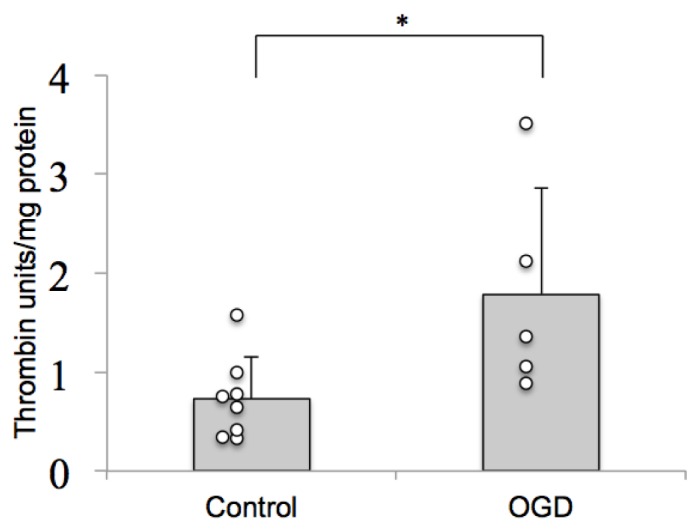
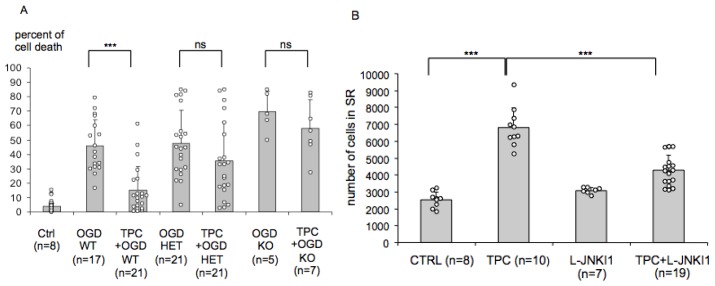
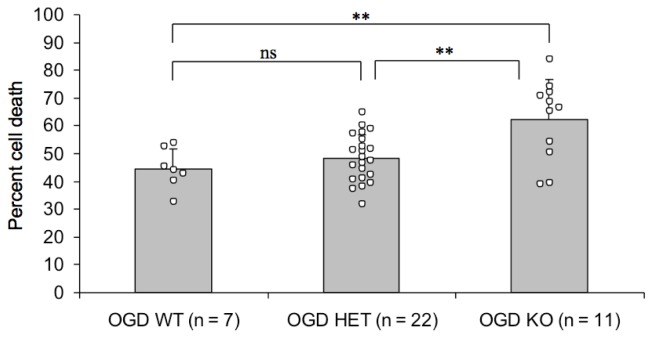
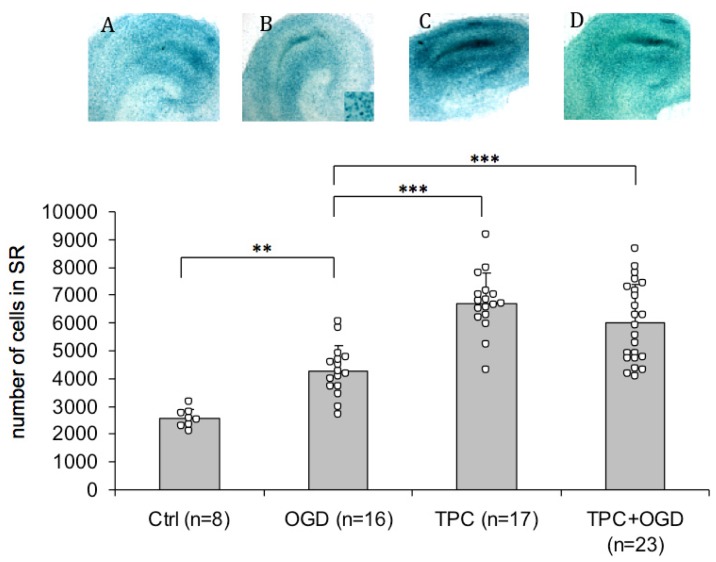
The serine protease thrombin plays a role in signalling ischemic neuronal death in the brain. Paradoxically, endogenous neuroprotective mechanisms can be triggered by preconditioning with thrombin (thrombin preconditioning, TPC), leading to tolerance to cerebral ischemia. Here we studied the role of thrombin's endogenous potent inhibitor, protease nexin-1 (PN-1), in ischemia and in tolerance to cerebral ischemia induced by TPC. Cerebral ischemia was modelled in vitro in organotypic hippocampal slice cultures from rats or genetically engineered mice lacking PN-1 or with the reporter gene lacZ knocked into the PN-1 locus PN-1HAPN-1-lacZ/HAPN-1-lacZ (PN-1 KI) exposed to oxygen and glucose deprivation (OGD). We observed increased thrombin enzyme activity in culture homogenates 24 h after OGD. Lack of PN-1 increased neuronal death in the CA1, suggesting that endogenous PN-1 inhibits thrombin-induced neuronal damage after ischemia. OGD enhanced β-galactosidase activity, reflecting PN-1 expression, at one and 24 h, most strikingly in the stratum radiatum, a glial cell layer adjacent to the CA1 layer of ischemia sensitive neurons. TPC, 24 h before OGD, additionally increased PN-1 expression 1 h after OGD, compared to OGD alone. TPC failed to induce tolerance in cultures from PN-1(-/-) mice confirming PN-1 as an important TPC target. PN-1 upregulation after TPC was blocked by the c-Jun N-terminal kinase (JNK) inhibitor, L-JNKI1, known to block TPC. This work suggests that PN-1 is an endogenous neuroprotectant in cerebral ischemia and a potential target for neuroprotection.
丝氨酸蛋白酶凝血酶在大脑中的信号转导缺血性神经元死亡中发挥作用。矛盾的是,内源性神经保护机制可以通过凝血酶预处理(凝血酶预处理,TPC)触发,导致对脑缺血的耐受。在这里,我们研究了凝血酶的内源性有效抑制剂蛋白酶神经素-1(PN-1)在缺血和 TPC 诱导的脑缺血耐受中的作用。在来自大鼠或缺乏 PN-1 的基因工程小鼠的器官型海马切片培养物中,体外模拟缺血或缺乏 PN-1 或在 PN-1 基因座中敲入报告基因 lacZ 的 PN-1HAPN-1-lacZ/HAPN-1-lacZ(PN-1KI)在缺氧和葡萄糖剥夺(OGD)下暴露。我们观察到 OGD 后 24 小时培养物匀浆中凝血酶酶活性增加。缺乏 PN-1 增加了 CA1 中的神经元死亡,表明内源性 PN-1 抑制了缺血后凝血酶诱导的神经元损伤。OGD 在 1 和 24 小时增强了β-半乳糖苷酶活性,反映了 PN-1 的表达,在最明显的放射层中,这是与缺血敏感神经元的 CA1 层相邻的神经胶质细胞层。与 OGD 单独处理相比,TPC 在 OGD 前 24 小时预处理还增加了 OGD 后 1 小时的 PN-1 表达。在缺乏 PN-1 的培养物中,TPC 未能诱导耐受,证实了 PN-1 是 TPC 的重要靶点。TPC 诱导的 PN-1 上调被已知阻断 TPC 的 c-Jun N 端激酶(JNK)抑制剂 L-JNKI1 阻断。这项工作表明,PN-1 是脑缺血的内源性神经保护剂,也是神经保护的潜在靶点。