1] Division of Neonatal and Developmental Medicine, Department of Pediatrics, Stanford University, Stanford, CA, USA [2] California Perinatal Quality Care Collaborative, Palo Alto, CA, USA.
J Perinatol. 2013 Nov;33(11):872-6. doi: 10.1038/jp.2013.92. Epub 2013 Aug 15.
To develop a length of stay (LOS) model for extremely low birth weight (ELBW) infants.
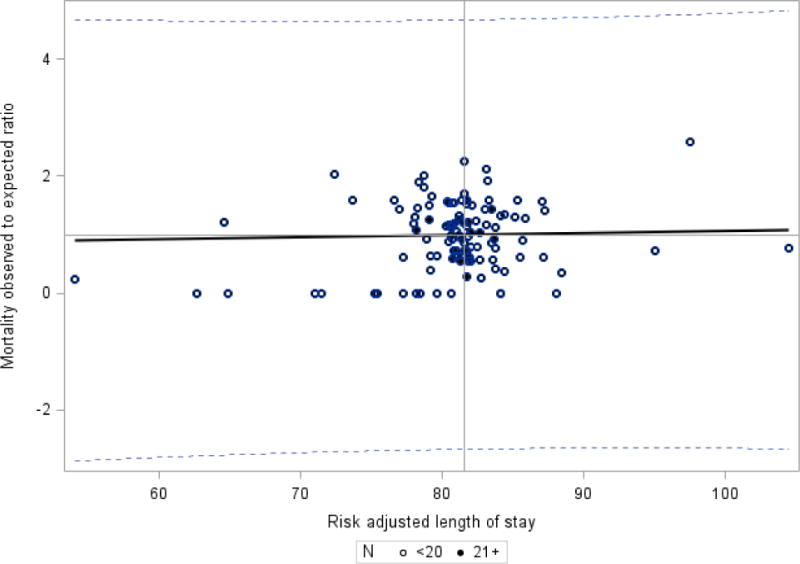
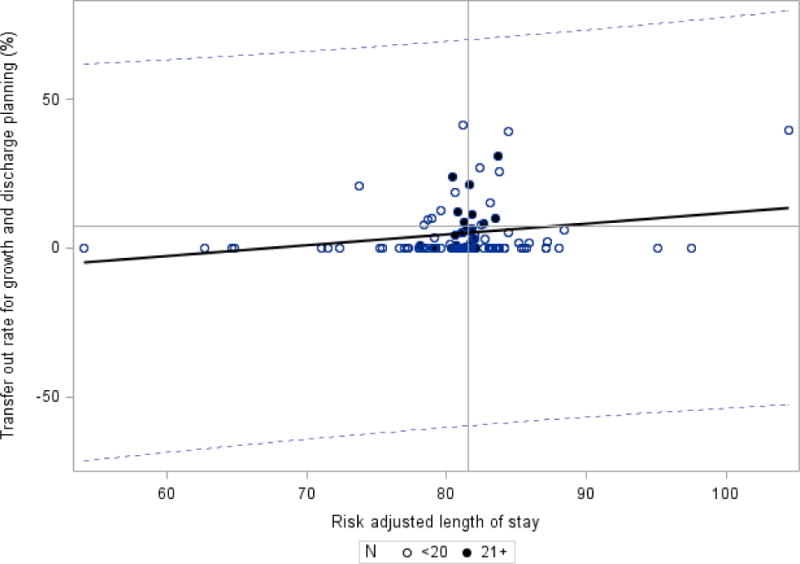
We included infants from the California Perinatal Quality Care Collaborative with birth weight 401 to 1000 g who were discharged to home. Exclusion criteria were congenital anomalies, surgery and death. LOS was defined as days from admission to discharge. As patients who died or were transferred to lower level of care were excluded, we assessed correlation of hospital mortality rates and transfers to risk-adjusted LOS.
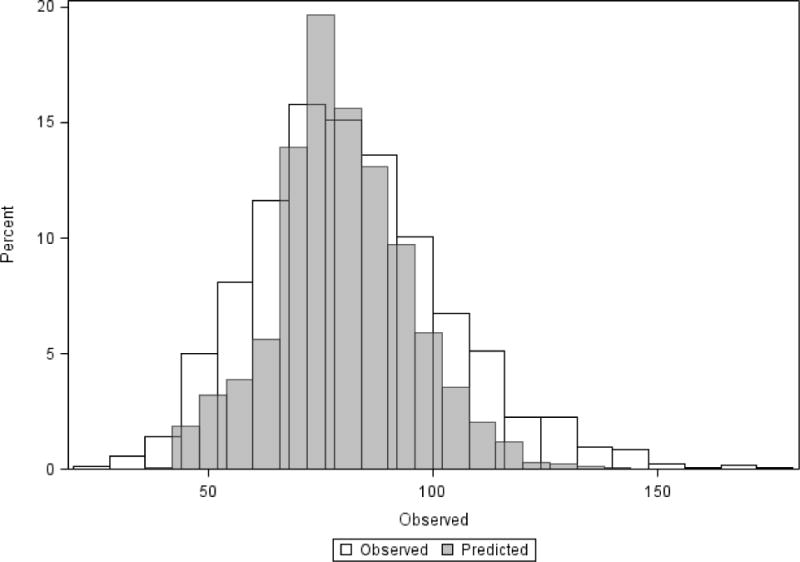
There were 2012 infants with median LOS 79 days (range 23 to 219). Lower birth weight, lack of antenatal steroids and lower Apgar score were associated with longer LOS. There was negligible correlation between risk-adjusted LOS and hospital mortality rates (r=0.0207) and transfer-out rates (r=0.121).
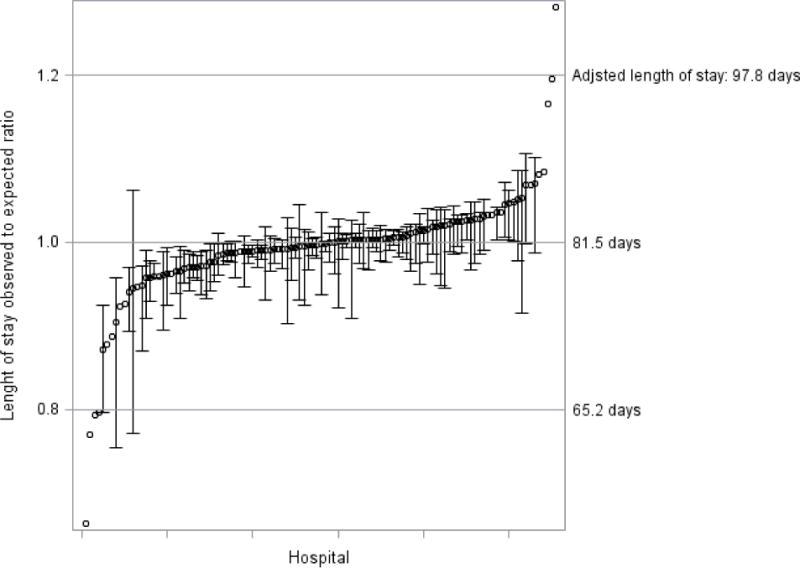
Particularly because ELBW infants have extended hospital stays, identification of unbiased and informative risk-adjusted LOS for these infants is an important step in benchmarking best practice and improving efficiency in care.
为极低出生体重(ELBW)婴儿开发住院日(LOS)模型。
我们纳入了加利福尼亚围产期质量护理合作组织中出生体重为 401 至 1000 克且出院回家的婴儿。排除标准为先天性异常、手术和死亡。LOS 定义为入院至出院的天数。由于死亡或转至较低护理水平的患者被排除在外,我们评估了医院死亡率和转至风险调整 LOS 的相关性。
共有 2012 名婴儿,中位 LOS 为 79 天(范围为 23 至 219)。较低的出生体重、缺乏产前类固醇和较低的 Apgar 评分与 LOS 延长相关。风险调整 LOS 与医院死亡率(r=0.0207)和转出率(r=0.121)之间几乎没有相关性。
特别是因为 ELBW 婴儿的住院时间较长,因此确定这些婴儿的无偏且信息丰富的风险调整 LOS 是基准最佳实践和提高护理效率的重要步骤。