1] Division of Transplant Immunology, Department of Pathology and Laboratory Medicine and Biesecker Center for Study of Pediatric Liver Diseases, Children's Hospital of Philadelphia and Perelman School of Medicine at the University of Pennsylvania, Philadelphia, Pennsylvania, USA. [2].
Nat Med. 2013 Sep;19(9):1173-7. doi: 10.1038/nm.3286. Epub 2013 Aug 18.
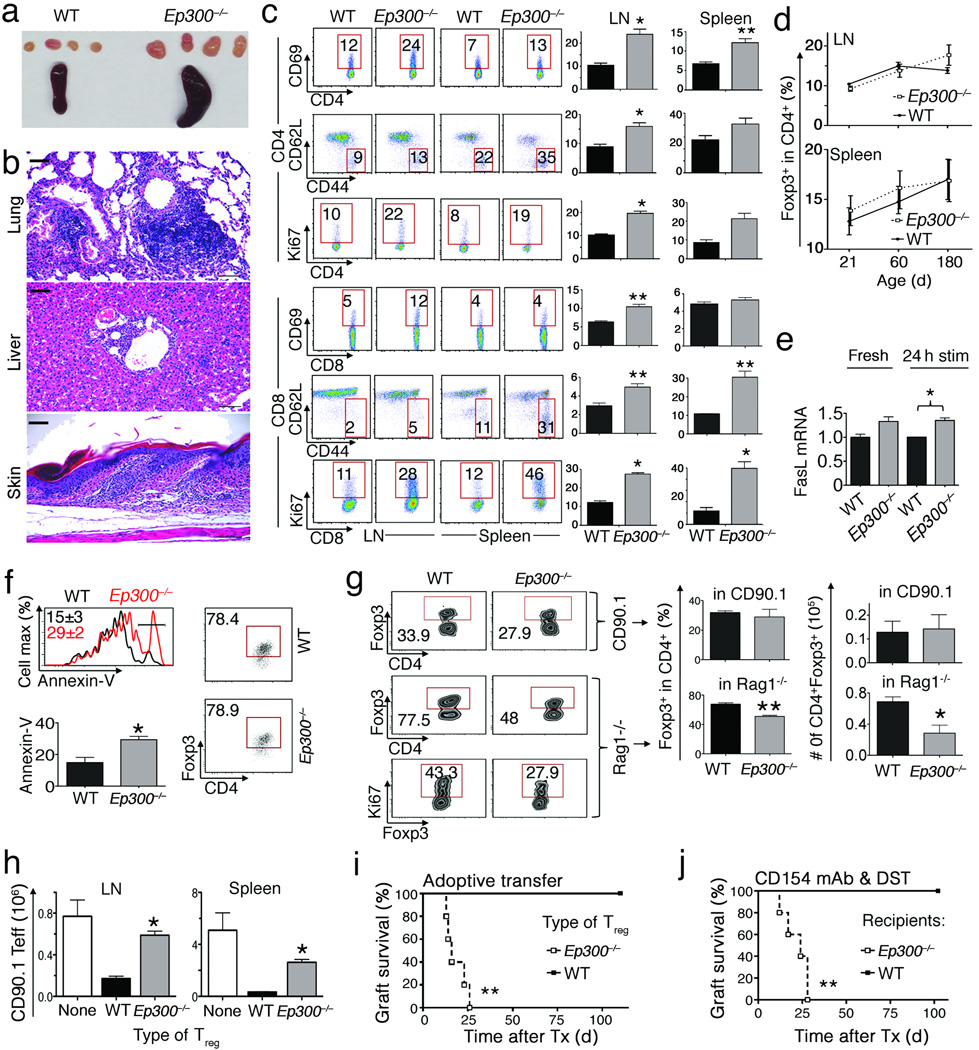
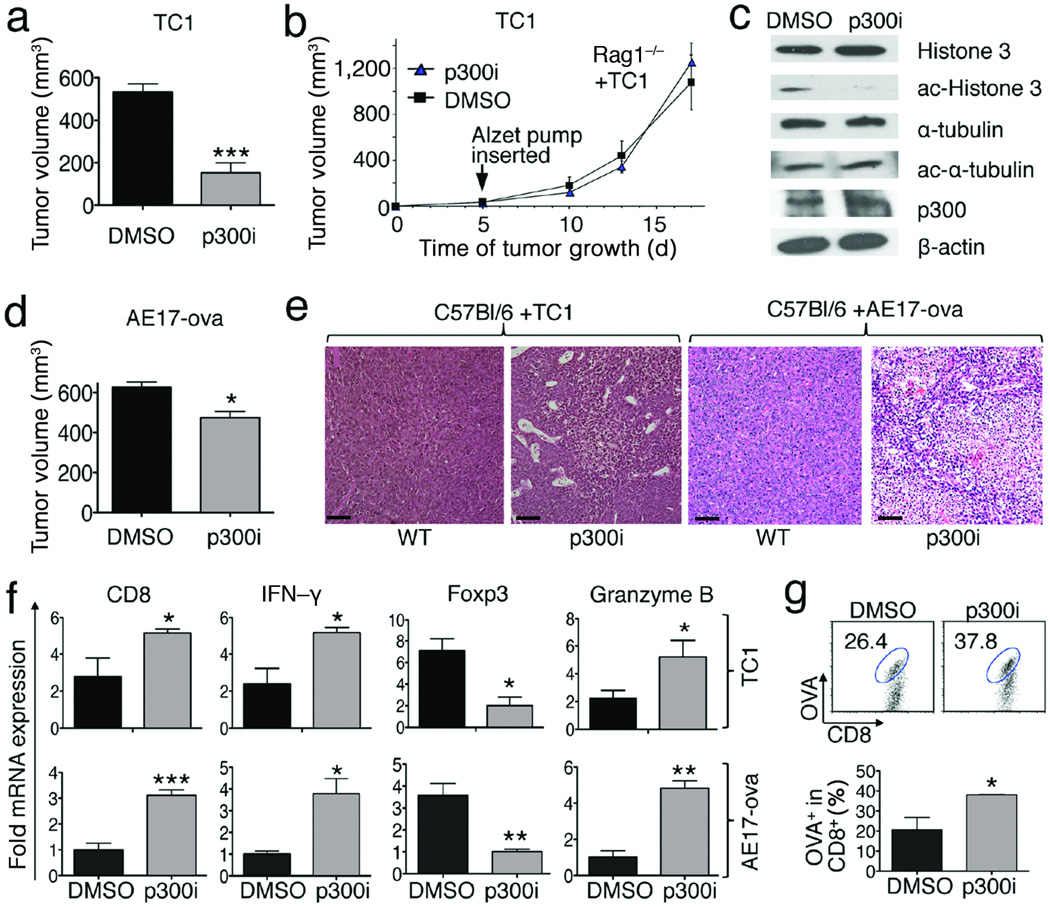
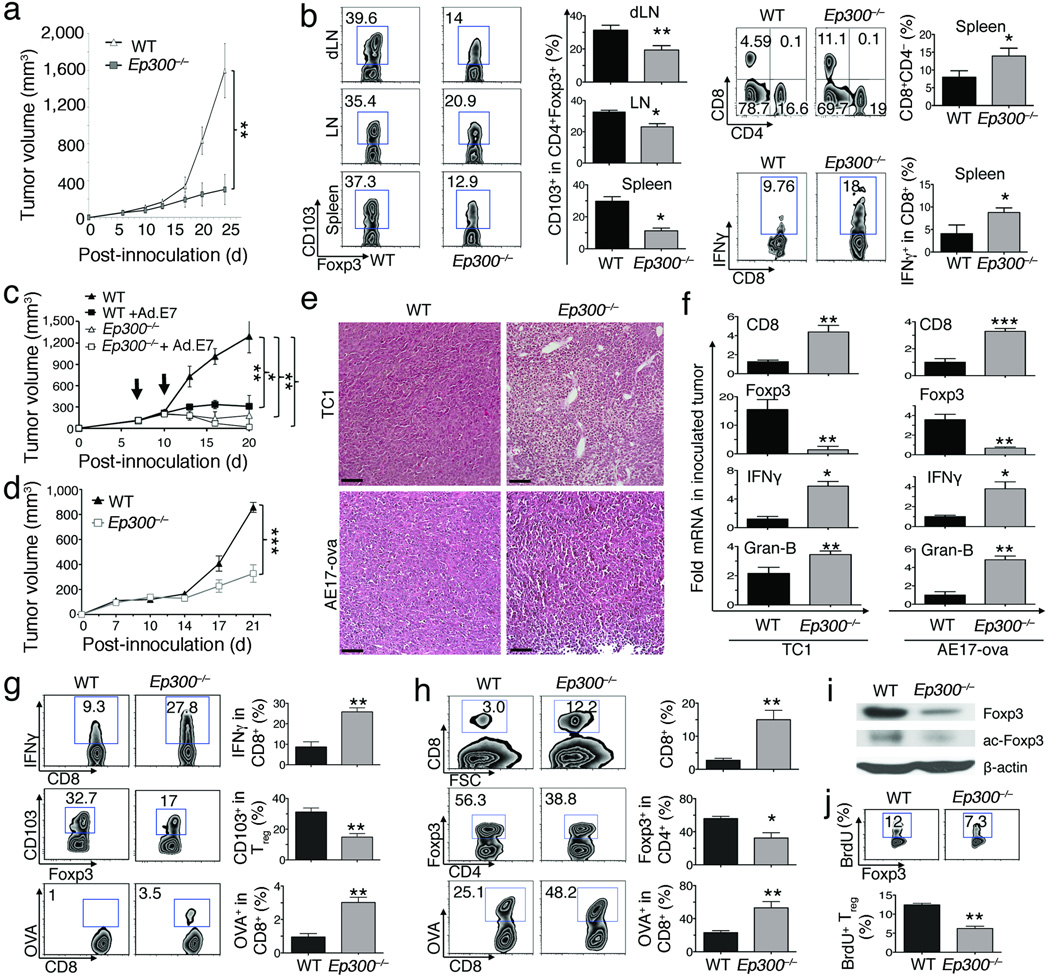
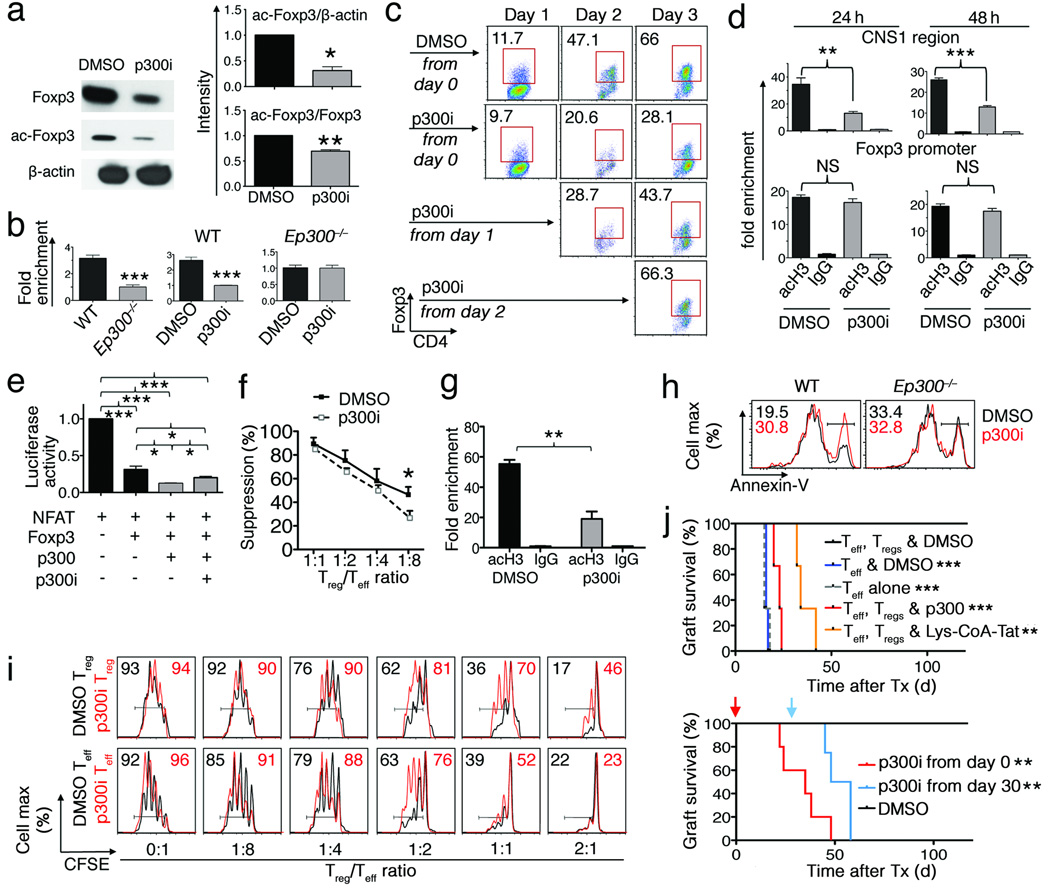
Forkhead box P3 (Foxp3)(+) T regulatory (T(reg)) cells maintain immune homeostasis and limit autoimmunity but can also curtail host immune responses to various types of tumors. Foxp3(+) T(reg) cells are therefore considered promising targets to enhance antitumor immunity, and approaches for their therapeutic modulation are being developed. However, although studies showing that experimentally depleting Foxp3(+) T(reg) cells can enhance antitumor responses provide proof of principle, these studies lack clear translational potential and have various shortcomings. Histone/protein acetyltransferases (HATs) promote chromatin accessibility, gene transcription and the function of multiple transcription factors and nonhistone proteins. We now report that conditional deletion or pharmacologic inhibition of one HAT, p300 (also known as Ep300 or KAT3B), in Foxp3(+) T(reg) cells increased T cell receptor-induced apoptosis in T(reg) cells, impaired T(reg) cell suppressive function and peripheral T(reg) cell induction, and limited tumor growth in immunocompetent but not in immunodeficient mice. Our data thereby demonstrate that p300 is important for Foxp3(+) T(reg) cell function and homeostasis in vivo and in vitro, and identify mechanisms by which appropriate small-molecule inhibitors can diminish T(reg) cell function without overtly impairing T effector cell responses or inducing autoimmunity. Collectively, these data suggest a new approach for cancer immunotherapy.
叉头框蛋白 P3(Foxp3)(+)调节性 T(Treg)细胞维持免疫稳态并限制自身免疫,但也可以抑制宿主对各种类型肿瘤的免疫反应。因此,Foxp3(+)Treg 细胞被认为是增强抗肿瘤免疫的有前途的靶点,并且正在开发针对它们的治疗调节方法。然而,尽管研究表明,实验性耗尽 Foxp3(+)Treg 细胞可以增强抗肿瘤反应提供了原理证明,但这些研究缺乏明确的转化潜力并且具有各种缺点。组蛋白/蛋白质乙酰转移酶(HATs)促进染色质可及性、基因转录以及多个转录因子和非组蛋白的功能。我们现在报告,在 Foxp3(+)Treg 细胞中条件性缺失或药理学抑制一种 HAT(p300,也称为 Ep300 或 KAT3B),可增加 T 细胞受体诱导的 Treg 细胞凋亡,损害 Treg 细胞抑制功能和外周 Treg 细胞诱导,并限制免疫功能正常但不是免疫缺陷小鼠中的肿瘤生长。我们的数据因此证明了 p300 对于 Foxp3(+)Treg 细胞在体内和体外的功能和稳态很重要,并确定了适当的小分子抑制剂如何在不明显损害 T 效应细胞反应或诱导自身免疫的情况下降低 Treg 细胞功能的机制。总的来说,这些数据为癌症免疫治疗提出了一种新的方法。