Biopharmaceutical Sciences, University of Illinois at Chicago, 833 S Wood Str, Chicago, IL 60612, USA.
J Ovarian Res. 2013 Aug 17;6(1):57. doi: 10.1186/1757-2215-6-57.
The goal of this study was to determine a predominant cell type expressing fractalkine receptor (CX3CR1) in mature ovarian teratomas and to establish functional significance of its expression in cell differentiation.
Specimens of ovarian teratoma and human fetal tissues were analyzed by immunohistochemistry for CX3CR1expression. Ovarian teratocarcinoma cell line PA-1 was used as a model for cell differentiation.
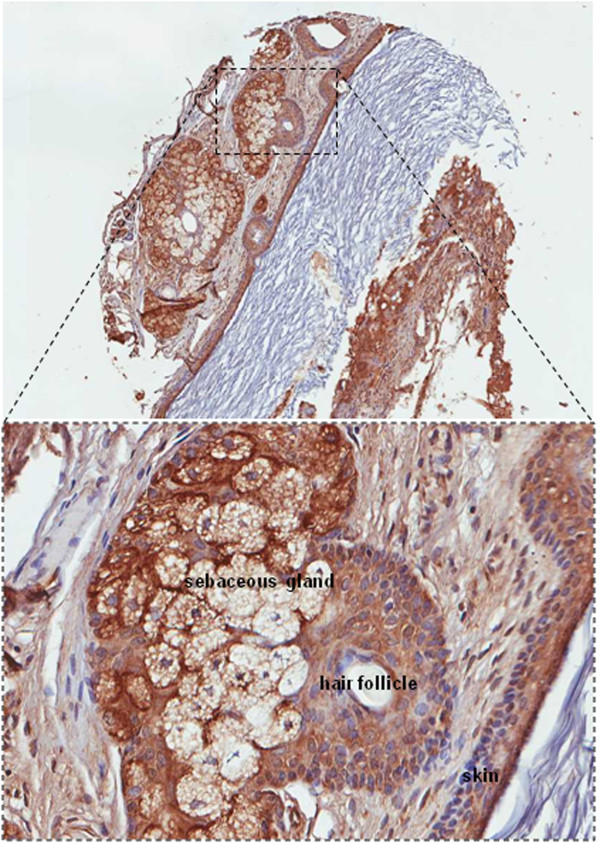
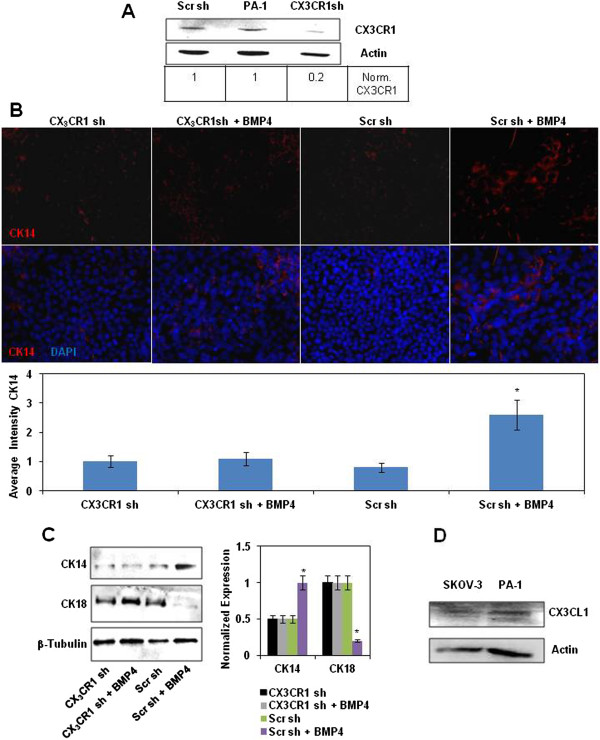
We found that the majority of the specimens contained CX3CR1-positive cells of epidermal lineage. Skin keratinocytes in fetal tissues were also CX3CR1- positive. PA-1 cells with downregulated CX3CR1 failed to express a skin keratinocyte marker cytokeratin 14 when cultured on Matrigel in the presence of a morphogen, bone morphogenic protein 4 (BMP-4), as compared to those expressing scrambled shRNA.
Here we demonstrate that CX3CR1 is expressed in both normally (fetal skin) and abnormally (ovarian teratoma) differentiated keratinocytes and is required for cell differentiation into epidermal lineage.
本研究旨在确定成熟卵巢畸胎瘤中表达趋化因子受体(CX3CR1)的主要细胞类型,并确定其在细胞分化中的表达的功能意义。
通过免疫组织化学分析卵巢畸胎瘤和人胎组织中 CX3CR1 的表达。将卵巢畸胎癌细胞系 PA-1 用作细胞分化的模型。
我们发现大多数标本都含有表皮谱系的 CX3CR1 阳性细胞。胎组织中的皮肤角质形成细胞也是 CX3CR1 阳性的。与表达 scrambled shRNA 的细胞相比,在存在形态发生素骨形态发生蛋白 4(BMP-4)的情况下,下调 CX3CR1 的 PA-1 细胞在 Matrigel 上培养时未能表达皮肤角质形成细胞标志物细胞角蛋白 14。
本研究证明 CX3CR1 在正常分化的(胎皮)和异常分化的(卵巢畸胎瘤)角质形成细胞中均有表达,并且是细胞分化为表皮谱系所必需的。