Neurogenetik, Institut für Biologie, Freie Universität Berlin, 14195 Berlin, Germany.
J Cell Biol. 2013 Aug 19;202(4):667-83. doi: 10.1083/jcb.201301072.
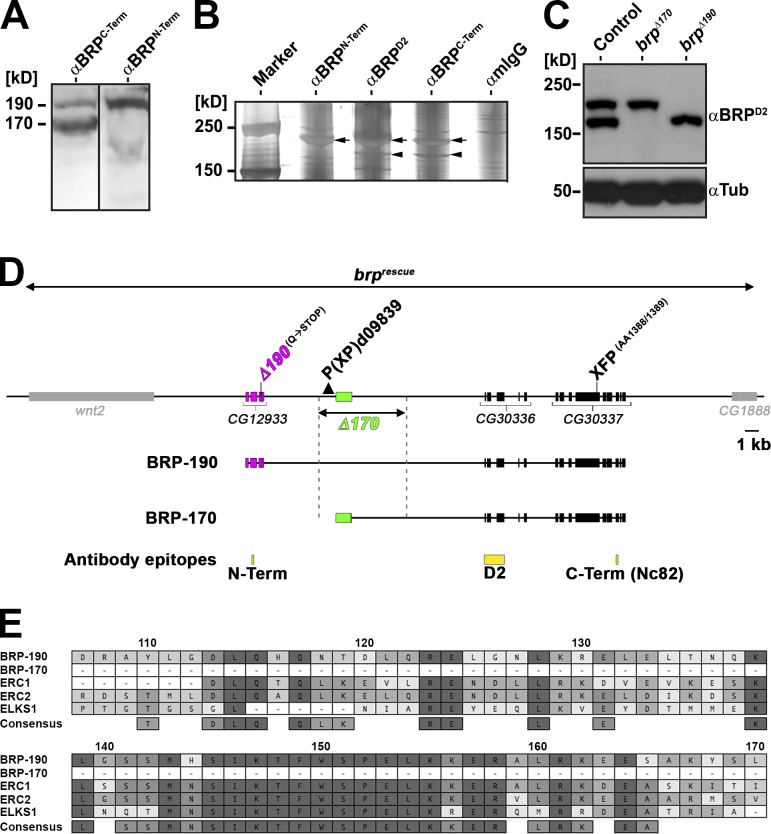
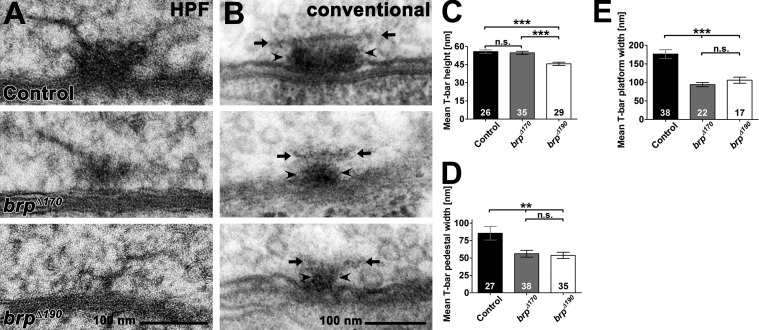
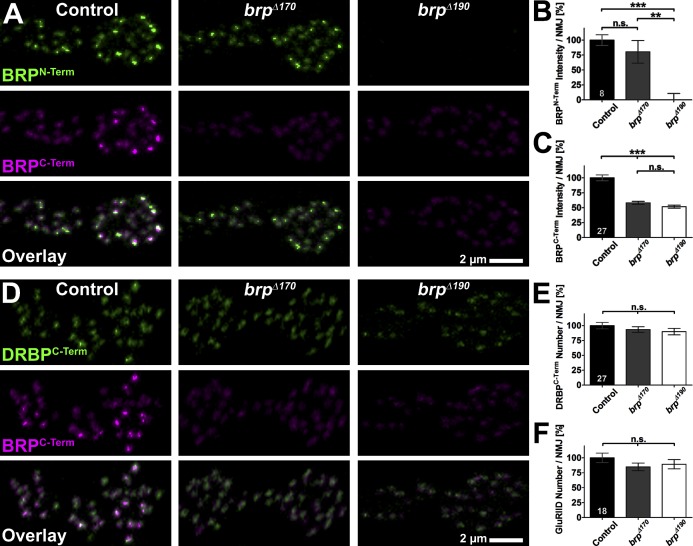
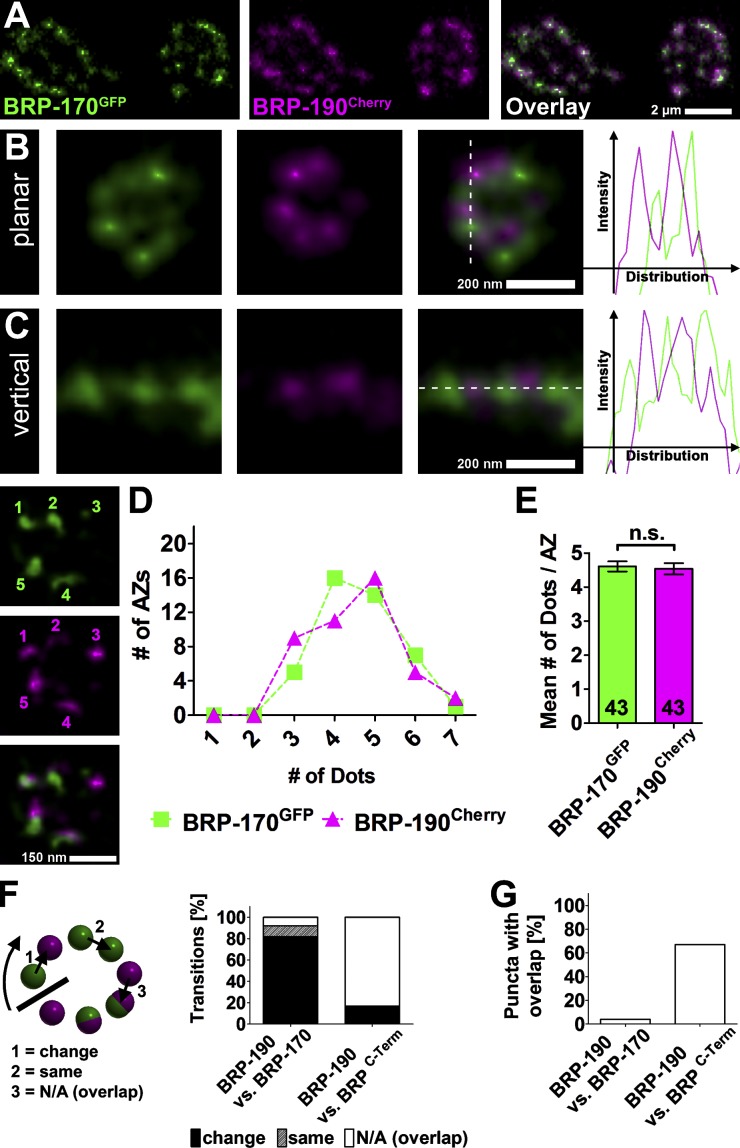
Synaptic vesicles (SVs) fuse at a specialized membrane domain called the active zone (AZ), covered by a conserved cytomatrix. How exactly cytomatrix components intersect with SV release remains insufficiently understood. We showed previously that loss of the Drosophila melanogaster ELKS family protein Bruchpilot (BRP) eliminates the cytomatrix (T bar) and declusters Ca(2+) channels. In this paper, we explored additional functions of the cytomatrix, starting with the biochemical identification of two BRP isoforms. Both isoforms alternated in a circular array and were important for proper T-bar formation. Basal transmission was decreased in isoform-specific mutants, which we attributed to a reduction in the size of the readily releasable pool (RRP) of SVs. We also found a corresponding reduction in the number of SVs docked close to the remaining cytomatrix. We propose that the macromolecular architecture created by the alternating pattern of the BRP isoforms determines the number of Ca(2+) channel-coupled SV release slots available per AZ and thereby sets the size of the RRP.
突触小泡 (SVs) 在称为活性区 (AZ) 的特化膜域融合,该区域被保守的细胞基质覆盖。细胞基质成分如何与 SV 释放精确交叉仍然了解不足。我们之前曾表明,果蝇的 ELKS 家族蛋白 Bruchpilot (BRP) 的缺失会消除细胞基质 (T -bar) 并使 Ca(2+) 通道解簇。在本文中,我们从 BRP 两种同工型的生化鉴定开始,探索了细胞基质的其他功能。两种同工型交替排列在一个圆形阵列中,对于正确的 T 形形成很重要。在同工型特异性突变体中基础传递减少,我们将其归因于可释放 SV 池 (RRP) 的大小减小。我们还发现靠近剩余细胞基质的 SV 停靠数量相应减少。我们提出,BRP 同工型交替模式所创建的大分子结构决定了每个 AZ 中 Ca(2+) 通道偶联的 SV 释放槽的数量,从而确定了 RRP 的大小。