Institute of Physiology, Otto-von-Guericke University Magdeburg, Germany.
Front Cell Neurosci. 2013 Aug 6;7:121. doi: 10.3389/fncel.2013.00121. eCollection 2013.
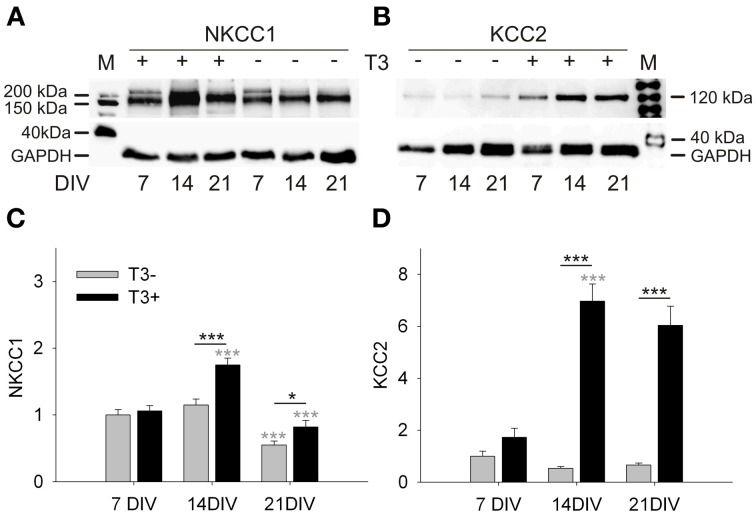
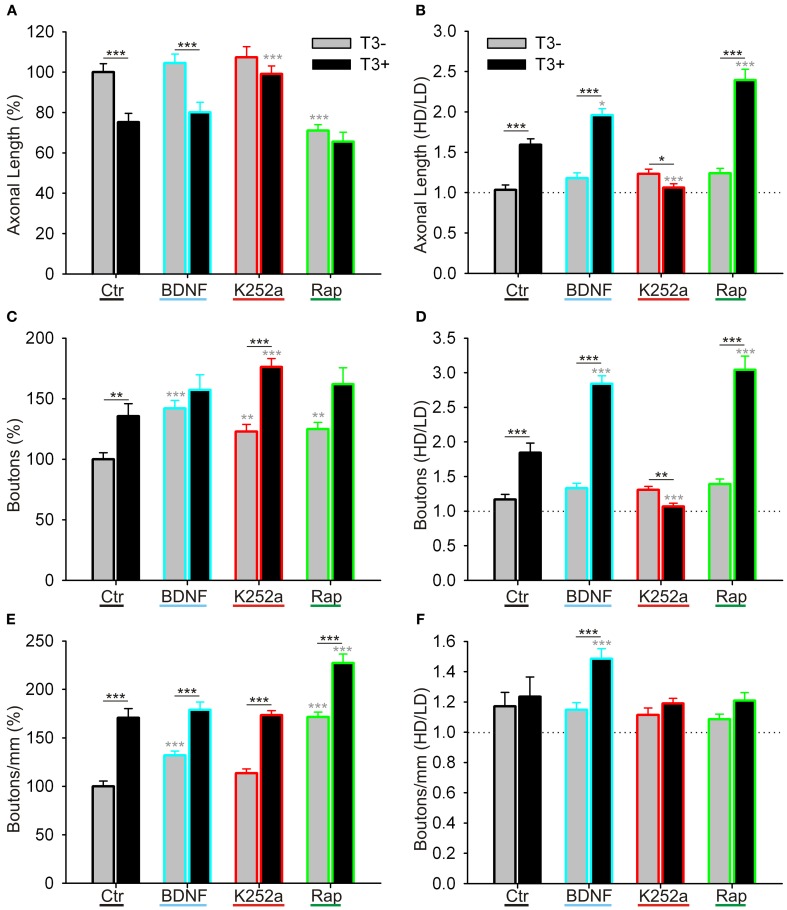
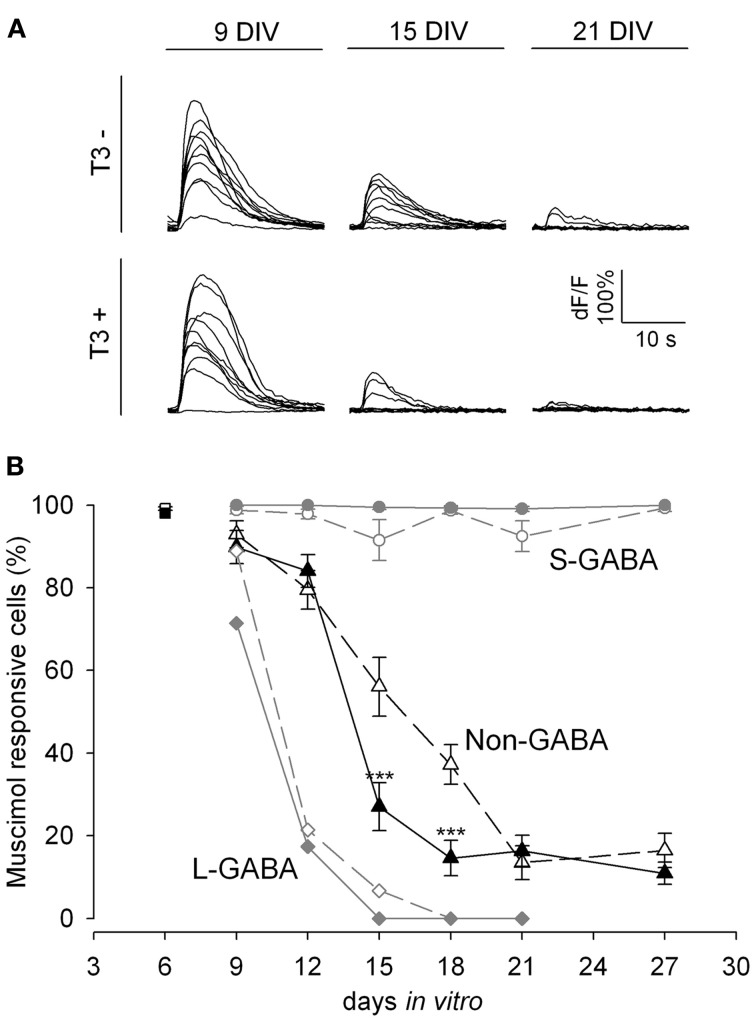
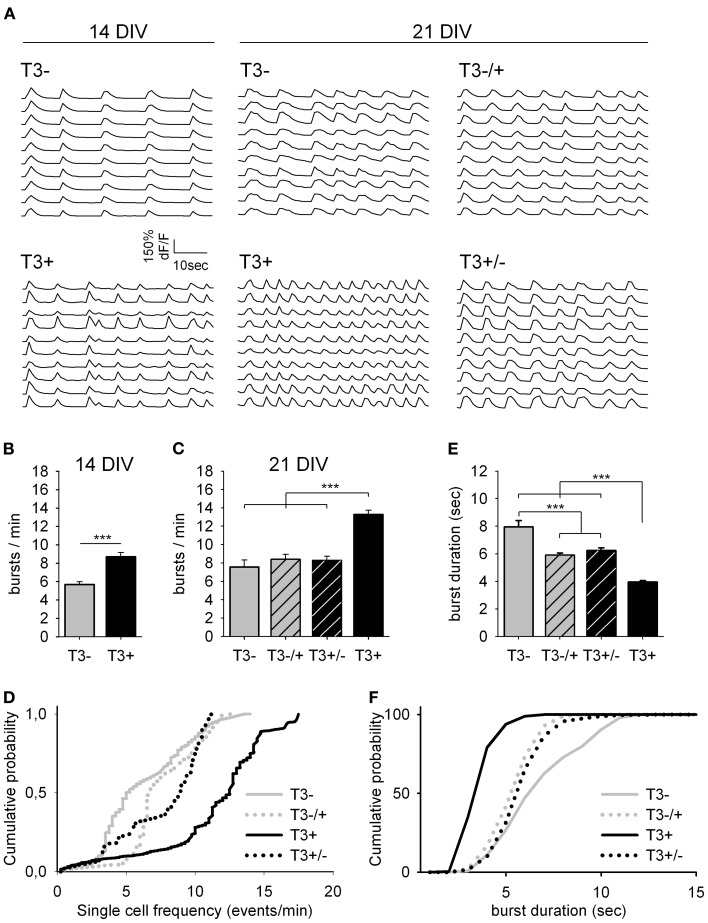
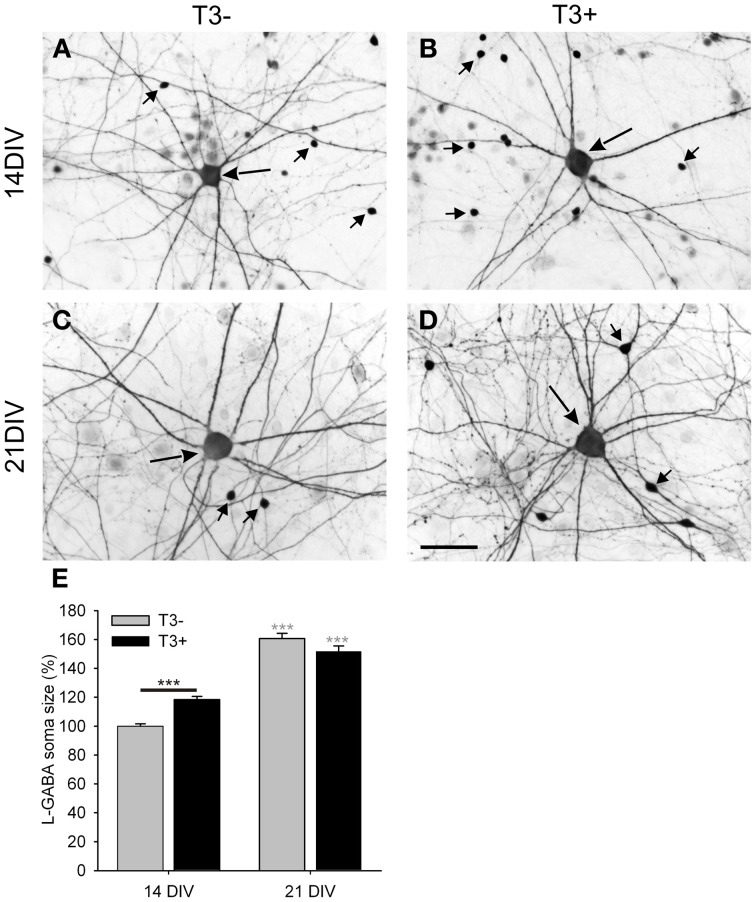
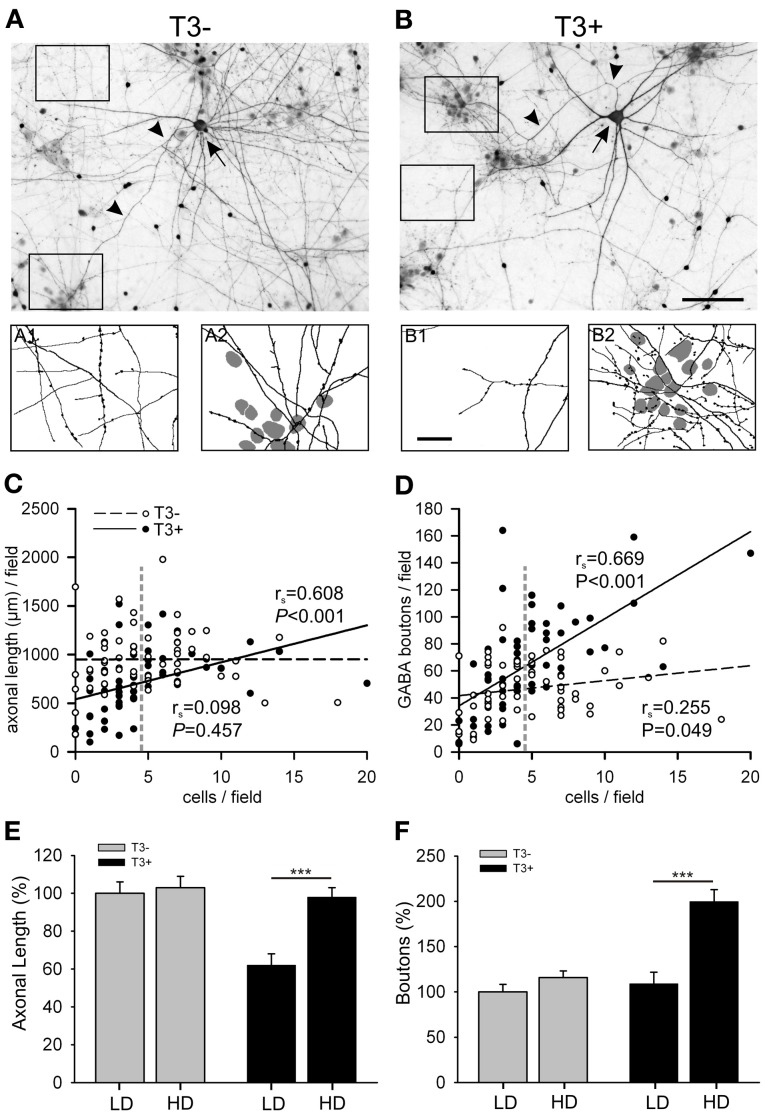
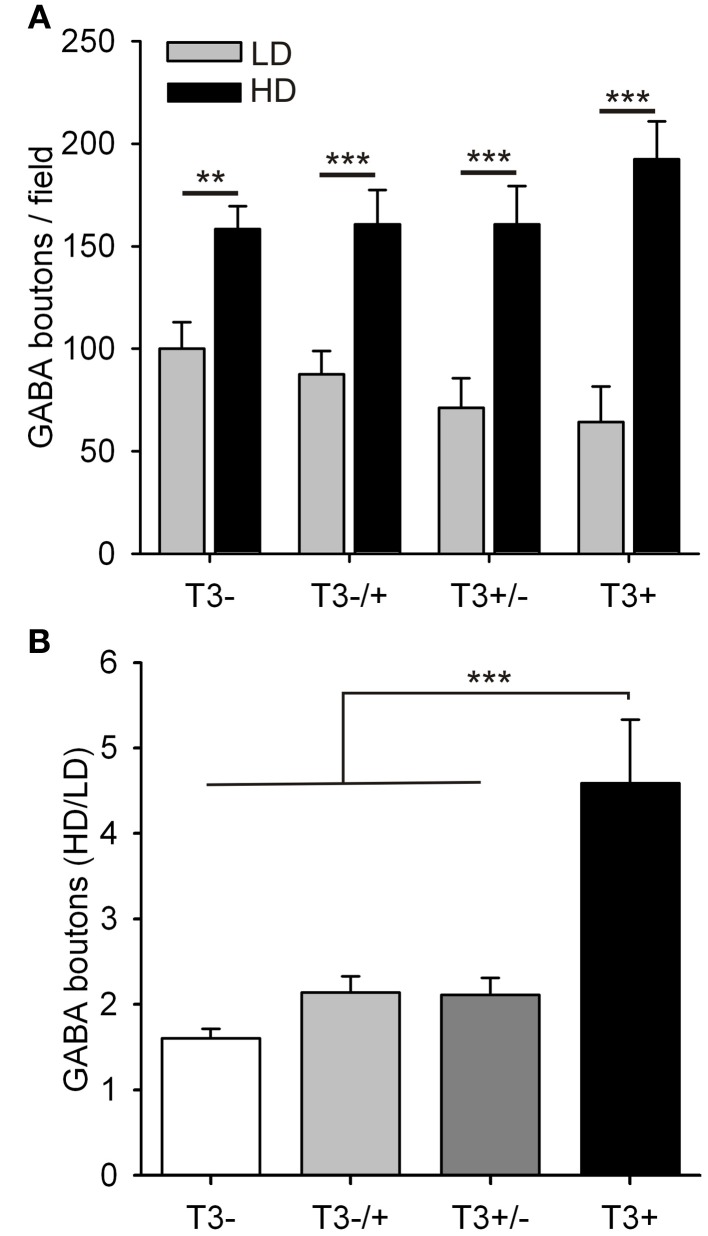
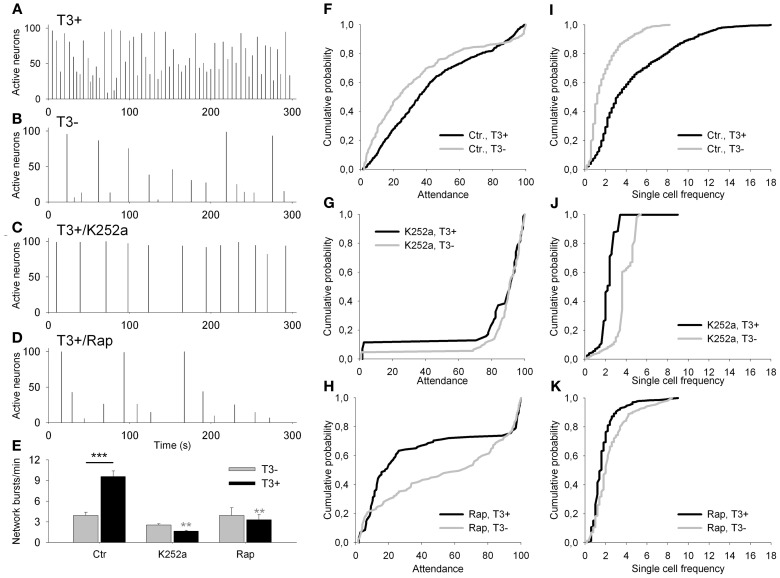
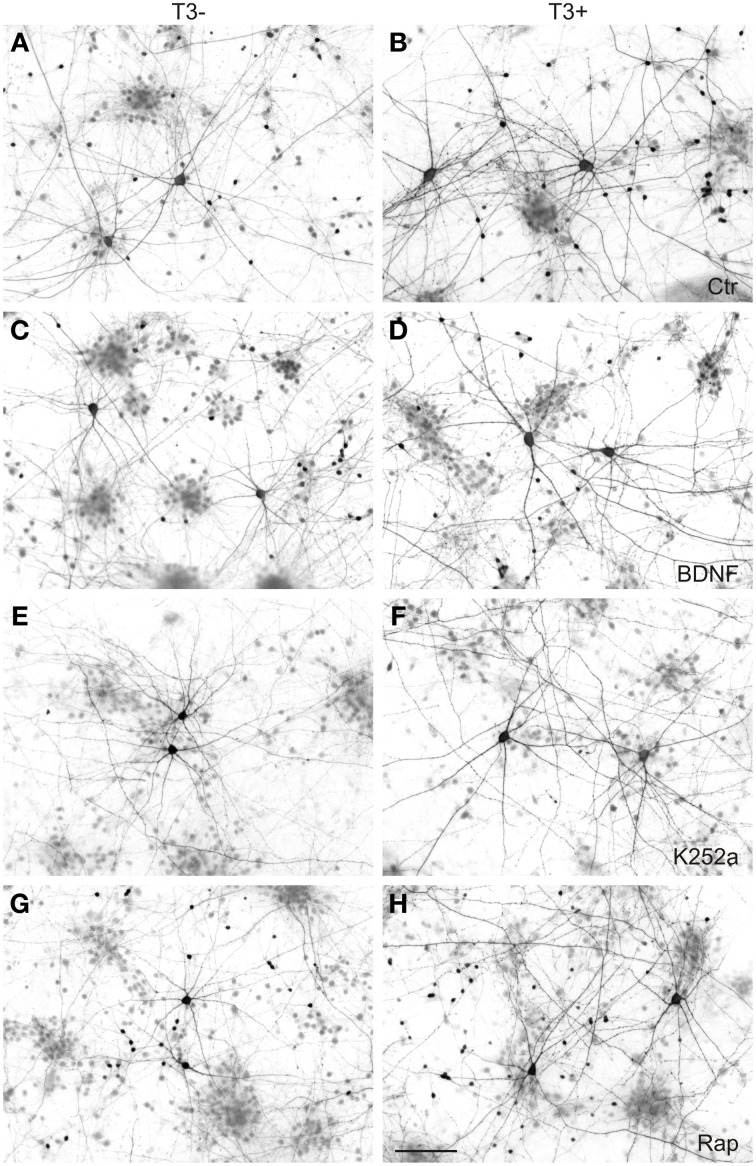
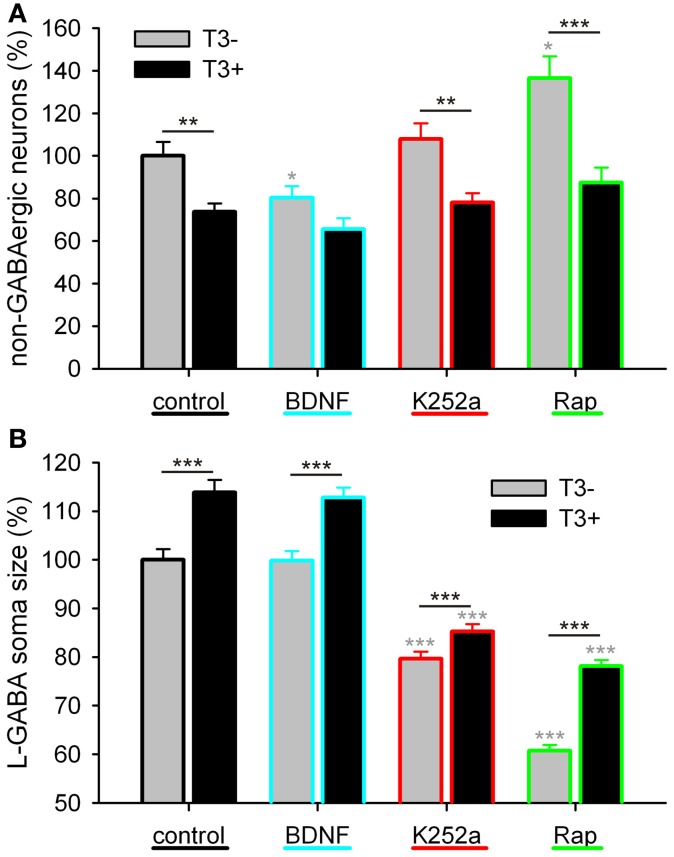
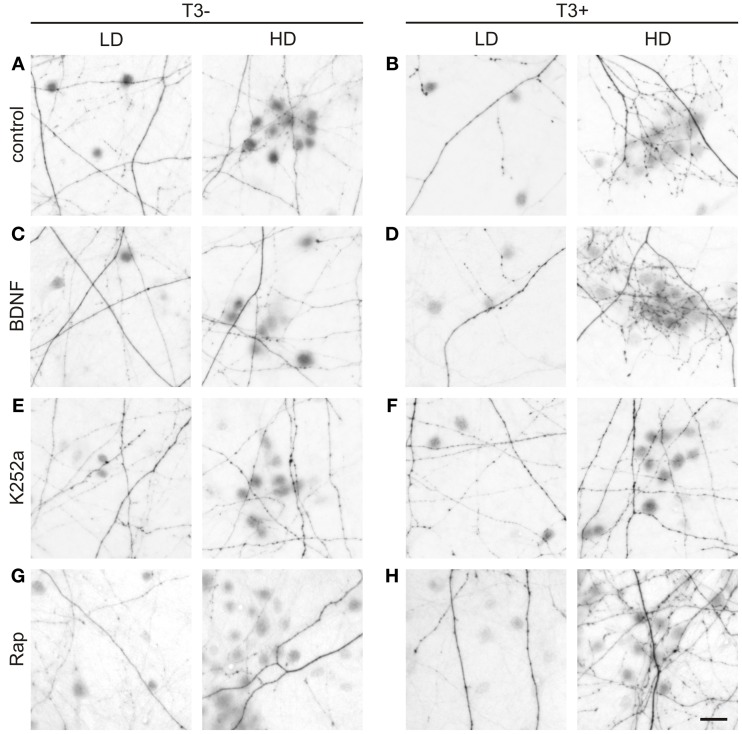
Early in neocortical network development, triiodothyronine (T3) promotes GABAergic neurons' population increase, their somatic growth and the formation of GABAergic synapses. In the presence of T3, GABAergic interneurons form longer axons and conspicuous axonal arborizations, with an increased number of putative synaptic boutons. Here we show that the increased GABAergic axonal growth is positively correlated with the proximity to non-GABAergic neurons (non-GABA). A differential innervation emerges from a T3-dependent decrease of axonal length in fields with low density of neuronal cell bodies, combined with an increased bouton formation in fields with high density of neuronal somata. T3 addition to deprived networks after the first 2 weeks of development did not rescue deficits in the GABAergic synaptic bouton distribution, or in the frequency and duration of spontaneous bursts. During the critical 2-week-period, GABAergic signaling is depolarizing as revealed by calcium imaging experiments. Interestingly, T3 enhanced the expression of the potassium-chloride cotransporter 2 (KCC2), and accelerated the developmental shift from depolarizing to hyperpolarizing GABAergic signaling in non-GABA. The T3-related increase of spontaneous network activity was remarkably reduced after blockade of either tropomyosin-receptor kinase B (trkB) or mammalian target of rapamycin (mTOR) pathways. T3-dependent increase in GABAergic neurons' soma size was mediated mainly by mTOR signaling. Conversely, the T3-dependent selective increase of GABAergic boutons near non-GABAergic cell bodies is mediated by trkB signaling only. Both trkB and mTOR signaling mediate T3-dependent reduction of the GABAergic axon extension. The circuitry context is relevant for the interaction between T3 and trkB signaling, but not for the interactions between T3 and mTOR signaling.
在皮质网络发育早期,三碘甲状腺原氨酸(T3)促进 GABA 能神经元的群体增加、体细胞生长和 GABA 能突触的形成。在 T3 的存在下,GABA 能中间神经元形成更长的轴突和明显的轴突分支,具有更多的假定突触末梢。我们在这里表明,GABA 能轴突生长的增加与靠近非 GABA 能神经元(非 GABA)的程度呈正相关。T3 依赖性降低了神经元胞体密度低的区域的轴突长度,同时在神经元胞体密度高的区域增加了末梢形成,从而出现了不同的神经支配。在发育的前 2 周后,向剥夺网络中添加 T3 并不能挽救 GABA 能突触末梢分布、自发爆发的频率和持续时间的缺陷。在关键的 2 周期间,GABA 能信号作为钙成像实验的结果被证明是去极化的。有趣的是,T3 增强了钾氯离子共转运蛋白 2(KCC2)的表达,并加速了非 GABA 中从去极化到超极化 GABA 能信号的发育转变。在阻断原肌球蛋白受体激酶 B(trkB)或哺乳动物雷帕霉素靶蛋白(mTOR)途径后,T3 相关的自发性网络活动增加显著减少。T3 依赖性 GABA 能神经元体大小增加主要通过 mTOR 信号介导。相反,T3 依赖性 GABA 能末梢在非 GABA 能细胞体附近的选择性增加仅通过 trkB 信号介导。trkB 和 mTOR 信号均介导 T3 依赖性 GABA 能轴突延伸减少。电路环境与 T3 和 trkB 信号之间的相互作用有关,但与 T3 和 mTOR 信号之间的相互作用无关。