Institute of Biochemistry, Computational Biochemistry Group, Charité - Universitätsmedizin Berlin, Berlin, Germany.
PLoS One. 2013 Aug 15;8(8):e70780. doi: 10.1371/journal.pone.0070780. eCollection 2013.
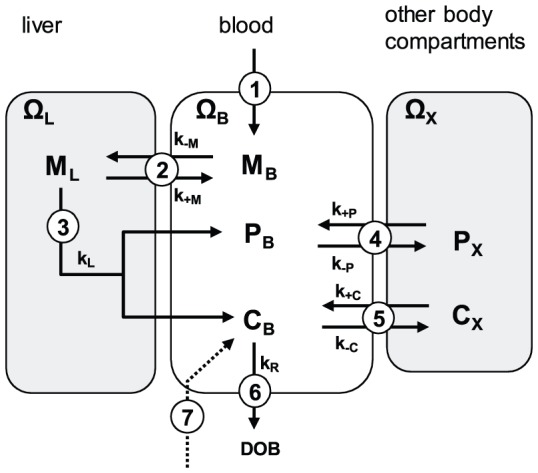
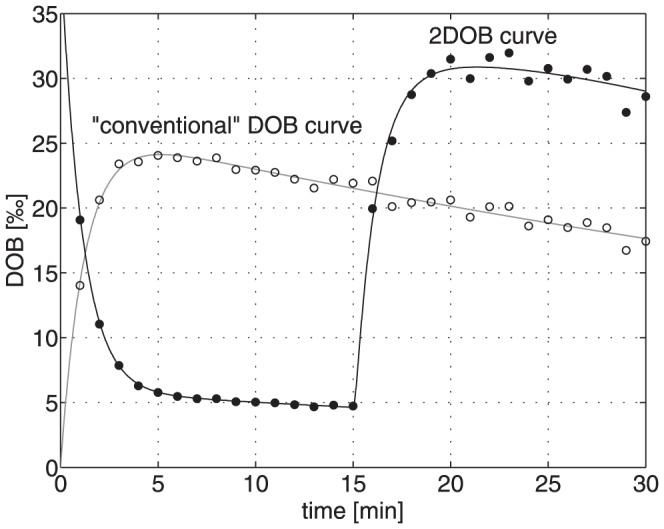
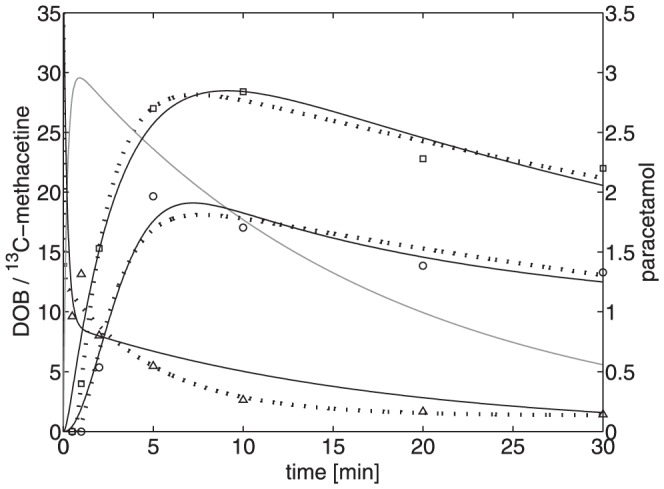
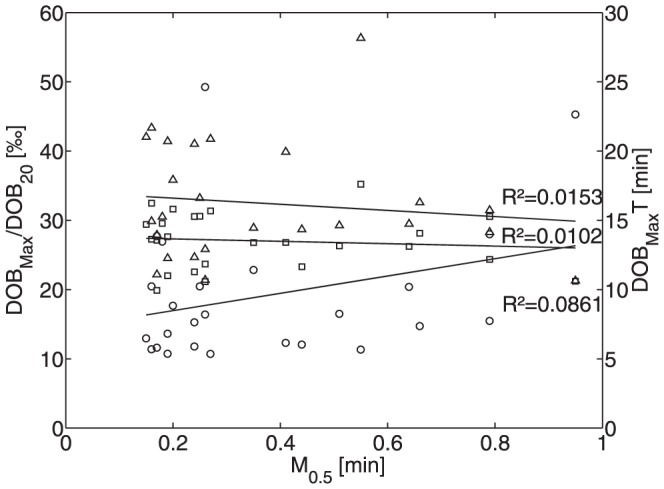
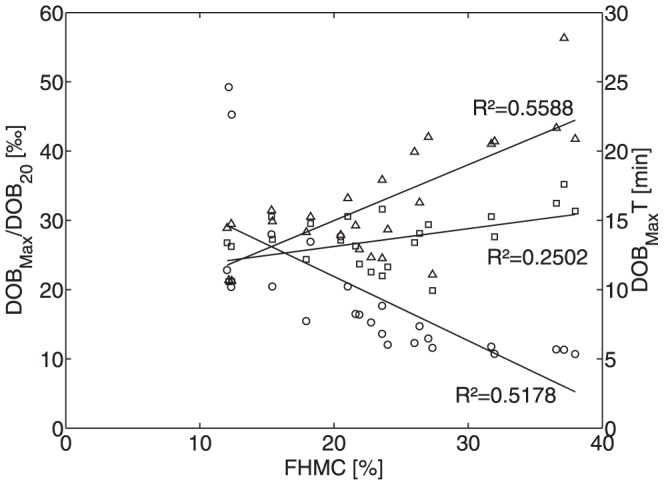
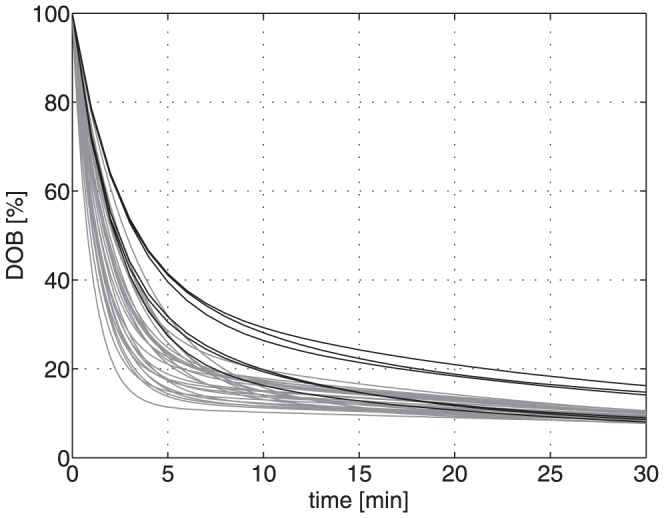
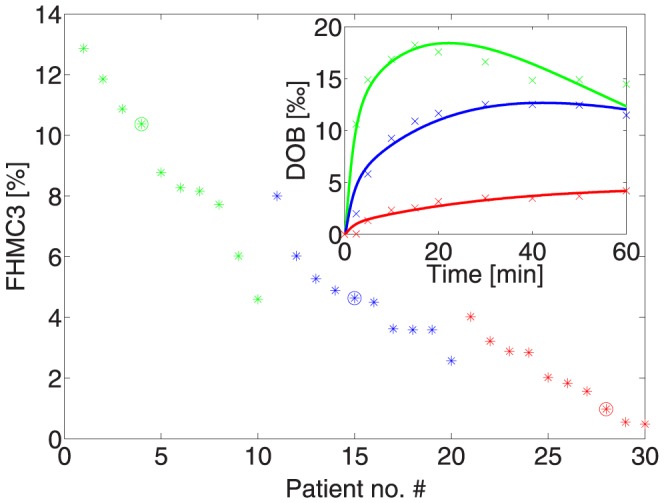
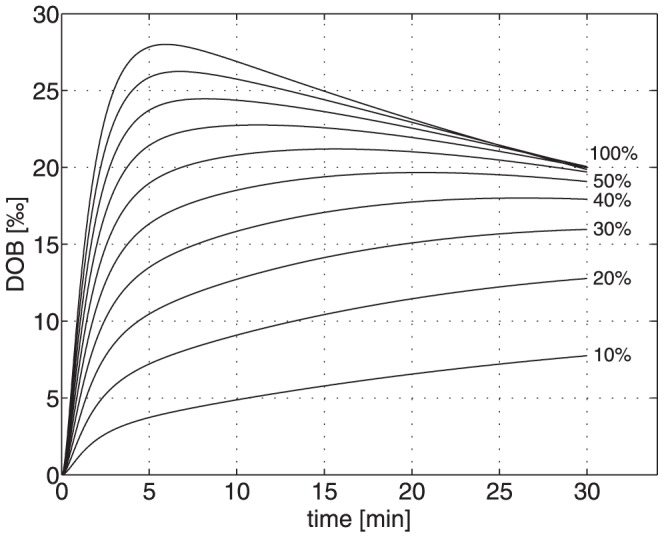
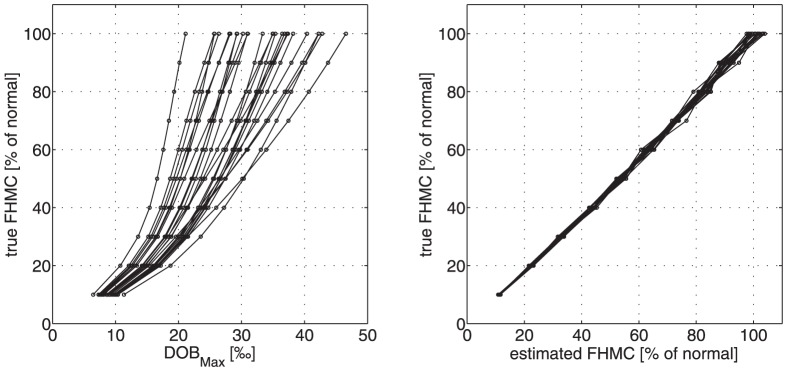
Breath tests based on the administration of a (13)C-labeled drug and subsequent monitoring of (13)CO2 in the breath (quantified as DOB - delta over baseline) liberated from the drug during hepatic CPY-dependent detoxification are important tools in liver function diagnostics. The capability of such breath tests to reliably indicate hepatic CYP performance is limited by the fact that (13)CO2 is not exclusively exhaled but also exchanged with other compartments of the body. In order to assess this bias caused by variations of individual systemic CO2 kinetics we administered intravenously the test drug (13)C-methacetin to 25 clinically liver-healthy individuals and monitored progress curves of DOB and the plasma concentration of (13)C-methacetin. Applying compartment modelling we estimated for each individual a set of kinetic parameters characterizing the time-dependent exchange of the drug and of CO2 with the liver and non-hepatic body compartments. This analysis revealed that individual variations in the kinetics of CO2 may account for up to 30% deviation of DOB curve parameters from their mean at otherwise identical (13)C-methacetin metabolization rates. In order to correct for this bias we introduced a novel detoxification score which ideally should be assessed from the DOB curve of a 2-step test ("2DOB") which is initialized with the injection of a standard dose of (13)C-labeled bicarbonate (in order to provide information on the actual CO2 status of the individual) followed by injection of the (13)C-labeled test drug (the common procedure). Computer simulations suggest that the predictive power of the proposed 2DOB breath test to reliably quantity the CYP-specific hepatic detoxification activity should be significantly higher compared to the conventional breath test.
基于(13)C 标记药物的给药和随后监测(13)CO2 在呼吸中的释放的呼吸测试(作为 DOB - 基线以上的差值进行量化),用于肝 CPY 依赖性解毒过程中药物的释放,是肝功能诊断的重要工具。这种呼吸测试能够可靠地指示肝 CYP 性能的能力受到限制,因为(13)CO2 不仅从肺部呼出,而且还与身体的其他隔室进行交换。为了评估由于个体全身 CO2 动力学变化引起的这种偏差,我们向 25 名临床肝脏健康的个体静脉注射了测试药物(13)C-美沙酮,并监测了 DOB 和(13)C-美沙酮的血浆浓度的进展曲线。通过应用隔室模型,我们为每个个体估计了一组描述药物和 CO2 与肝和非肝体隔室之间随时间变化的交换的动力学参数。该分析表明,CO2 动力学的个体差异可能导致 DOB 曲线参数与其在其他相同(13)C-美沙酮代谢率下的平均值偏差高达 30%。为了纠正这种偏差,我们引入了一种新的解毒评分,该评分理想情况下应从 2 步测试(“2DOB”)的 DOB 曲线评估,该测试从注射标准剂量的(13)C 标记的碳酸氢盐开始(为了提供有关个体实际 CO2 状态的信息),然后注射(13)C 标记的测试药物(常见程序)。计算机模拟表明,与常规呼吸测试相比,拟议的 2DOB 呼吸测试对可靠地定量 CYP 特异性肝解毒活性的预测能力应该显著更高。