Clinical Laboratory, Beijing Chao-Yang Hospital, Capital Medical University, Beijing, China.
PLoS One. 2013 Aug 14;8(8):e71059. doi: 10.1371/journal.pone.0071059. eCollection 2013.
Idiopathic pulmonary fibrosis (IPF) and pulmonary sarcoidosis are typical interstitial lung diseases with unknown etiology that cause lethal lung damages. There are notable differences between these two pulmonary disorders, although they do share some similarities. Gene expression profiles have been reported independently, but differences on the transcriptional level between these two entities have not been investigated.
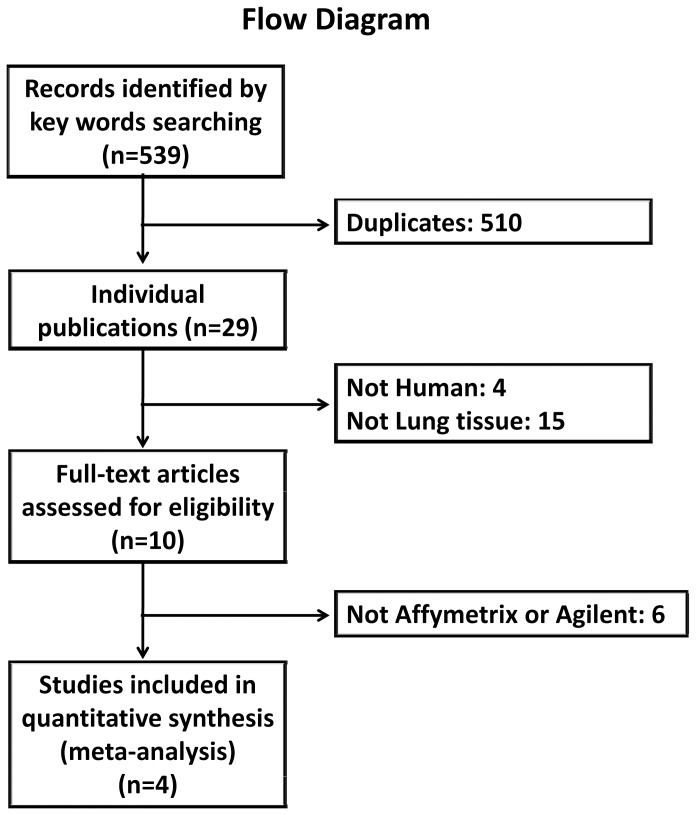
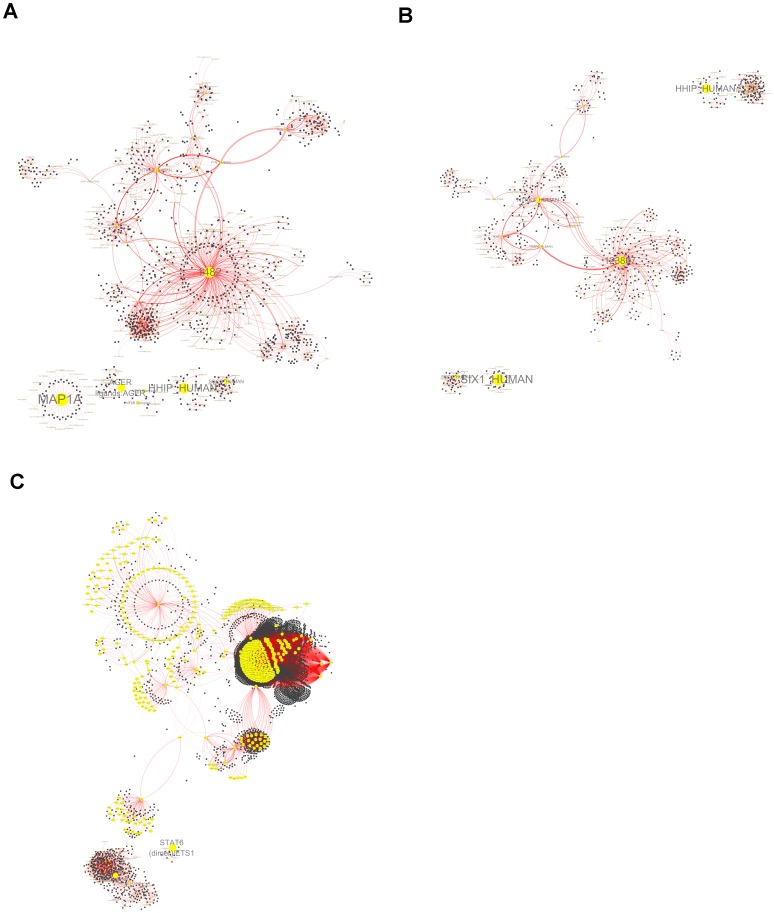
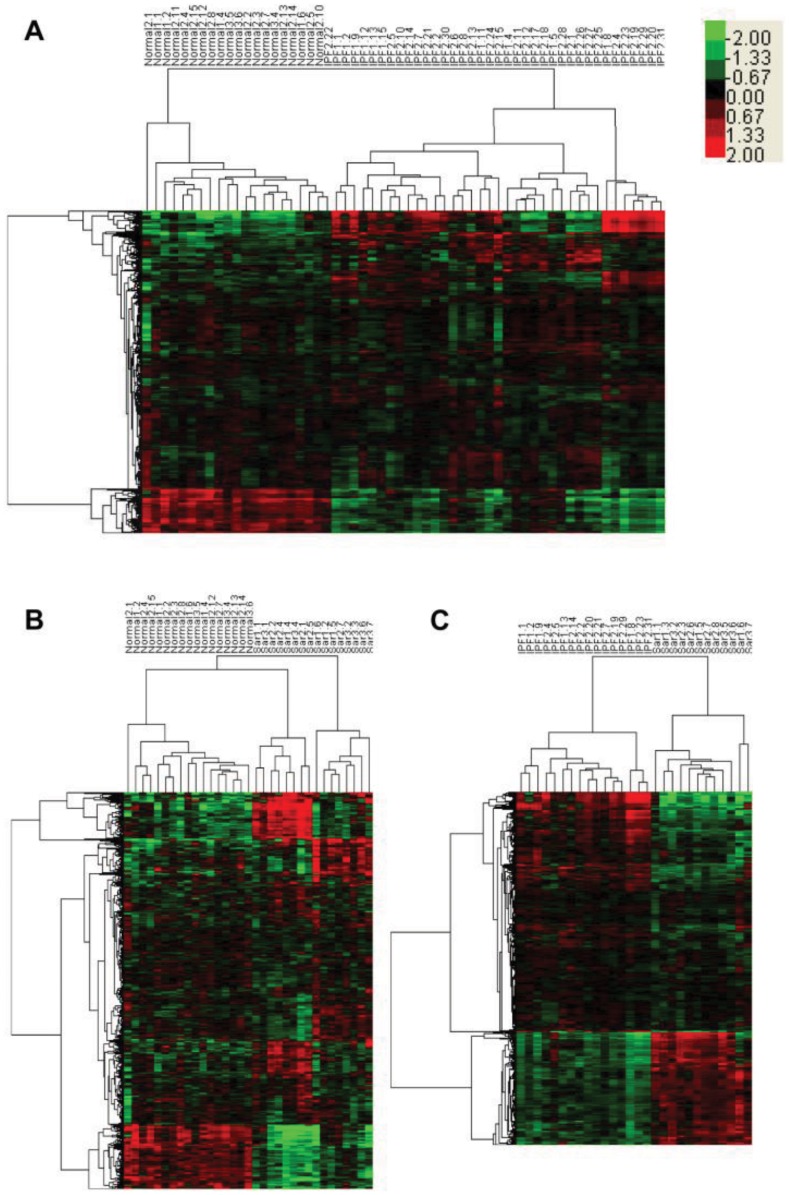
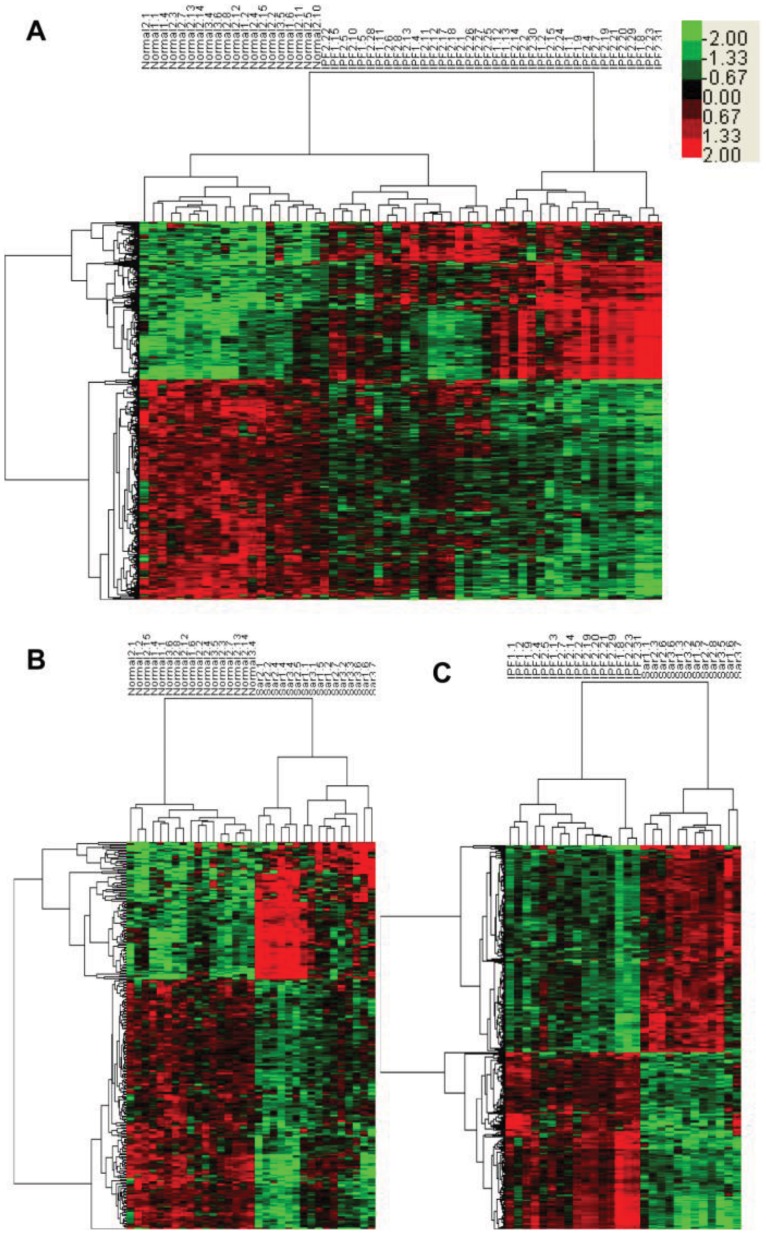
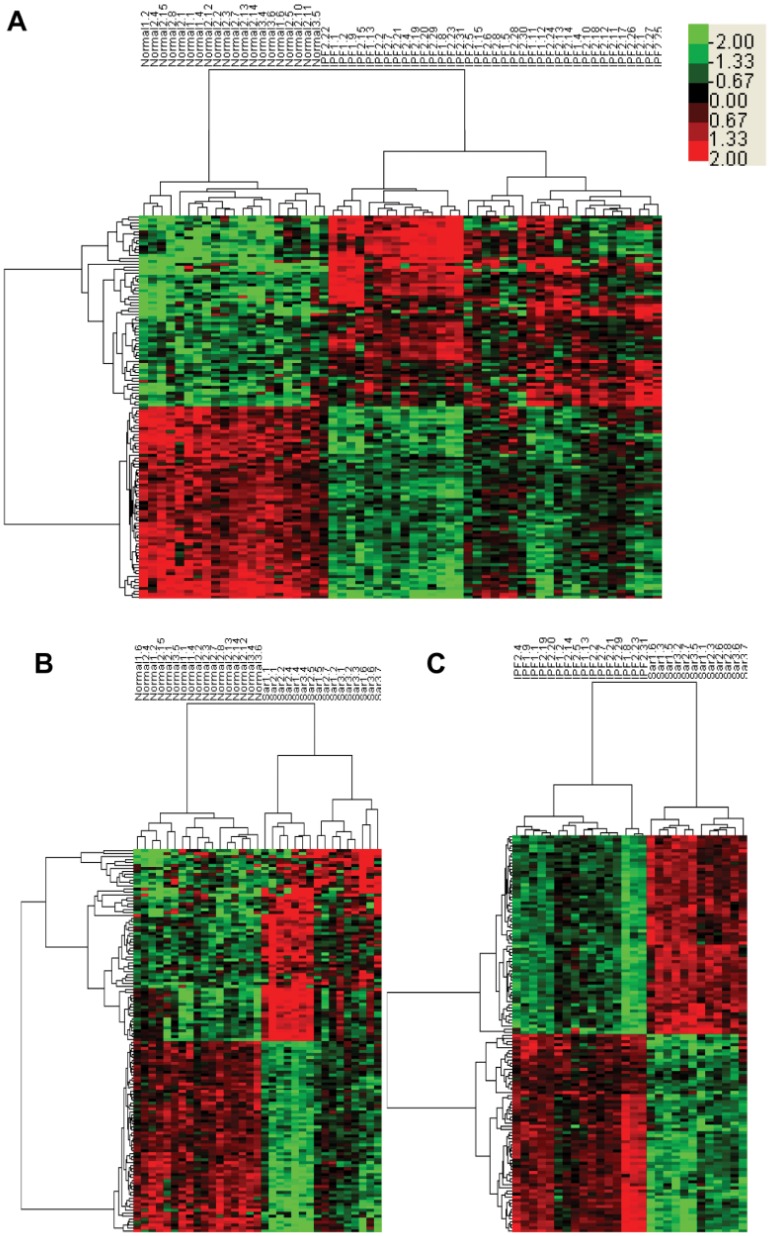
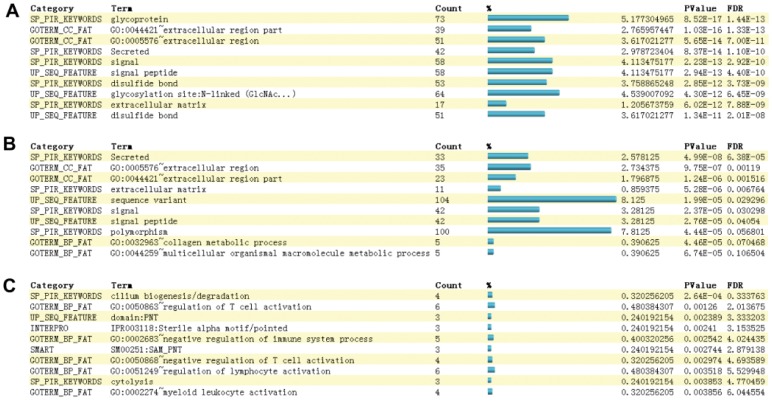
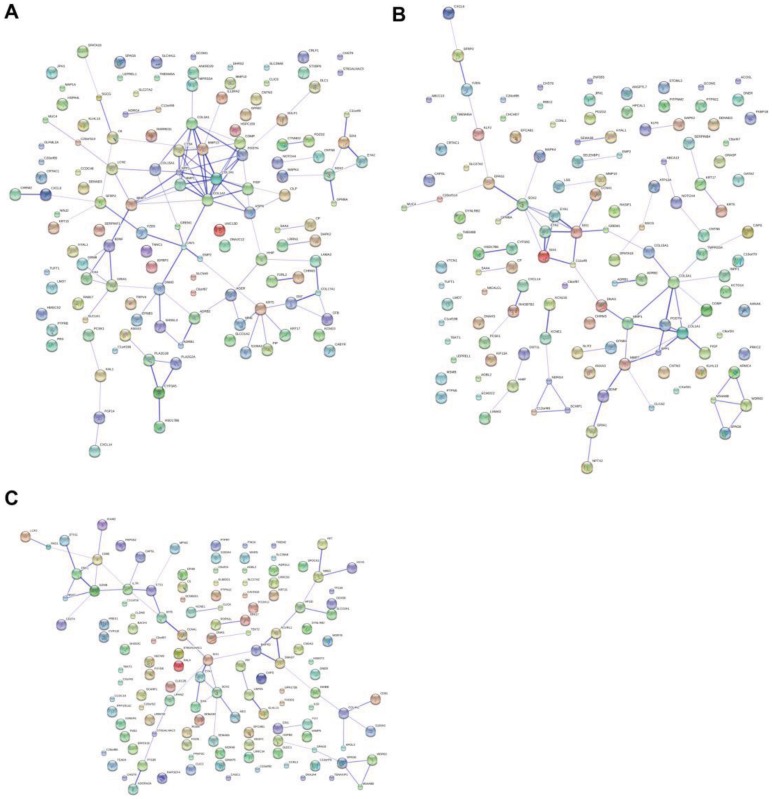
METHODS/RESULTS: All expression data of lung tissue samples for IPF and sarcoidosis were from published datasets in the Gene Expression Omnibus (GEO) repository. After cross platform normalization, the merged sample data were grouped together and were subjected to statistical analysis for finding discriminate genes. Gene enrichments with their corresponding functions were analyzed by the online analysis engine "Database for Annotation, Visualization and Integrated Discovery" (DAVID) 6.7, and genes interactions and functional networks were further analyzed by STRING 9.0 and Cytoscape 3.0.0 Beta1. One hundred and thirty signature genes could potentially differentiate one disease state from another. Compared with normal lung tissue, tissue affected by IPF and sarcoidosis displayed similar signatures that concentrated on proliferation and differentiation. Distinctly expressed genes that could distinguish IPF from sarcoidosis are more enriched in processes of cilium biogenesis or degradation and regulating T cell activations. Key discriminative network modules involve aspects of bone morphogenetic protein receptor two (BMPR2) related and v-myb myeloblastosis viral oncogene (MYB) related proliferation.
This study is the first attempt to examine the transcriptional regulation of IPF and sarcoidosis across different studies based on different working platforms. Groups of significant genes were found to clearly distinguish one condition from the other. While IPF and sarcoidosis share notable similarities in cell proliferation, differentiation and migration, remarkable differences between the diseases were found at the transcription level, suggesting that the two diseases are regulated by overlapping yet distinctive transcriptional networks.
特发性肺纤维化(IPF)和肺结节病是两种病因不明的典型间质性肺疾病,可导致致命性肺损伤。虽然这两种肺部疾病有一些相似之处,但它们之间存在显著差异。基因表达谱已被独立报道,但这两种实体之间在转录水平上的差异尚未被研究过。
方法/结果:IPF 和结节病的肺组织样本的所有表达数据均来自基因表达综合数据库(GEO)存储库中已发表的数据集。在跨平台归一化后,将合并的样本数据组合在一起,并进行统计分析以寻找有区别的基因。通过在线分析引擎“数据库注释、可视化和综合发现”(DAVID)6.7 分析基因丰度及其相应功能,并通过 STRING 9.0 和 Cytoscape 3.0.0 Beta1 进一步分析基因相互作用和功能网络。有 130 个特征基因可能潜在地区分一种疾病状态和另一种疾病状态。与正常肺组织相比,受 IPF 和结节病影响的组织显示出相似的特征,这些特征集中在增殖和分化上。能够将 IPF 与结节病区分开来的差异表达基因在纤毛发生或降解以及调节 T 细胞激活的过程中更为丰富。关键的鉴别网络模块涉及骨形态发生蛋白受体 2(BMPR2)相关和 v-myb 髓样白血病病毒癌基因(MYB)相关增殖。
这是首次尝试基于不同工作平台,对不同研究中 IPF 和结节病的转录调控进行研究。发现了一组显著的基因,可清楚地区分一种情况与另一种情况。虽然 IPF 和结节病在细胞增殖、分化和迁移方面有显著的相似之处,但在疾病的转录水平上发现了显著的差异,表明这两种疾病受重叠但独特的转录网络调控。