School of Life Science and Technology, State Key Laboratory of Urban Water Resource and Environment, Harbin Institute of Technology, Harbin, China.
PLoS One. 2013 Aug 14;8(8):e71152. doi: 10.1371/journal.pone.0071152. eCollection 2013.
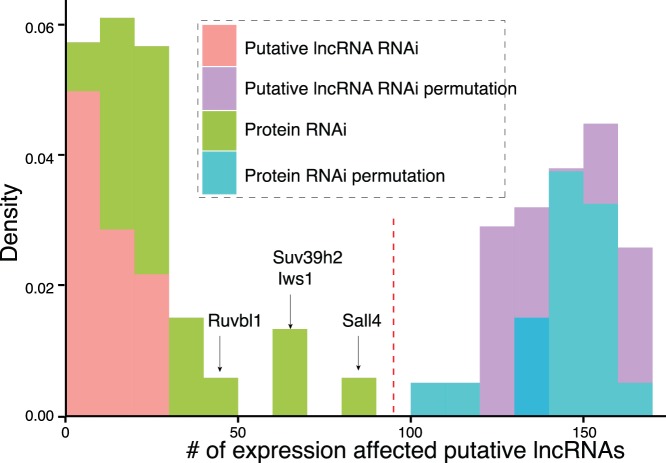
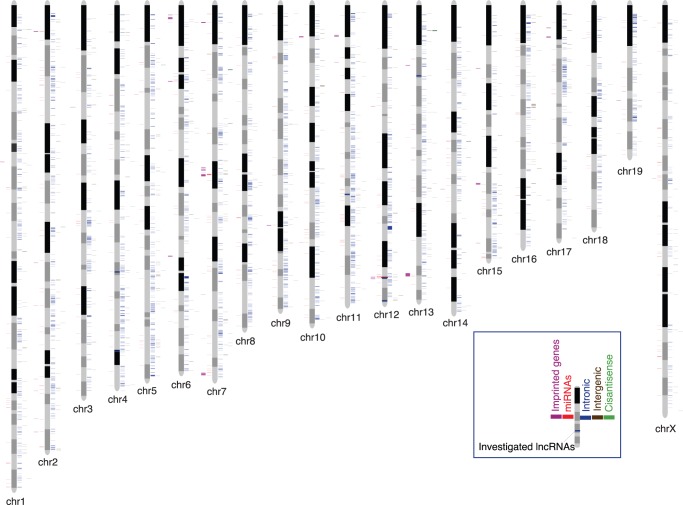
Long non-coding RNAs (lncRNAs) as a key group of non-coding RNAs have gained widely attention. Though lncRNAs have been functionally annotated and systematic explored in higher mammals, few are under systematical identification and annotation. Owing to the expression specificity, known lncRNAs expressed in embryonic brain tissues remain still limited. Considering a large number of lncRNAs are only transcribed in brain tissues, studies of lncRNAs in developmental brain are therefore of special interest. Here, publicly available RNA-sequencing (RNA-seq) data in embryonic brain are integrated to identify thousands of embryonic brain lncRNAs by a customized pipeline. A significant proportion of novel transcripts have not been annotated by available genomic resources. The putative embryonic brain lncRNAs are shorter in length, less spliced and show less conservation than known genes. The expression of putative lncRNAs is in one tenth on average of known coding genes, while comparable with known lncRNAs. From chromatin data, putative embryonic brain lncRNAs are associated with active chromatin marks, comparable with known lncRNAs. Embryonic brain expressed lncRNAs are also indicated to have expression though not evident in adult brain. Gene Ontology analysis of putative embryonic brain lncRNAs suggests that they are associated with brain development. The putative lncRNAs are shown to be related to possible cis-regulatory roles in imprinting even themselves are deemed to be imprinted lncRNAs. Re-analysis of one knockdown data suggests that four regulators are associated with lncRNAs. Taken together, the identification and systematic analysis of putative lncRNAs would provide novel insights into uncharacterized mouse non-coding regions and the relationships with mammalian embryonic brain development.
长链非编码 RNA(lncRNA)作为非编码 RNA 的一个重要群体,已经引起了广泛的关注。尽管在高等哺乳动物中已经对 lncRNA 进行了功能注释和系统探索,但仍有少数 lncRNA 有待系统鉴定和注释。由于表达特异性,已知在胚胎脑组织中表达的 lncRNA 仍然有限。考虑到大量的 lncRNA 仅在脑组织中转录,因此对发育中的大脑中的 lncRNA 进行研究具有特殊意义。在这里,通过定制的管道,整合了胚胎脑组织中公开可用的 RNA 测序(RNA-seq)数据,以识别数千种胚胎脑 lncRNA。大量新的转录本尚未被现有基因组资源注释。推定的胚胎脑 lncRNA 长度较短,剪接较少,与已知基因相比保守性较低。推定 lncRNA 的表达平均为已知编码基因的十分之一,与已知 lncRNA 相当。从染色质数据来看,推定的胚胎脑 lncRNA 与活性染色质标记相关,与已知的 lncRNA 相当。还表明,胚胎脑表达的 lncRNA 存在表达,尽管在成年脑中不明显。对推定的胚胎脑 lncRNA 的基因本体分析表明,它们与脑发育有关。推定的 lncRNA 被证明与印迹的顺式调控作用有关,即使它们本身被认为是印迹的 lncRNA。对一个敲低数据的重新分析表明,有四个调节剂与 lncRNA 相关。总之,推定 lncRNA 的鉴定和系统分析将为未表征的小鼠非编码区域及其与哺乳动物胚胎脑发育的关系提供新的见解。