Developmental Biology and Regenerative Medicine Program, Saban Research Institute, Children's Hospital Los Angeles, Los Angeles, California, USA.
PLoS One. 2013 Aug 13;8(8):e71679. doi: 10.1371/journal.pone.0071679. eCollection 2013.
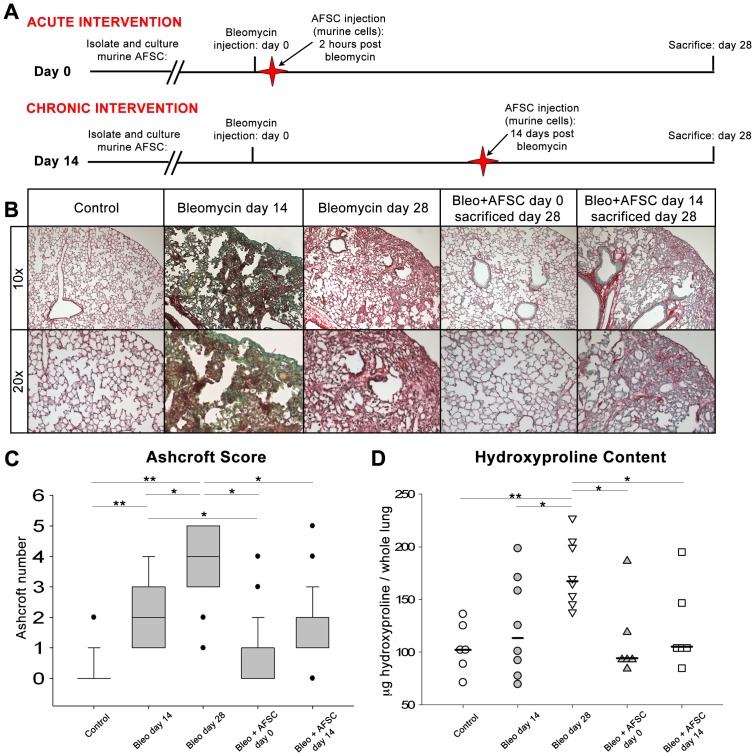
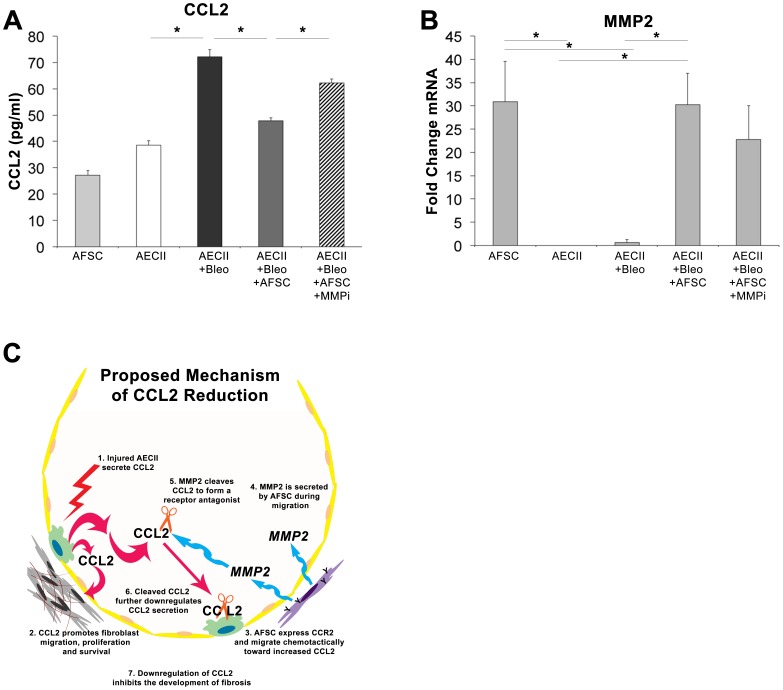
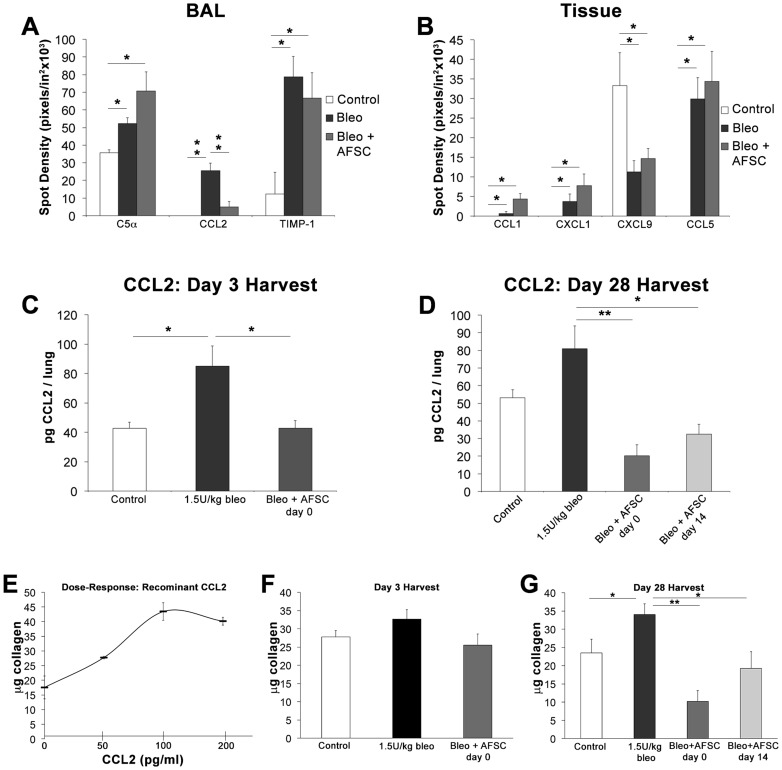
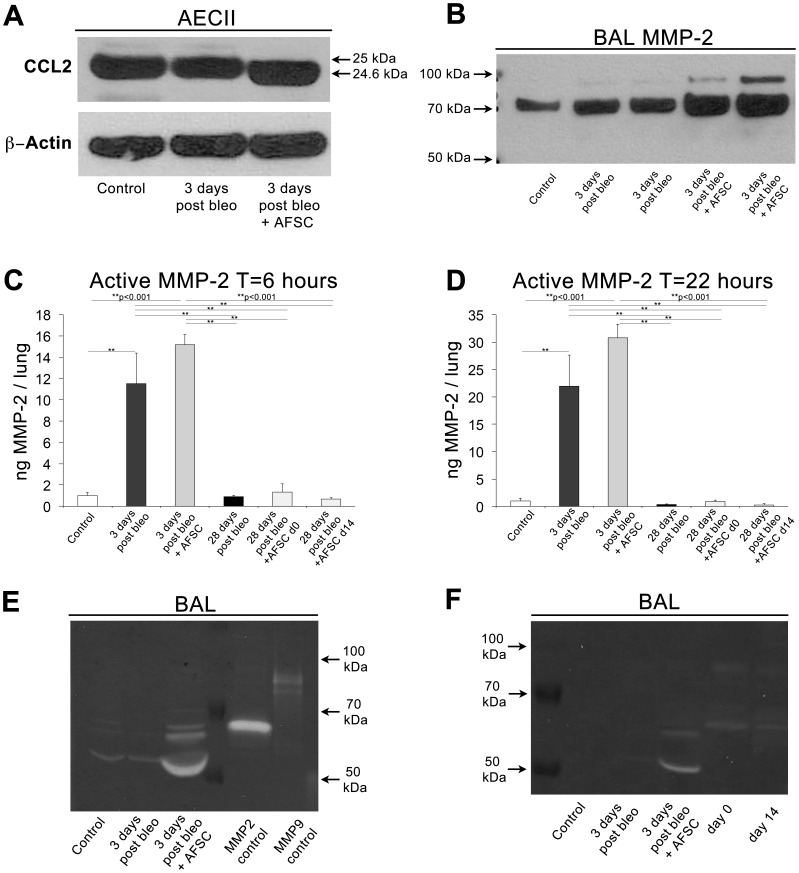
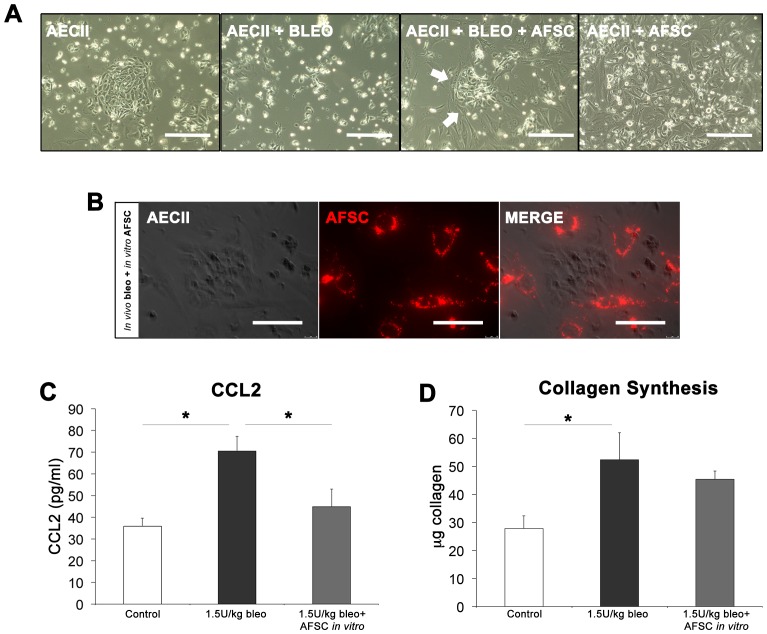
The potential for amniotic fluid stem cell (AFSC) treatment to inhibit the progression of fibrotic lung injury has not been described. We have previously demonstrated that AFSC can attenuate both acute and chronic-fibrotic kidney injury through modification of the cytokine environment. Fibrotic lung injury, such as in Idiopathic Pulmonary Fibrosis (IPF), is mediated through pro-fibrotic and pro-inflammatory cytokine activity. Thus, we hypothesized that AFSC treatment might inhibit the progression of bleomycin-induced pulmonary fibrosis through cytokine modulation. In particular, we aimed to investigate the effect of AFSC treatment on the modulation of the pro-fibrotic cytokine CCL2, which is increased in human IPF patients and is correlated with poor prognoses, advanced disease states and worse fibrotic outcomes. The impacts of intravenous murine AFSC given at acute (day 0) or chronic (day 14) intervention time-points after bleomycin injury were analyzed at either day 3 or day 28 post-injury. Murine AFSC treatment at either day 0 or day 14 post-bleomycin injury significantly inhibited collagen deposition and preserved pulmonary function. CCL2 expression increased in bleomycin-injured bronchoalveolar lavage (BAL), but significantly decreased following AFSC treatment at either day 0 or at day 14. AFSC were observed to localize within fibrotic lesions in the lung, showing preferential targeting of AFSC to the area of fibrosis. We also observed that MMP-2 was transiently increased in BAL following AFSC treatment. Increased MMP-2 activity was further associated with cleavage of CCL2, rendering it a putative antagonist for CCL2/CCR2 signaling, which we surmise is a potential mechanism for CCL2 reduction in BAL following AFSC treatment. Based on this data, we concluded that AFSC have the potential to inhibit the development or progression of fibrosis in a bleomycin injury model during both acute and chronic remodeling events.
羊水干细胞 (AFSC) 治疗抑制纤维化肺损伤进展的潜力尚未被描述。我们之前已经证明,AFSC 可以通过改变细胞因子环境来减轻急性和慢性纤维化肾脏损伤。特发性肺纤维化 (IPF) 等纤维化肺损伤是通过促纤维化和促炎细胞因子活性介导的。因此,我们假设 AFSC 治疗可能通过细胞因子调节来抑制博来霉素诱导的肺纤维化的进展。特别是,我们旨在研究 AFSC 治疗对促纤维化细胞因子 CCL2 调节的影响,CCL2 在 IPF 患者中增加,与预后不良、疾病进展和更严重的纤维化结局相关。在博来霉素损伤后第 3 天或第 28 天分析急性(第 0 天)或慢性(第 14 天)干预时间点给予静脉内鼠 AFSC 的影响。在博来霉素损伤后第 0 天或第 14 天给予鼠 AFSC 治疗显著抑制胶原蛋白沉积并维持肺功能。CCL2 在博来霉素损伤的支气管肺泡灌洗液 (BAL) 中表达增加,但在第 0 天或第 14 天给予 AFSC 治疗后显著降低。观察到 AFSC 在肺纤维化病变中定位,表明 AFSC 优先靶向纤维化区域。我们还观察到 MMP-2 在 AFSC 治疗后 BAL 中短暂增加。MMP-2 活性的增加进一步与 CCL2 的切割相关,这使其成为 CCL2/CCR2 信号的潜在拮抗剂,我们推测这是 AFSC 治疗后 BAL 中 CCL2 减少的潜在机制。基于这些数据,我们得出结论,AFSC 有可能在急性和慢性重塑事件期间抑制博来霉素损伤模型中纤维化的发展或进展。