Centre des Sciences du Goût et de l'Alimentation, Centre National de la Recherche Scientifique - Institut National de la Recherche Agronomique - Université de Bourgogne, Dijon, France.
PLoS One. 2013 Aug 13;8(8):e72029. doi: 10.1371/journal.pone.0072029. eCollection 2013.
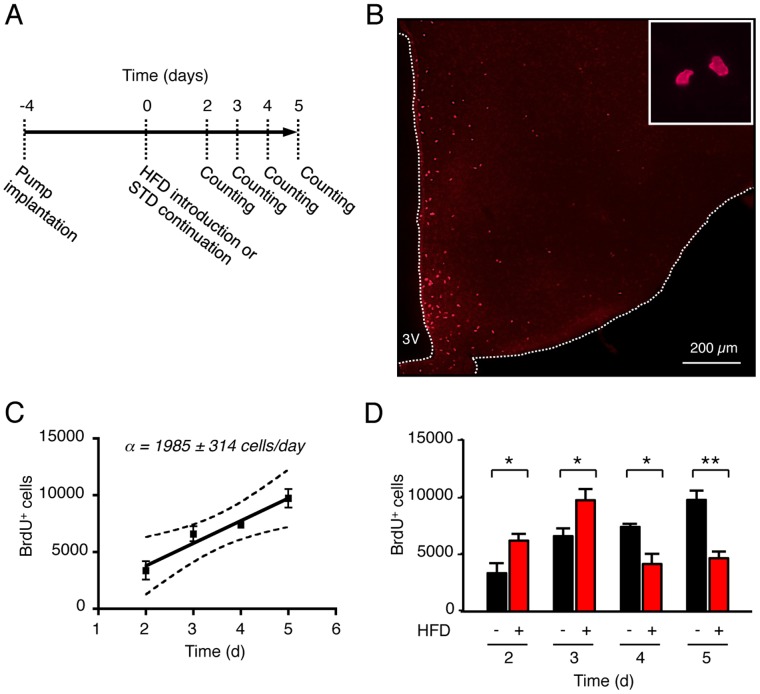
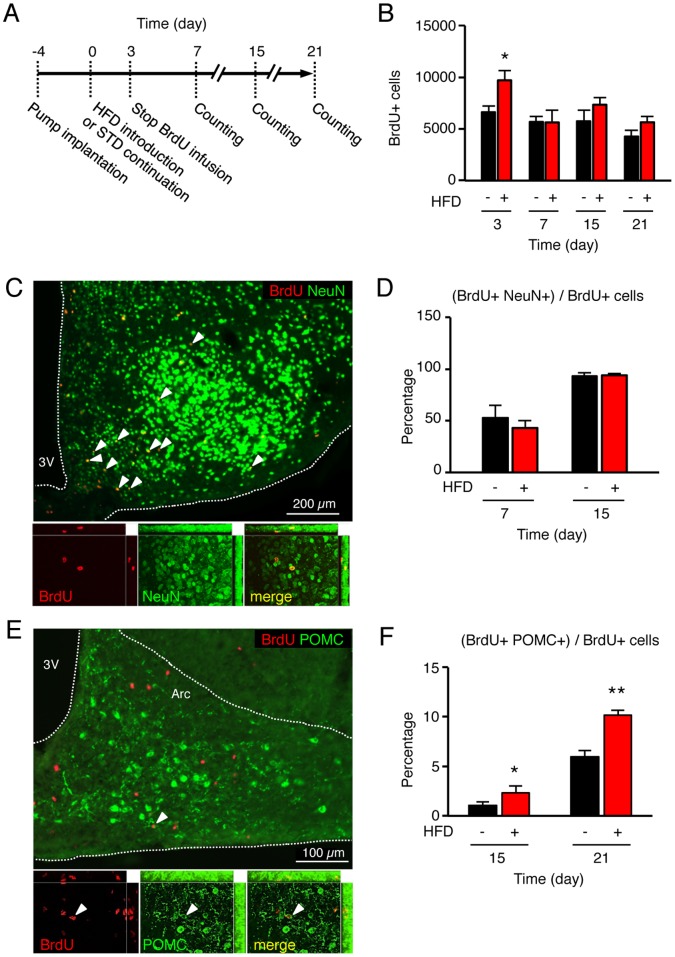
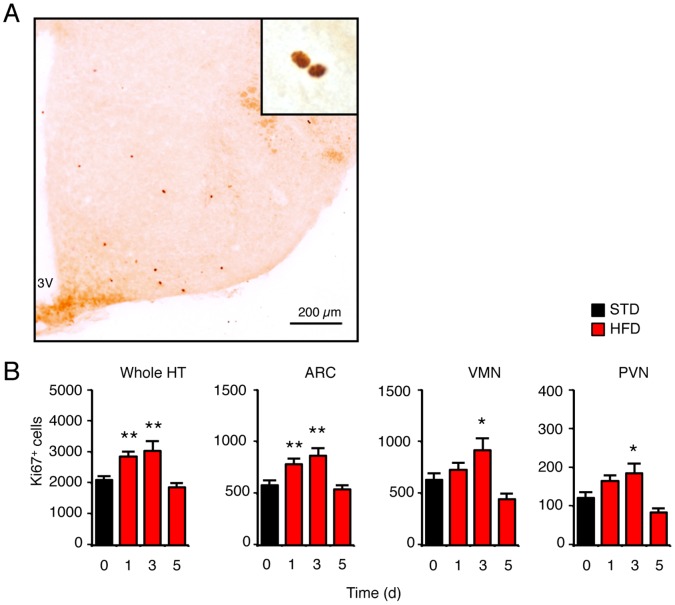
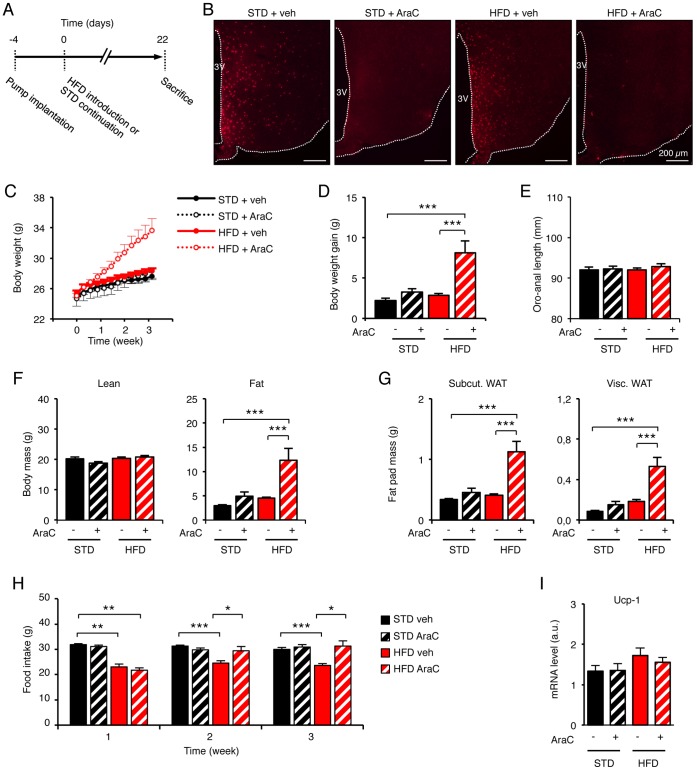
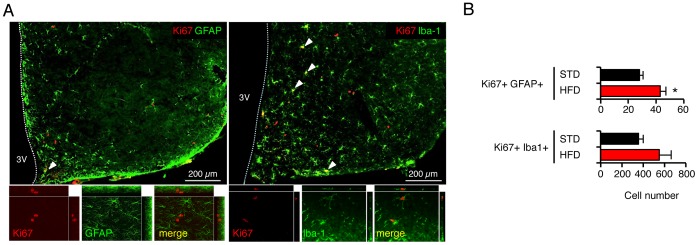
The hypothalamus plays a crucial role in the control of the energy balance and also retains neurogenic potential into adulthood. Recent studies have reported the severe alteration of the cell turn-over in the hypothalamus of obese animals and it has been proposed that a neurogenic deficiency in the hypothalamus could be involved in the development of obesity. To explore this possibility, we examined hypothalamic cell renewal during the homeostatic response to dietary fat in mice, i.e., at the onset of diet-induced obesity. We found that switching to high-fat diet (HFD) accelerated cell renewal in the hypothalamus through a local, rapid and transient increase in cell proliferation, peaking three days after introducing the HFD. Blocking HFD-induced cell proliferation by central delivery of an antimitotic drug prevented the food intake normalization observed after HFD introduction and accelerated the onset of obesity. This result showed that HFD-induced dividing brain cells supported an adaptive anorectic function. In addition, we found that the percentage of newly generated neurons adopting a POMC-phenotype in the arcuate nucleus was increased by HFD. This observation suggested that the maturation of neurons in feeding circuits was nutritionally regulated to adjust future energy intake. Taken together, these results showed that adult cerebral cell renewal was remarkably responsive to nutritional conditions. This constituted a physiological trait required to prevent severe weight gain under HFD. Hence this report highlighted the amazing plasticity of feeding circuits and brought new insights into our understanding of the nutritional regulation of the energy balance.
下丘脑在能量平衡的控制中起着至关重要的作用,并且在成年期仍然具有神经发生潜力。最近的研究报告称,肥胖动物下丘脑的细胞更替严重改变,并且有人提出,下丘脑的神经发生缺陷可能与肥胖的发展有关。为了探索这种可能性,我们研究了在饮食诱导肥胖的情况下,即肥胖开始时,下丘脑的细胞更新情况。我们发现,切换到高脂肪饮食(HFD)通过局部、快速和短暂的细胞增殖增加加速了下丘脑的细胞更新,在引入 HFD 三天后达到峰值。通过中枢递送抗有丝分裂药物阻止 HFD 诱导的细胞增殖,可防止在引入 HFD 后观察到的食物摄入量正常化,并加速肥胖的发生。这一结果表明,HFD 诱导的分裂脑细胞支持适应性厌食功能。此外,我们发现,弓状核中采用 POMC 表型的新生成神经元的百分比增加了 HFD。这一观察结果表明,进食回路中的神经元成熟受到营养调节,以调整未来的能量摄入。总的来说,这些结果表明,成年大脑细胞更新对营养状况有显著反应。这是一种防止在 HFD 下体重严重增加的生理特征。因此,本报告强调了进食回路的惊人可塑性,并为我们理解能量平衡的营养调节提供了新的见解。