Innovative Trauma Care, Inc., Edmonton, Alberta, Canada.
Prehosp Emerg Care. 2013 Oct-Dec;17(4):526-32. doi: 10.3109/10903127.2013.818177. Epub 2013 Aug 22.
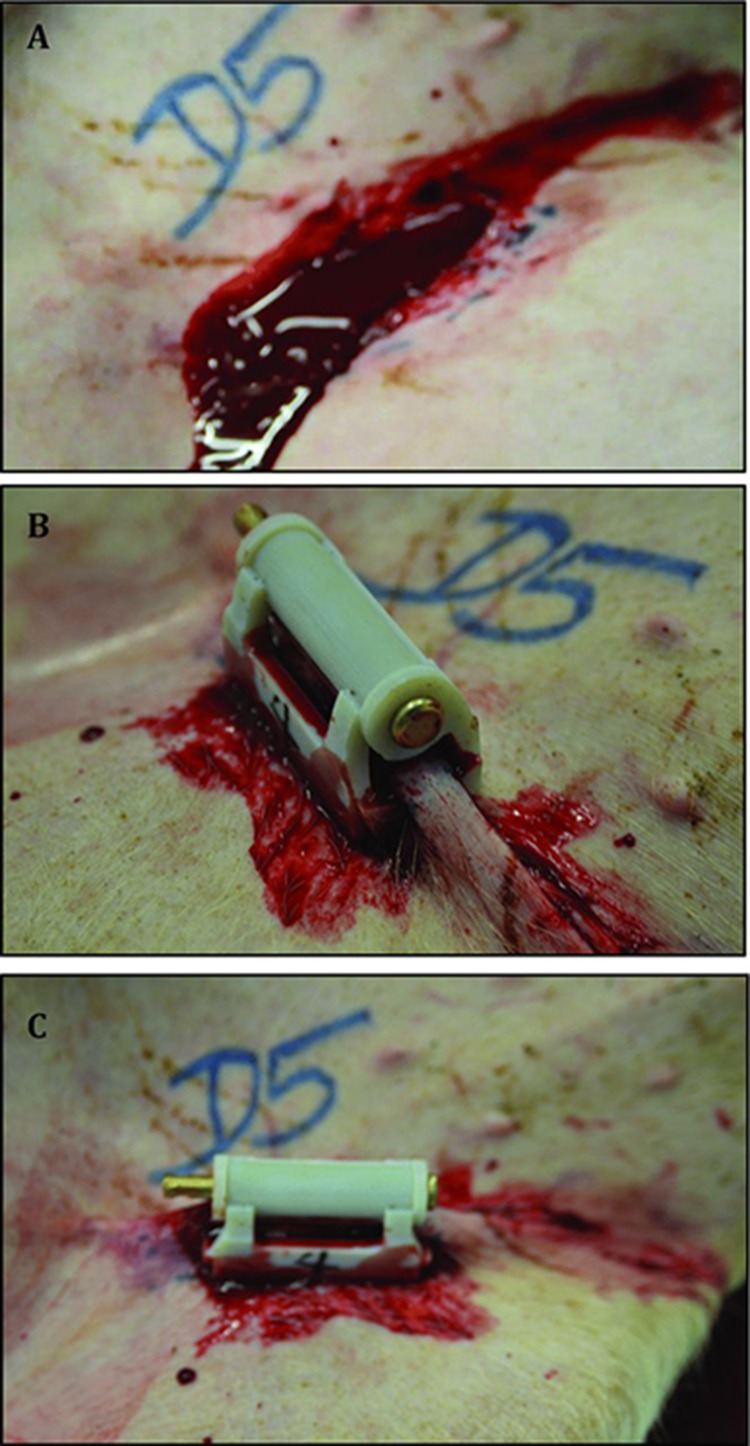
Severe hemorrhage is a leading cause of death and difficult to control even by trained medical personnel. Current interventions have significant limitations in the prehospital setting; therefore, a need exists for a new and effective treatment. iTraumaCare has designed a temporary wound closure device, the iTClamp, which controls external hemorrhage from open wounds within compressible zones. The device approximates the wound edges, sealing the skin within a pressure bar, enabling creation of a hematoma and subsequent clot formation. The objective of this study is to test the effectiveness of the iTClamp to control external bleeding due to a major vascular injury to the groin in an in vivo swine model.
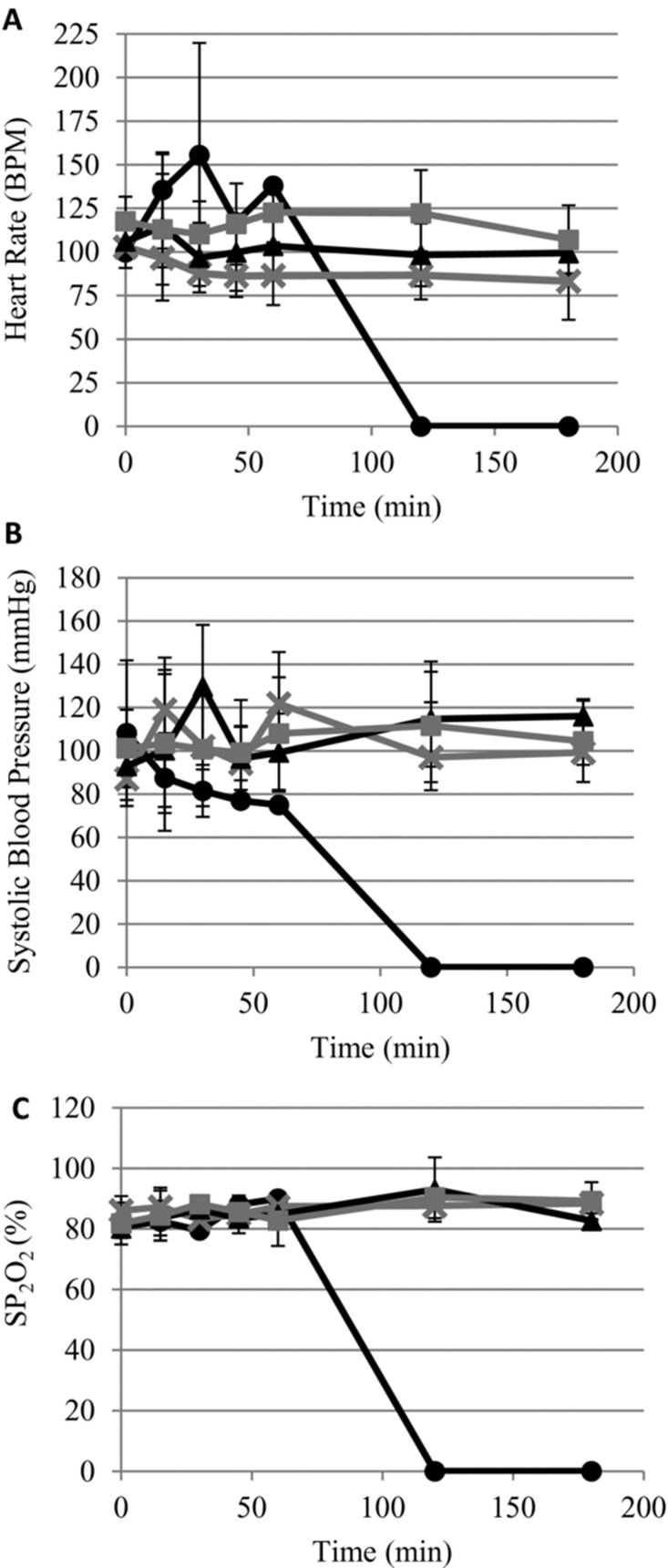
Twenty Yorkshire-cross male swine were enrolled in this study. A complex groin injury was created by complete excision of the femoral artery and vein along with some surrounding muscle. The animals were divided into four treatment groups: control (no treatment), early iTClamp treatment, late iTClamp treatment, and standard gauze treatment. Survival rate, survival time, and blood loss were the primary endpoints. Physiologic parameters (heart rate, blood pressure, oxygen saturation) were monitored throughout the experiment and blood samples were collected to analyze partial thromboplastin time and fibrinogen.
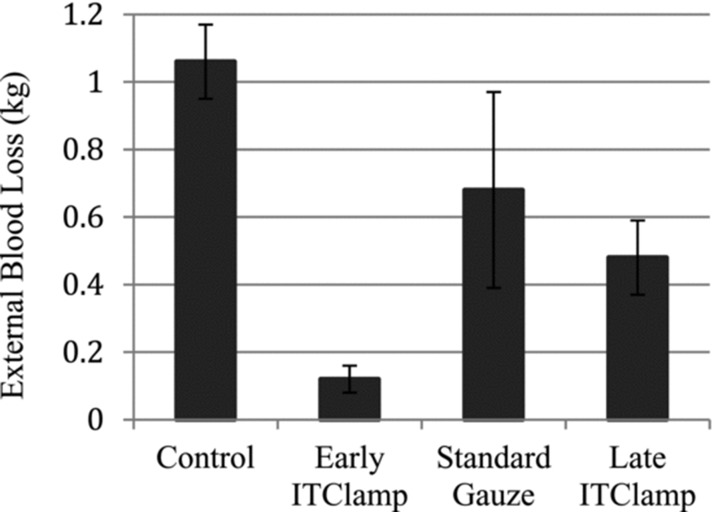
All (100%) of the animals treated with the iTClamp lived through the end of the experiment, compared to 60% in standard gauze treated and 0% of untreated control animals (early and late iTClamp vs. control and standard gauze, Fisher's exact, p = 0.003). Both the early iTClamp and late iTClamp treatment groups survived significantly longer than the untreated control pigs (Mann-Whitney U-test, p < 0.009). External blood loss was significantly lower in animals treated with the iTClamp (early) compared to no treatment (Mann-Whitney U-test, p < 0.008). There was no significant change in physiologic or hematologic parameters between treatment groups.
The iTClamp showed statistically significant improvement in survival, survival time, and estimated blood loss when compared to no treatment. This proof-of-concept study demonstrates the potential of the iTClamp to control severe bleeding and prevent blood loss.
严重出血是导致死亡的主要原因,即使经过专业医疗人员的治疗也难以控制。目前的干预措施在院前环境中存在显著局限性;因此,需要一种新的有效治疗方法。iTraumaCare 设计了一种临时伤口闭合装置,即 iTClamp,它可以控制可压缩区域内开放性伤口的外部出血。该装置使伤口边缘接近,将皮肤密封在压力杆内,形成血肿并随后形成血栓。本研究的目的是测试 iTClamp 在活体猪模型中控制腹股沟大血管损伤引起的外部出血的有效性。
本研究纳入了 20 头约克夏杂交雄性猪。通过完全切除股动脉和静脉以及一些周围肌肉来创建复杂的腹股沟损伤。动物被分为四组治疗:对照组(无治疗)、早期 iTClamp 治疗组、晚期 iTClamp 治疗组和标准纱布治疗组。生存率、生存时间和失血量是主要终点。整个实验过程中监测生理参数(心率、血压、血氧饱和度),并采集血样分析部分凝血活酶时间和纤维蛋白原。
所有接受 iTClamp 治疗的动物(100%)均存活至实验结束,而标准纱布治疗组的存活率为 60%,未治疗的对照组动物的存活率为 0%(早期 iTClamp 与对照组和标准纱布比较,Fisher 确切检验,p = 0.003)。早期 iTClamp 和晚期 iTClamp 治疗组的动物比未治疗的对照组猪存活时间明显更长(Mann-Whitney U 检验,p < 0.009)。与未治疗相比,接受 iTClamp(早期)治疗的动物的外部失血量明显减少(Mann-Whitney U 检验,p < 0.008)。治疗组之间的生理或血液学参数没有显著变化。
与无治疗相比,iTClamp 在生存率、生存时间和估计失血量方面均有统计学显著改善。这项概念验证研究证明了 iTClamp 控制严重出血和预防失血的潜力。