Internal Medicine, University of Utah School of Medicine Salt Lake City, UT, USA.
Front Genet. 2013 Aug 20;4:152. doi: 10.3389/fgene.2013.00152. eCollection 2013.
Prostate cancer is a common and often deadly cancer. Decades of study have yet to identify genes that explain much familial prostate cancer. Traditional linkage analysis of pedigrees has yielded results that are rarely validated. We hypothesize that there are rare segregating variants responsible for high-risk prostate cancer pedigrees, but recognize that within-pedigree heterogeneity is responsible for significant noise that overwhelms signal. Here we introduce a method to identify homogeneous subsets of prostate cancer, based on cancer characteristics, which show the best evidence for an inherited contribution.
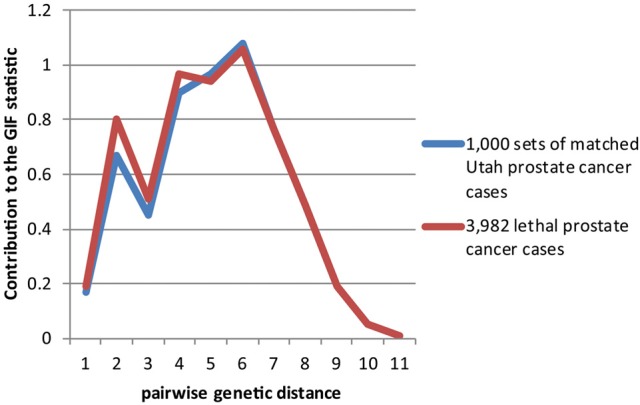
We have modified an existing method, the Genealogical Index of Familiality (GIF) used to show evidence for significant familial clustering. The modification allows a test for excess familial clustering of a subset of prostate cancer cases when compared to all prostate cancer cases.
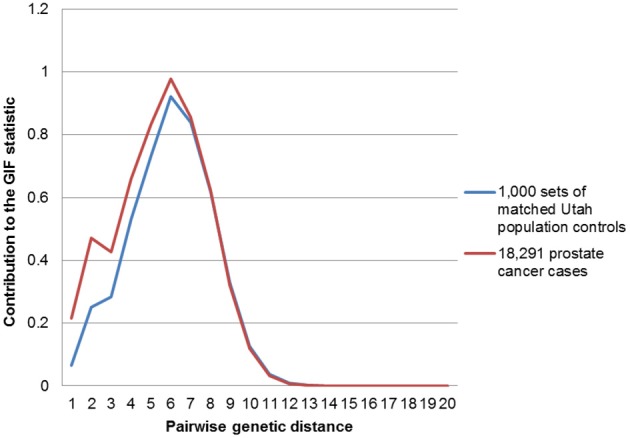
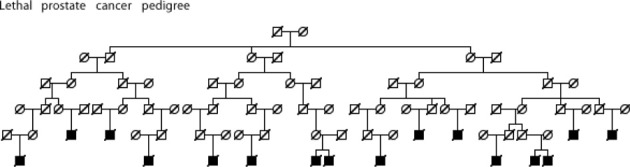
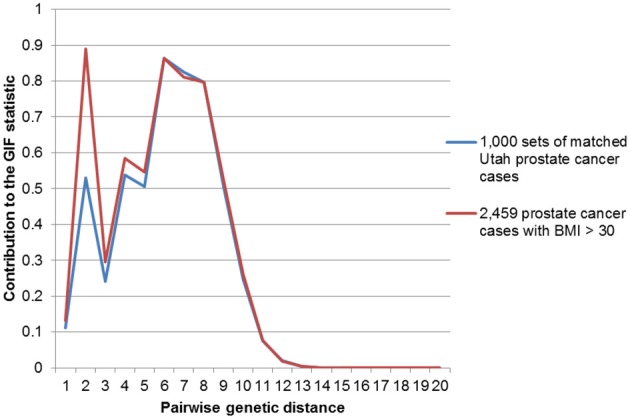
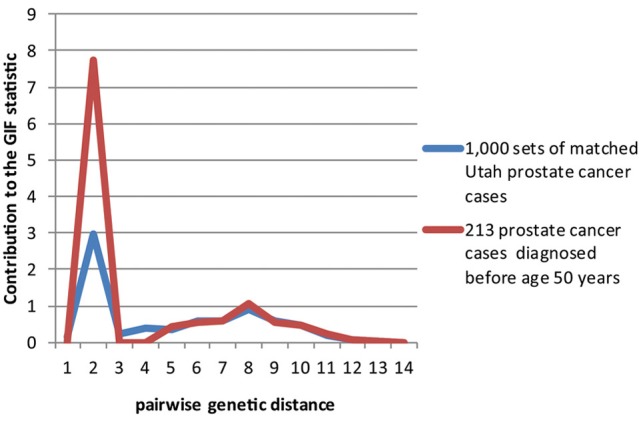
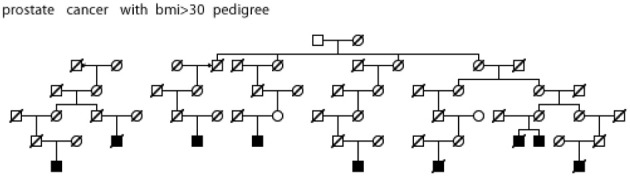
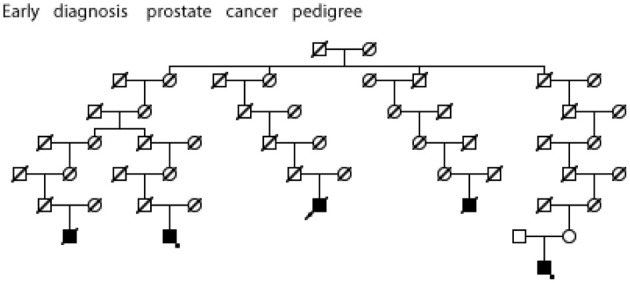
Consideration of the familial clustering of eight clinical subsets of prostate cancer cases compared to the expected familial clustering of all prostate cancer cases identified three subsets of prostate cancer cases with evidence for familial clustering significantly in excess of expected. These subsets include prostate cancer cases diagnosed before age 50 years, prostate cancer cases with body mass index (BMI) greater than or equal to 30, and prostate cancer cases for whom prostate cancer contributed to death.
This analysis identified several subsets of prostate cancer cases that cluster significantly more than expected when compared to all prostate cancer familial clustering. A focus on high-risk prostate cancer cases or pedigrees with these characteristics will reduce noise and could allow identification of the rare predisposition genes or variants responsible.
前列腺癌是一种常见且通常致命的癌症。几十年来的研究尚未确定能够解释家族性前列腺癌的基因。对家系进行传统连锁分析的结果很少得到验证。我们假设存在导致高危前列腺癌家系的罕见分离变异,但也认识到家系内异质性是导致信号被淹没的主要噪声源。在此,我们介绍了一种基于癌症特征来识别前列腺癌同质亚组的方法,该方法显示出与遗传贡献相关的最佳证据。
我们对现有的用于显示显著家族聚集证据的遗传家族性指数(GIF)方法进行了修改。该修改允许在与所有前列腺癌病例相比时,对亚组前列腺癌病例的家族聚集进行过度检验。
考虑到 8 个临床前列腺癌亚组病例的家族聚集与所有前列腺癌病例的预期家族聚集相比,有 3 个前列腺癌亚组病例的家族聚集明显超过预期。这些亚组包括诊断年龄小于 50 岁的前列腺癌病例、体质指数(BMI)大于或等于 30 的前列腺癌病例,以及前列腺癌导致死亡的前列腺癌病例。
该分析确定了几个前列腺癌亚组病例,与所有前列腺癌家族聚集相比,这些亚组病例的聚集程度明显更高。关注高危前列腺癌病例或具有这些特征的家系可以减少噪声,并可能有助于确定导致这种情况的罕见易感性基因或变异。