Cannon-Albright Lisa A, Stevens Jeff, Facelli Julio C, Teerlink Craig C, Allen-Brady Kristina, Agarwal Neeraj
Genetic Epidemiology, Department of Internal Medicine, University of Utah School of Medicine, Salt Lake City, UT 84132, USA.
George E. Wahlen Department of Veterans Affairs Medical Center, Salt Lake City, UT 84148, USA.
Cancers (Basel). 2023 Mar 31;15(7):2085. doi: 10.3390/cancers15072085.
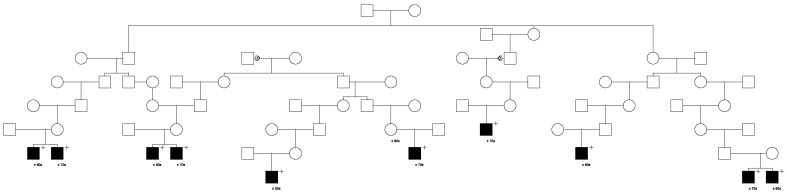
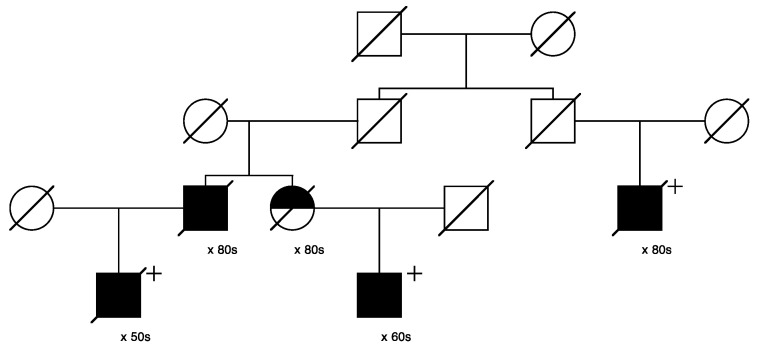
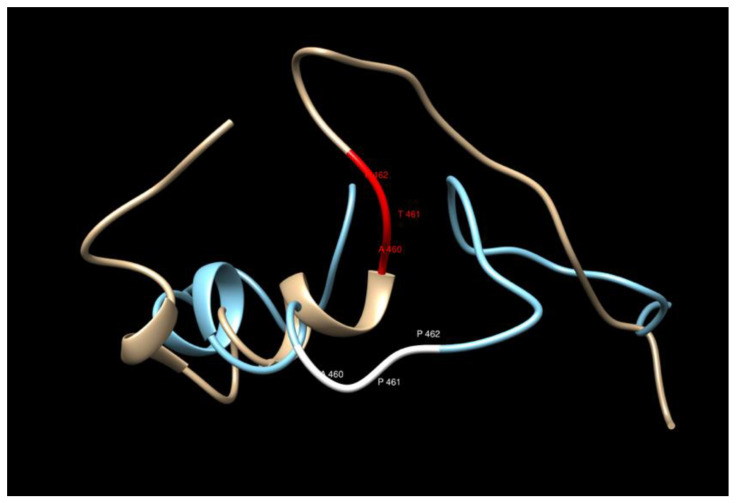
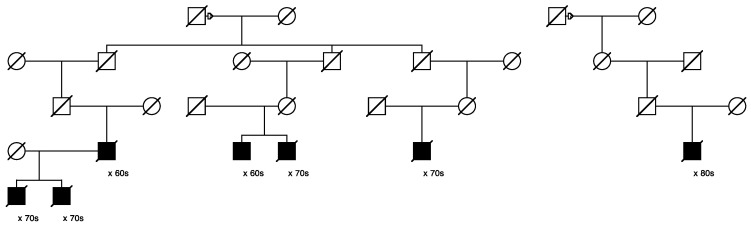
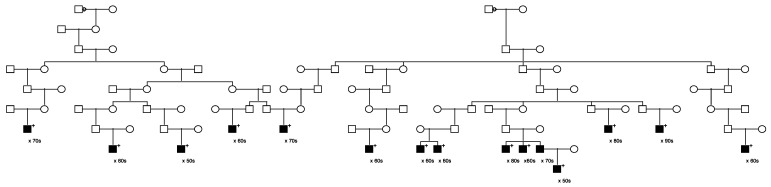
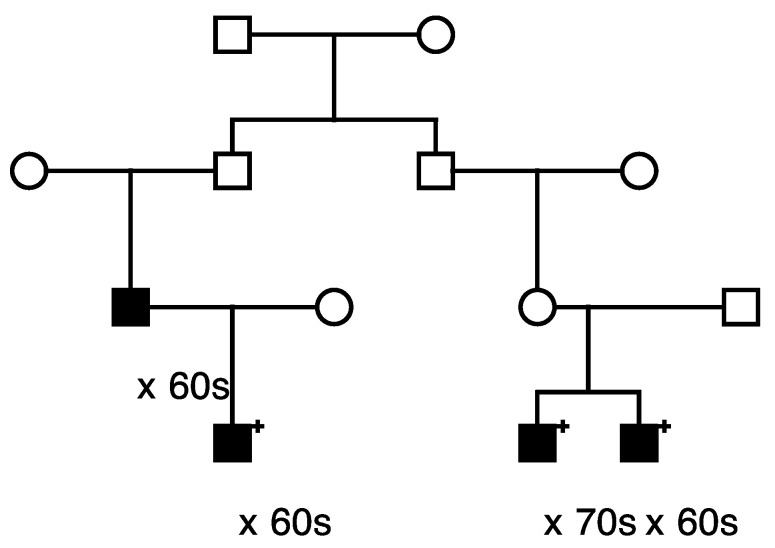
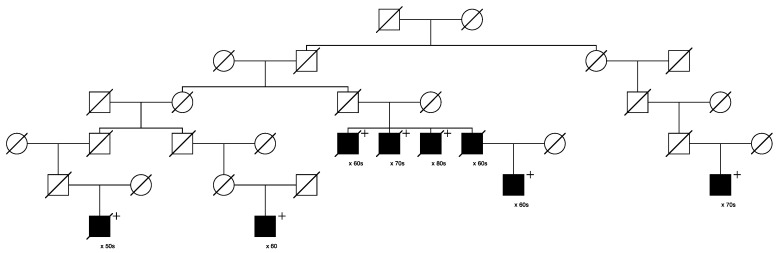
There is evidence for contribution of inherited factors to prostate cancer, and more specifically to lethal prostate cancer, but few responsible genes/variants have been identified. We examined genetic sequence data for 51 affected cousin pairs who each died from prostate cancer and who were members of high-risk prostate cancer pedigrees in order to identify rare variants shared by the cousins as candidate predisposition variants. Candidate variants were tested for association with prostate cancer risk in UK Biobank data. Candidate variants were also assayed in 1195 additional sampled Utah prostate cancer cases. We used 3D protein structure prediction methods to analyze structural changes and provide insights into mechanisms of pathogenicity. Almost 4000 rare (<0.005) variants were identified as shared in the 51 affected cousin pairs. One candidate variant was also significantly associated with prostate cancer risk among the 840 variants with data in UK Biobank, in the gene ( = 3.2 × 10; OR = 2.09). The rare risk variant in was observed to segregate in five pedigrees. The overall predicted structures of the mutant protein do not show any significant overall changes upon mutation, but the mutated structure loses a helical structure for the two residues after the mutation. This unique analysis of closely related individuals with lethal prostate cancer, who were members of high-risk prostate cancer pedigrees, has identified a strong set of candidate predisposition variants which should be pursued in independent studies. Validation data for a subset of the candidates identified are presented, with strong evidence for a rare variant in .
有证据表明遗传因素对前列腺癌有影响,更具体地说,对致命性前列腺癌有影响,但已确定的相关基因/变异很少。我们检查了51对患前列腺癌且均因前列腺癌死亡的患病表亲的基因序列数据,这些表亲是高危前列腺癌家系的成员,以便确定表亲共有的罕见变异作为候选易感性变异。在英国生物银行数据中测试候选变异与前列腺癌风险的关联性。还在另外1195例犹他州前列腺癌样本病例中检测了候选变异。我们使用三维蛋白质结构预测方法来分析结构变化并深入了解致病机制。在51对患病表亲中确定了近4000个罕见(<0.005)变异为共有变异。在英国生物银行有数据的840个变异中,有一个候选变异也与前列腺癌风险显著相关,位于基因 ( = 3.2 × 10;比值比 = 2.09)。观察到 中的罕见风险变异在五个家系中分离。突变蛋白的整体预测结构在突变后未显示出任何显著的整体变化,但突变结构在突变后的两个残基处失去了螺旋结构。对属于高危前列腺癌家系且患有致命性前列腺癌的密切相关个体进行的这种独特分析,已经确定了一组强有力的候选易感性变异,应在独立研究中进一步探究。本文给出了部分已鉴定候选变异的验证数据,有力证明了 中一个罕见变异的存在。