Zilkha Neurogenetic Institute, Keck School of Medicine, University of Southern California, Los Angeles, CA 90033, USA.
Neuron. 2013 Aug 21;79(4):738-53. doi: 10.1016/j.neuron.2013.06.012.
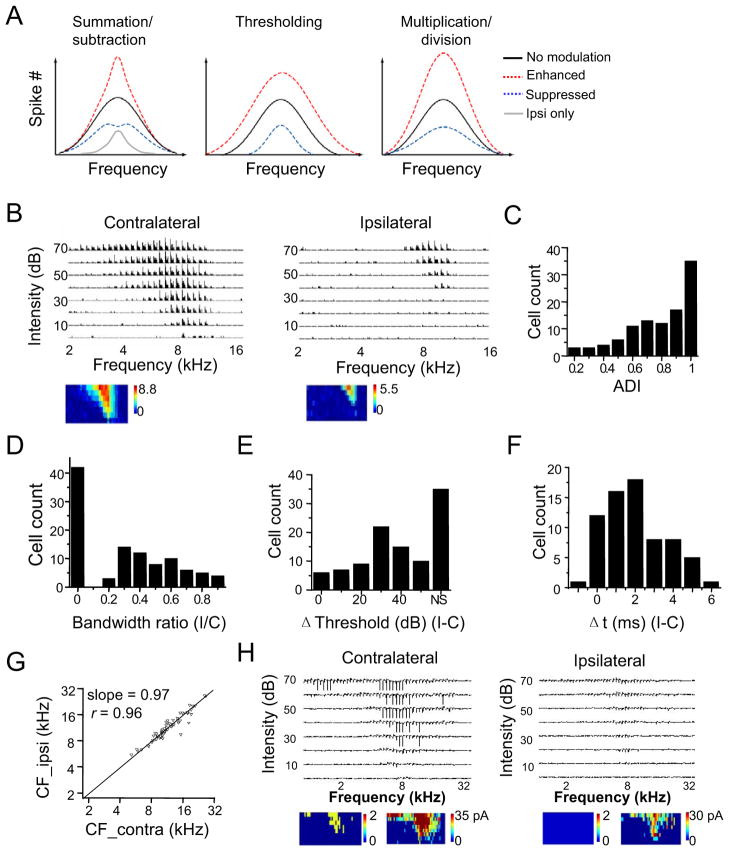
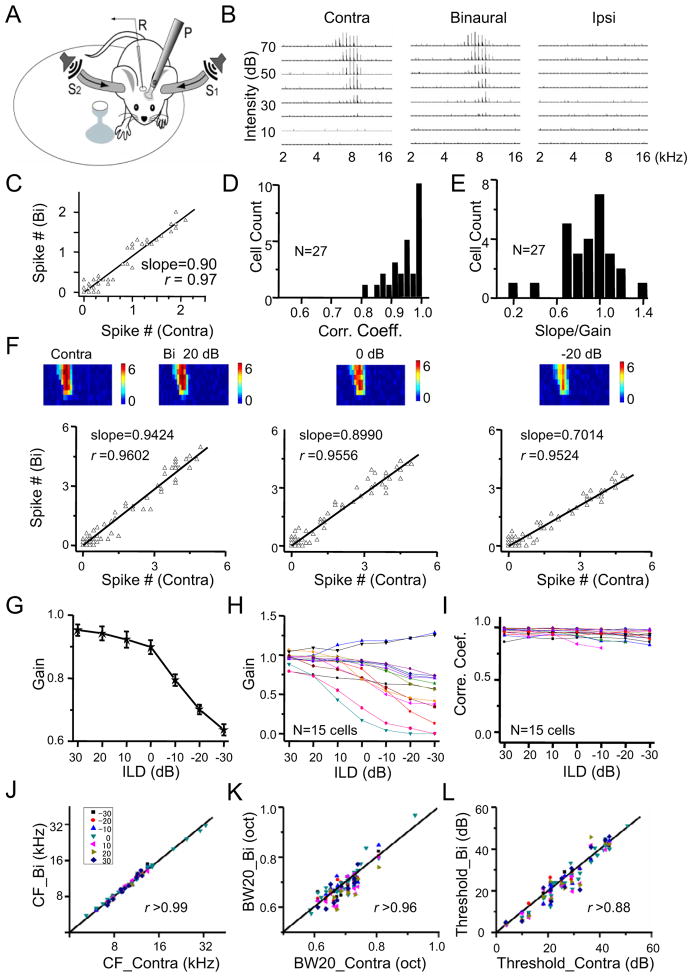
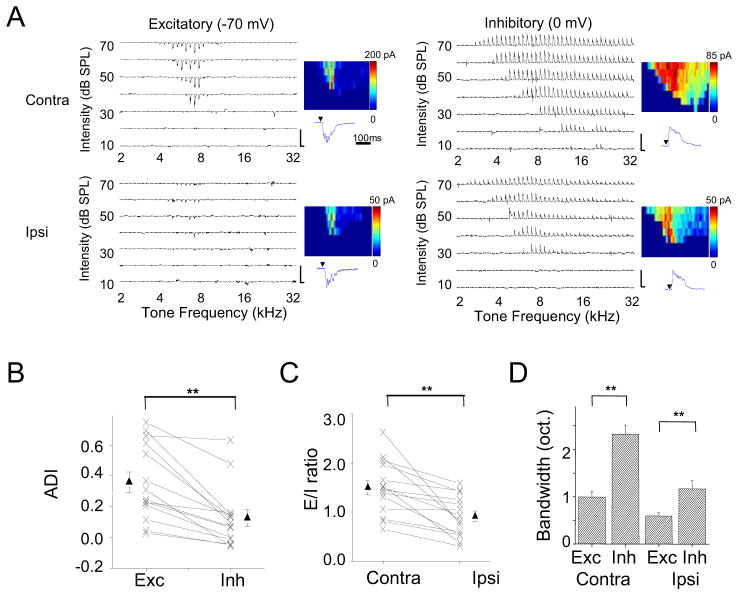
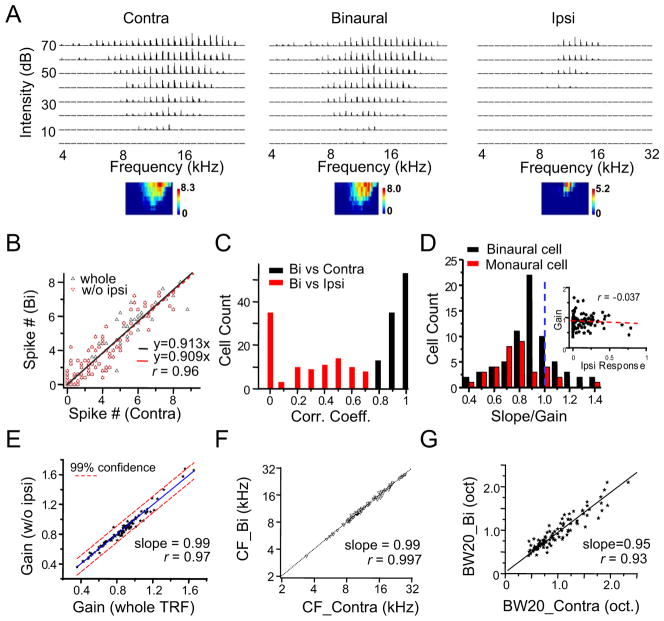
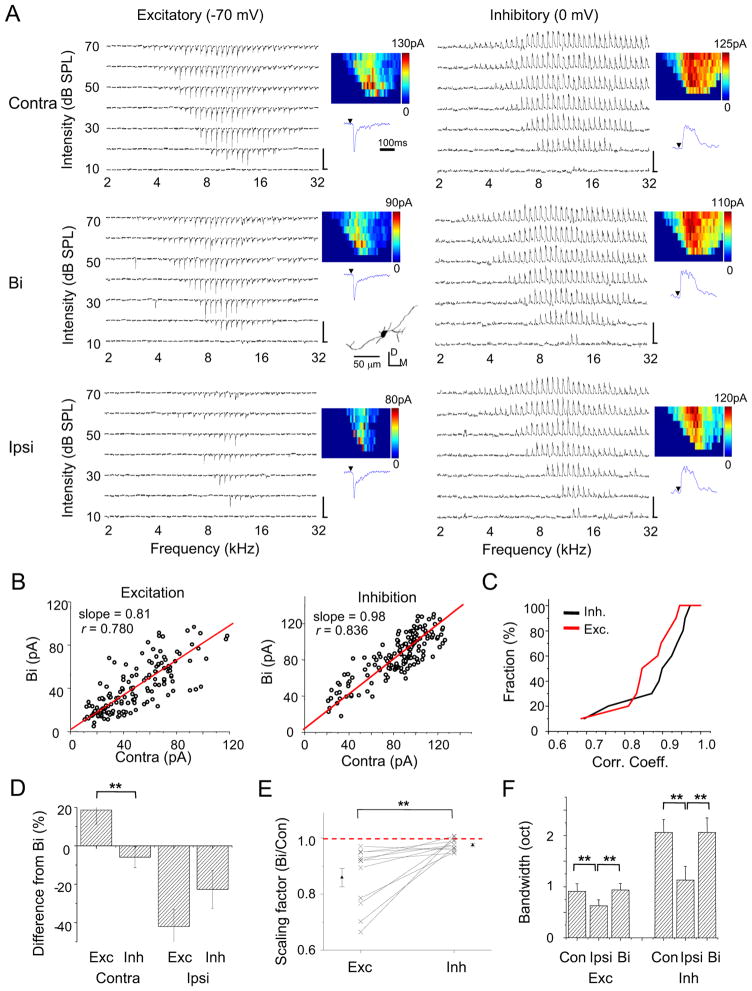
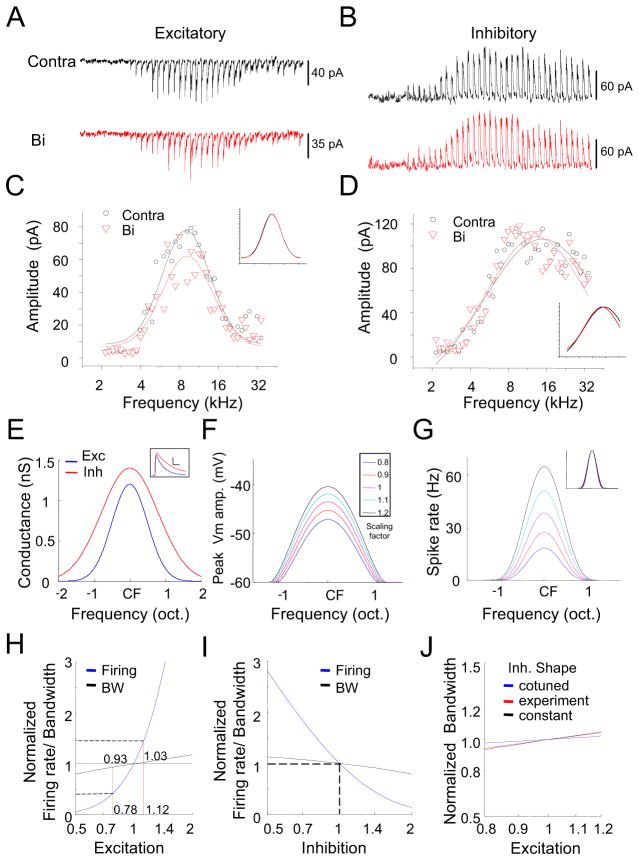
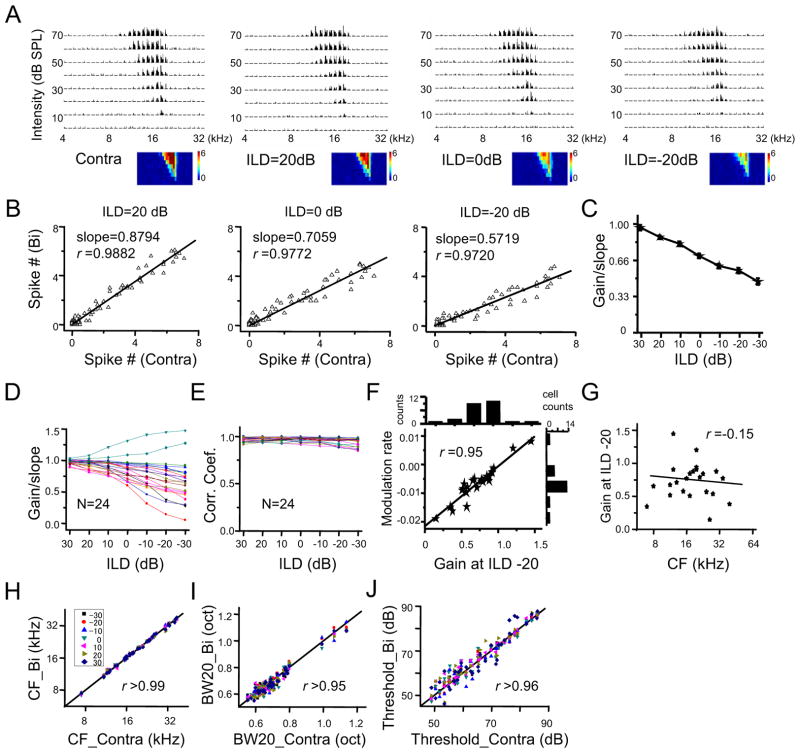
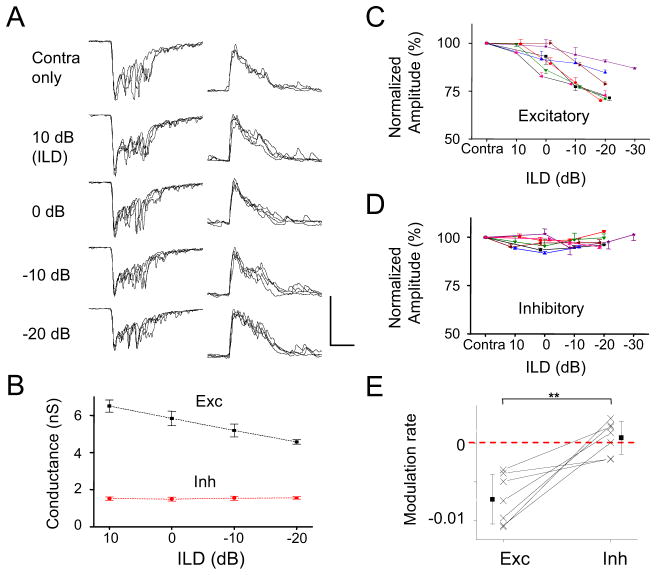
Binaural integration in the central nucleus of inferior colliculus (ICC) plays a critical role in sound localization. However, its arithmetic nature and underlying synaptic mechanisms remain unclear. Here, we showed in mouse ICC neurons that the contralateral dominance is created by a "push-pull"-like mechanism, with contralaterally dominant excitation and more bilaterally balanced inhibition. Importantly, binaural spiking response is generated apparently from an ipsilaterally mediated scaling of contralateral response, leaving frequency tuning unchanged. This scaling effect is attributed to a divisive attenuation of contralaterally evoked synaptic excitation onto ICC neurons with their inhibition largely unaffected. Thus, a gain control mediates the linear transformation from monaural to binaural spike responses. The gain value is modulated by interaural level difference (ILD) primarily through scaling excitation to different levels. The ILD-dependent synaptic scaling and gain adjustment allow ICC neurons to dynamically encode interaural sound localization cues while maintaining an invariant representation of other independent sound attributes.
双侧整合在中脑下丘(IC)核中发挥着关键作用在声音定位。然而,其算术性质和潜在的突触机制尚不清楚。在这里,我们在小鼠 ICC 神经元中表明,对侧优势是由“推挽”式机制产生的,具有对侧优势兴奋和更双侧平衡抑制。重要的是,双耳尖峰反应显然是由同侧介导的对侧反应的缩放产生的,而频率调谐保持不变。这种缩放效应归因于对 ICC 神经元的对侧诱发突触兴奋的除法衰减,而其抑制作用基本不受影响。因此,增益控制介导了从单耳到双耳尖峰反应的线性转换。增益值通过将同侧传入的兴奋调整到不同的水平来调制。ILD 依赖性突触缩放和增益调整允许 ICC 神经元在动态编码耳间声音定位线索的同时,保持其他独立声音属性的不变表示。