Center for Molecular Imaging, Department of Radiology, University of Michigan Medical School, Ann Arbor, MI 48109-2200, USA.
Biochem Pharmacol. 2013 Nov 1;86(9):1263-71. doi: 10.1016/j.bcp.2013.08.019. Epub 2013 Aug 22.
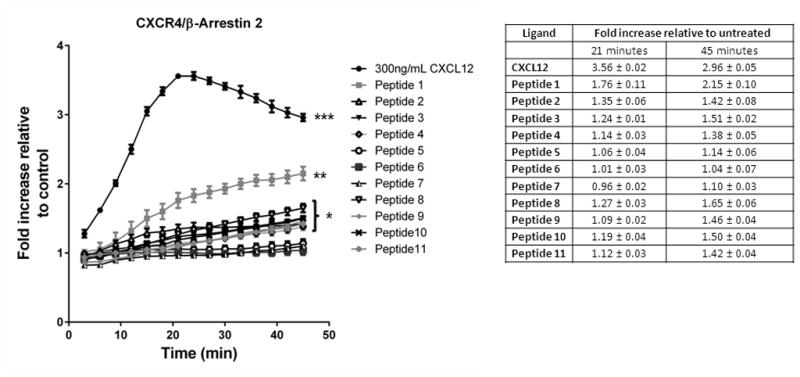
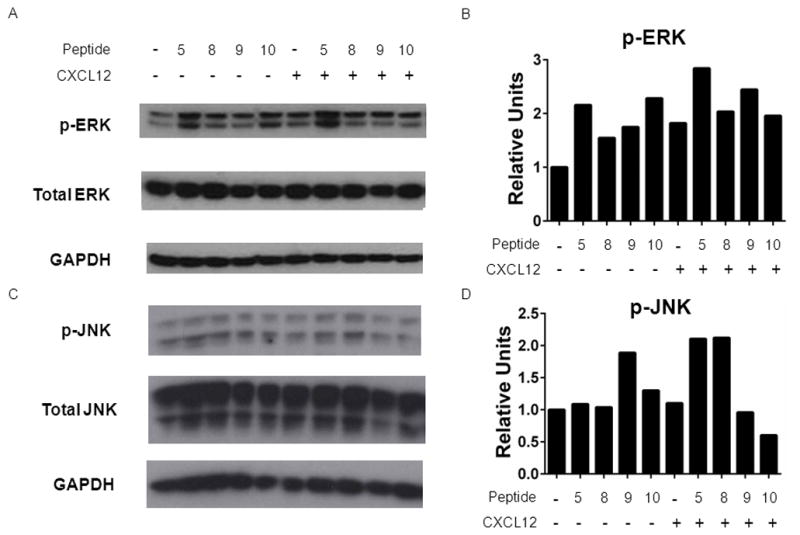
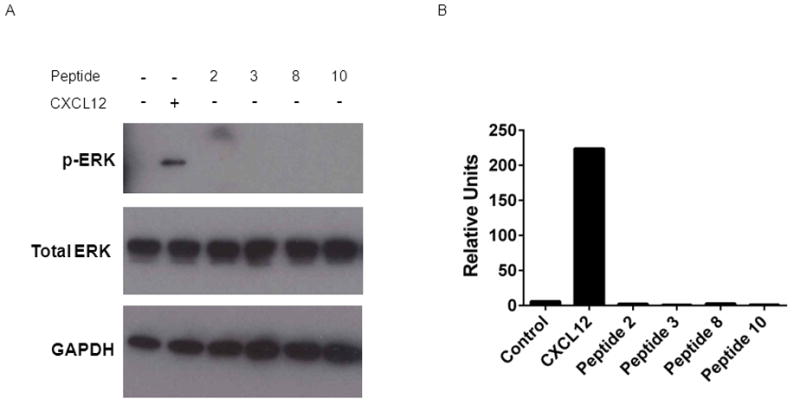
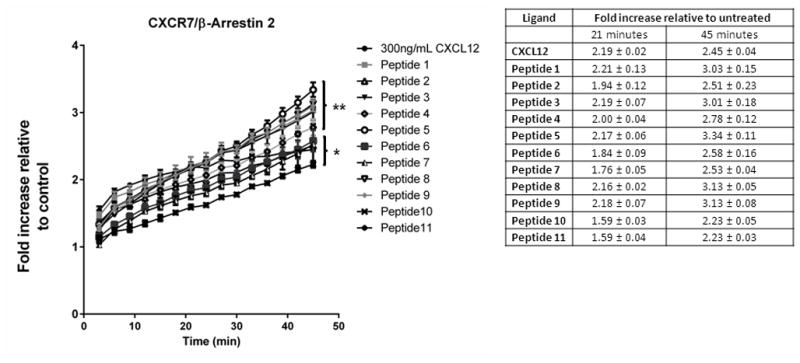
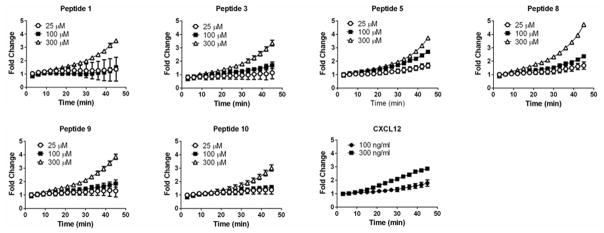
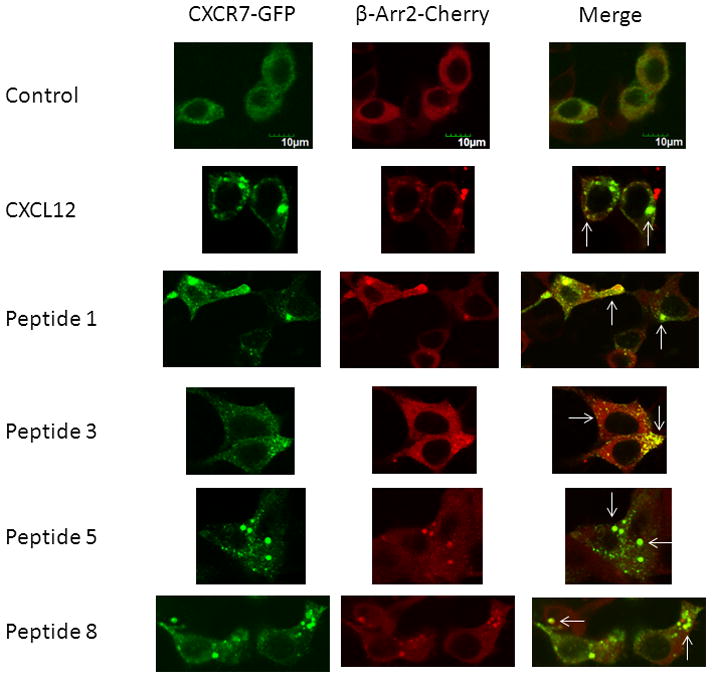
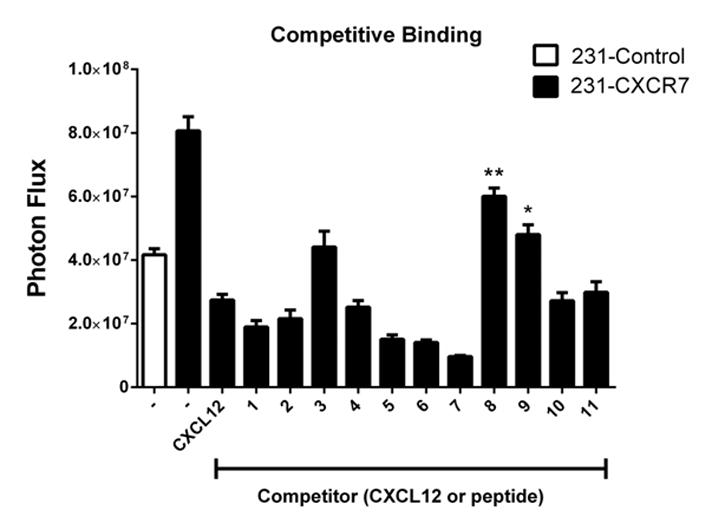
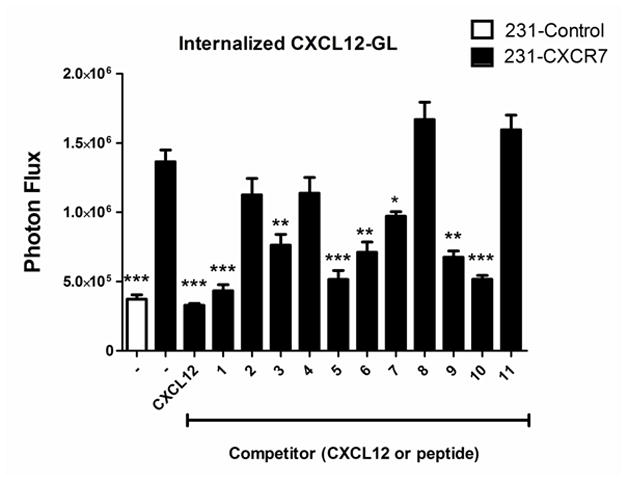
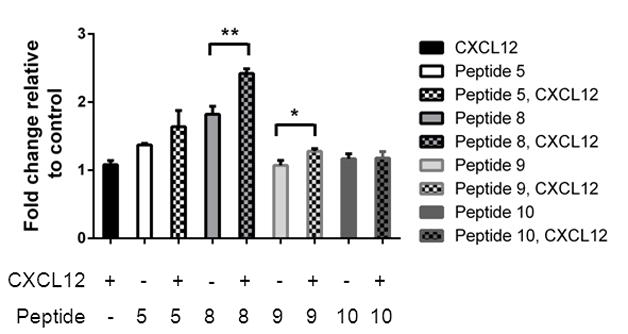
The chemokine CXCL12 and its shared seven-transmembrane receptors CXCR4 and CXCR7 regulate diseases including cancer, atherosclerosis, autoimmunity, and HIV infection, making these molecules promising drug targets. These molecules also control key processes in normal development and physiology, suggesting the need to selectively modulate CXCR4 and/or CXCR7 functions and signaling to reduce potential complications of long-term therapy. We previously identified two peptides that functioned as allosteric agonists driving CXCR4-dependent chemotaxis, providing key structural information to design a small number of additional peptides to investigate determinants of CXCL12 interactions and signaling through CXCR4 and CXCR7. In the current study, we show that the previously identified peptides only minimally activated CXCR4 signaling through the cytosolic adapter protein β-arrestin 2 and do not initiate signaling to ERK1/2. By comparison, peptides with diverse N-terminal amino acid sequences effectively activated CXCR7 signaling to β-arrestin 2. One peptide, designated as GSLW based on its N-terminal amino acids, activated CXCR7 signaling and potentiated CXCL12-CXCR7 signaling without blocking the scavenger function of CXCR7 to internalize CXCL12. These results advance our understanding of CXCR7 ligand recognition and signaling, and provide structural information to target allosteric binding sites on this receptor as chemical probes and potential therapeutic agents.
趋化因子 CXCL12 及其共享的七跨膜受体 CXCR4 和 CXCR7 调节包括癌症、动脉粥样硬化、自身免疫和 HIV 感染在内的疾病,使这些分子成为有前途的药物靶点。这些分子还控制着正常发育和生理过程中的关键过程,这表明需要选择性地调节 CXCR4 和/或 CXCR7 的功能和信号,以减少长期治疗的潜在并发症。我们之前鉴定了两种作为变构激动剂发挥作用的肽,它们可驱动 CXCR4 依赖性趋化作用,为设计少量其他肽提供了关键结构信息,以研究通过 CXCR4 和 CXCR7 进行的 CXCL12 相互作用和信号传递的决定因素。在本研究中,我们表明,之前鉴定的肽仅通过胞质衔接蛋白β-arrestin 2 最小程度地激活 CXCR4 信号,并且不会引发 ERK1/2 的信号传递。相比之下,具有不同 N 端氨基酸序列的肽有效地激活了 CXCR7 信号到β-arrestin 2。一种肽,根据其 N 端氨基酸命名为 GSLW,激活 CXCR7 信号并增强 CXCL12-CXCR7 信号,而不阻断 CXCR7 对内化 CXCL12 的清除功能。这些结果推进了我们对 CXCR7 配体识别和信号传递的理解,并提供了结构信息,以将变构结合位点作为化学探针和潜在的治疗剂靶向该受体。