Lounsbury Nicole
Department of Pharmaceutical Sciences, Larkin University College of Pharmacy, Miami, FL 33169, USA.
Pharmaceuticals (Basel). 2020 Feb 21;13(2):33. doi: 10.3390/ph13020033.
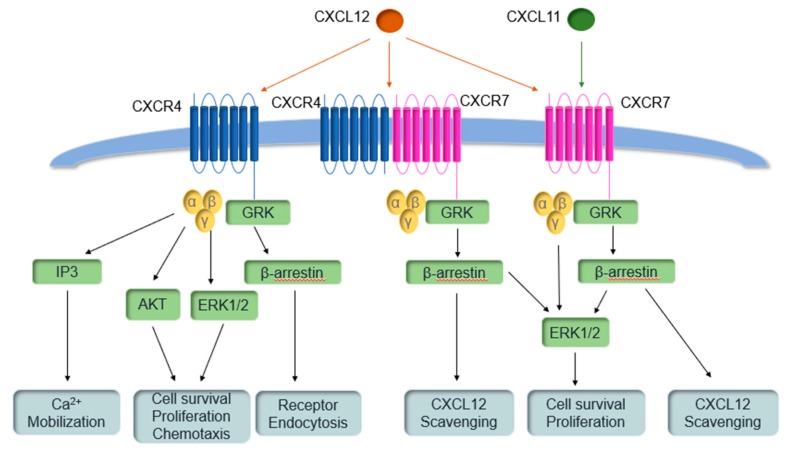
CXC chemokine receptor 7 (CXCR7) is a G-protein-coupled receptor that signals through the β-arrestin pathway. Its ligands include interferon-inducible T cell α chemoattractant (CXCL11) and stromal cell-derived factor-1 (CXCL12). It interacts with CXCR4, and the two are associated with various cancers, as well as other disease states such as coronary artery disease, stroke, inflammation and human immunodeficiency virus (HIV). Antibodies and small interfering RNA (siRNA) have shown the utility of antagonists of CXCR7 in these disease states. Although some small molecules were initially reported as antagonists due to their displayed activity, many function as agonists while still producing the desired pharmacologic effects. A potential reason for this contradiction is that effects may be due to elevated extracellular CXCL12 levels.
CXC趋化因子受体7(CXCR7)是一种通过β-抑制蛋白途径发出信号的G蛋白偶联受体。其配体包括干扰素诱导的T细胞α趋化因子(CXCL11)和基质细胞衍生因子-1(CXCL12)。它与CXCR4相互作用,二者与多种癌症以及其他疾病状态相关,如冠状动脉疾病、中风、炎症和人类免疫缺陷病毒(HIV)。抗体和小干扰RNA(siRNA)已显示CXCR7拮抗剂在这些疾病状态中的效用。尽管一些小分子最初因其显示的活性而被报道为拮抗剂,但许多小分子却发挥激动剂的作用,同时仍产生预期的药理效应。这种矛盾的一个潜在原因可能是这些效应可能归因于细胞外CXCL12水平的升高。