1] Engineering Research Center of Eco-environment in Three Gorges Reservoir Region, Ministry of Education, China Three Gorges University, Yichang, 443002, China [2] Institute of Earth Environment, Chinese Academy of Sciences, Xi'an 710075, China.
Sci Rep. 2013;3:2500. doi: 10.1038/srep02500.
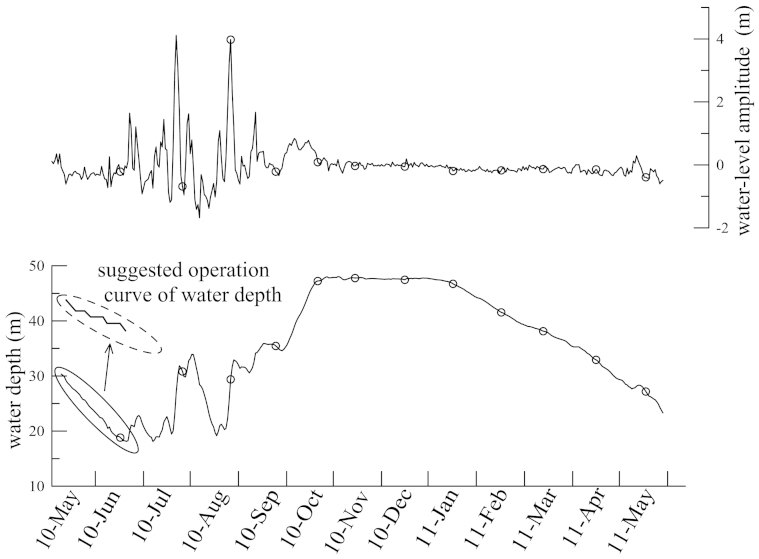
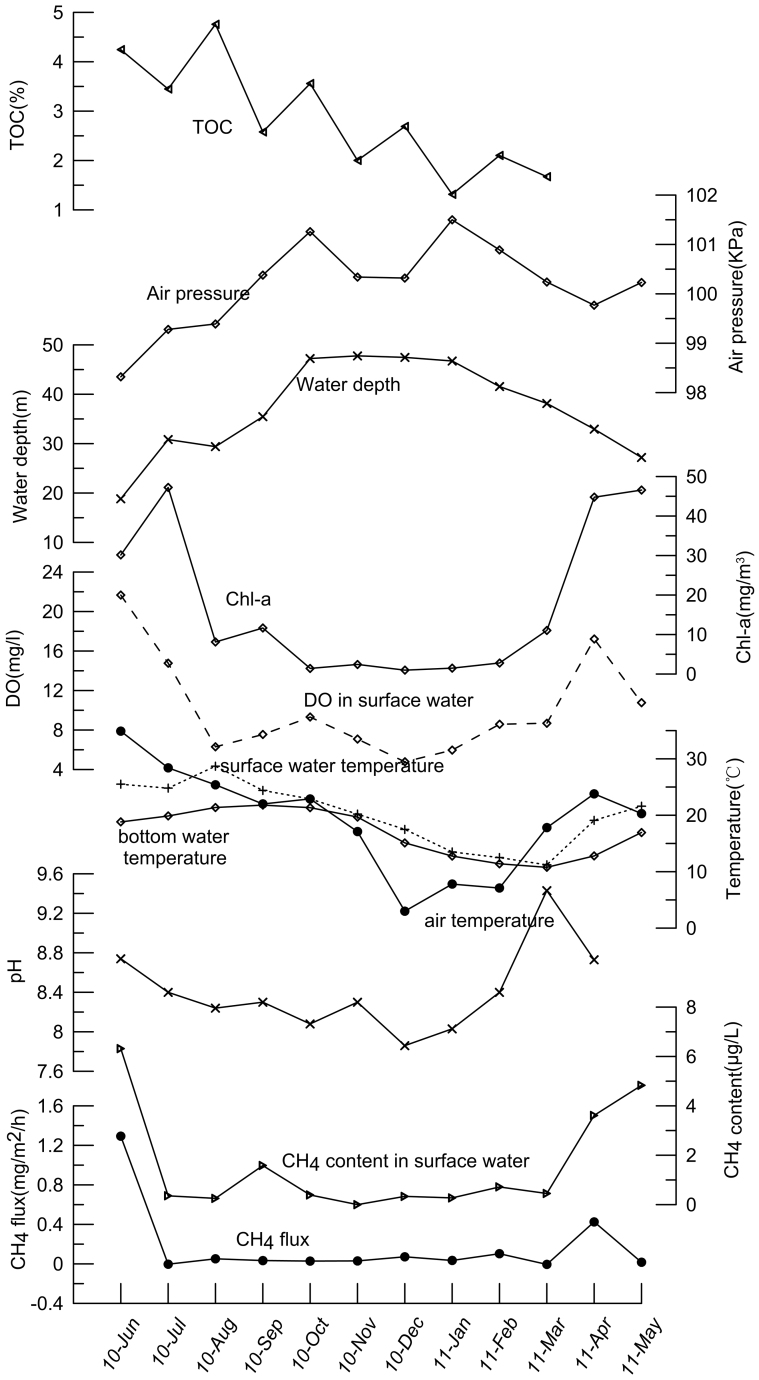
Three diel field campaigns and one monthly sampling campaign during June 2010-May 2011 were carried out to investigate the CH4 flux across the water-gas interface in Xiangxi Bay of the Three Gorges Reservoir, China. The average CH4 flux was much less than that reported from reservoirs in tropic and temperate regions. The photosynthesis of phytoplankton dominated the diel gas fluxes during alga bloom in spring and summer. The maximum monthly flux occurred in June 2010 and corresponded to the lowest water level. Water temperature, sediment temperature, and TOC did not have significant correlation with the monthly CH4 fluxes. Continuously decreasing hydrostatic pressure and the low water level resulted in more CH4 emission at the sediment-water during the discharging period, and thus increases the CH4 effluxes because the diffusion time through a thin water column is shorter and less CH4 may be oxidized compared with that in a long water column.
2010 年 6 月至 2011 年 5 月期间进行了三次日场调查和一次每月采样调查,以研究中国三峡水库香溪河湾水-气界面的 CH4 通量。CH4 通量的平均值明显小于热带和温带地区水库的报告值。在春、夏季藻类大量繁殖期间,浮游植物的光合作用主导了日气体通量。最大的月通量出现在 2010 年 6 月,与最低水位相对应。水温、沉积物温度和 TOC 与每月 CH4 通量没有显著相关性。持续下降的静水压力和较低的水位导致在放水期间更多的 CH4 在沉积物-水界面释放,从而增加了 CH4 通量,因为通过薄水柱的扩散时间更短,与长水柱相比,可能氧化的 CH4 更少。