Department of Molecular Genetics, Cleveland Clinic Lerner Research Institute, Cleveland, OH 44195, USA, Advanced Biomedical Computing Center, SAIC-Frederick, Inc., Frederick, MD 21702, USA, Genomics Facility, University of Chicago, Chicago, IL 60637, USA, Division of Human Biology, Fred Hutchinson Cancer Research Center, Seattle, WA 98109, USA, Department of Molecular Pathology, Cleveland Clinic, Cleveland, OH 44195, USA and Department of Molecular Medicine, Cleveland Clinic Lerner College of Medicine of Case Western Reserve University, Cleveland, OH 44195, USA.
Nucleic Acids Res. 2013 Nov;41(21):9732-40. doi: 10.1093/nar/gkt762. Epub 2013 Aug 23.
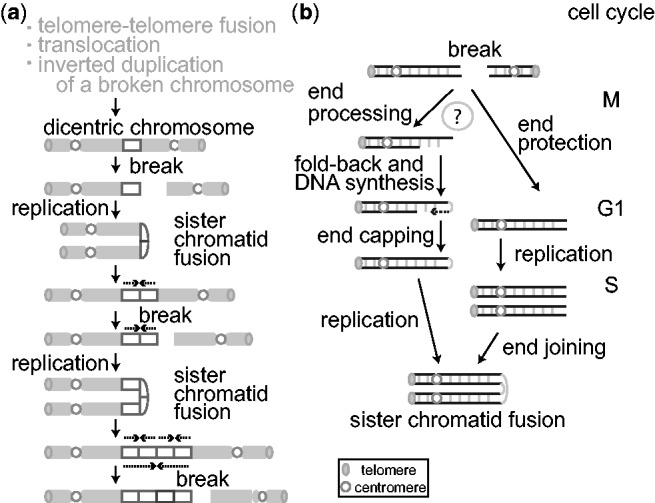
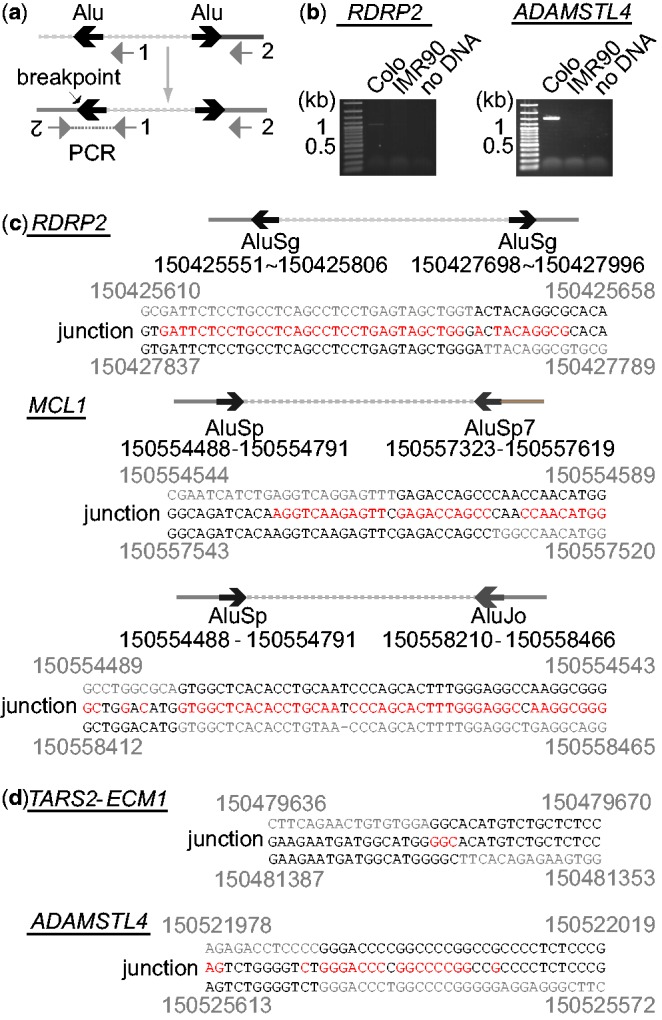
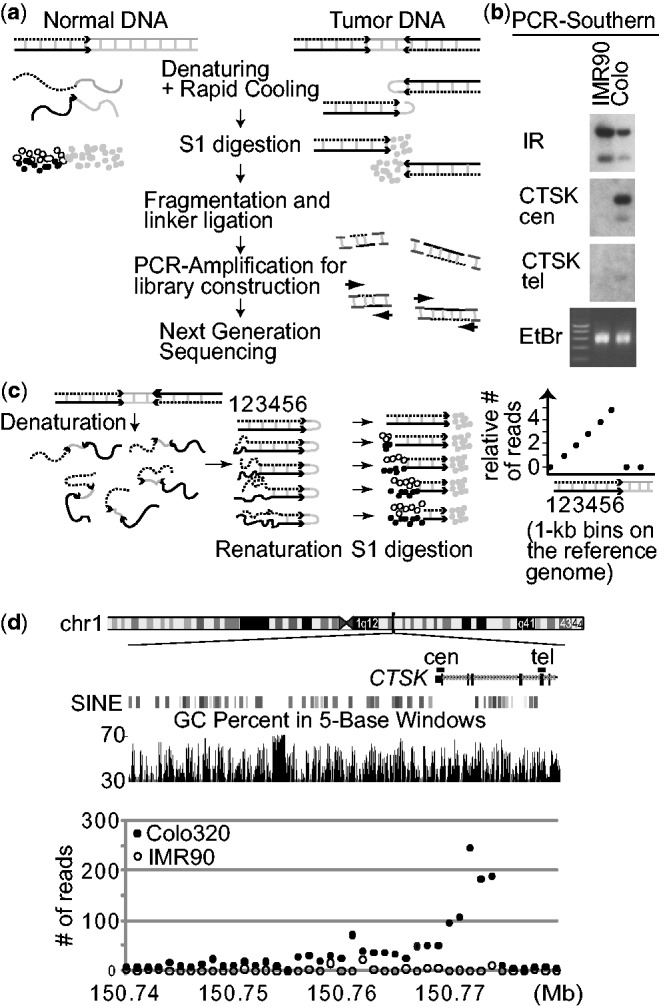
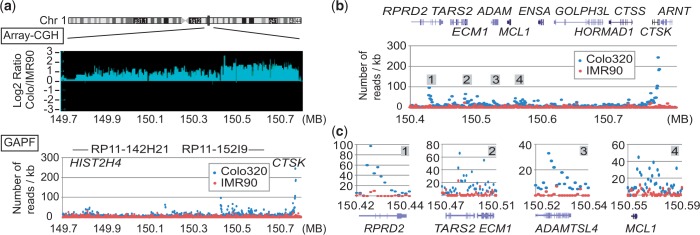
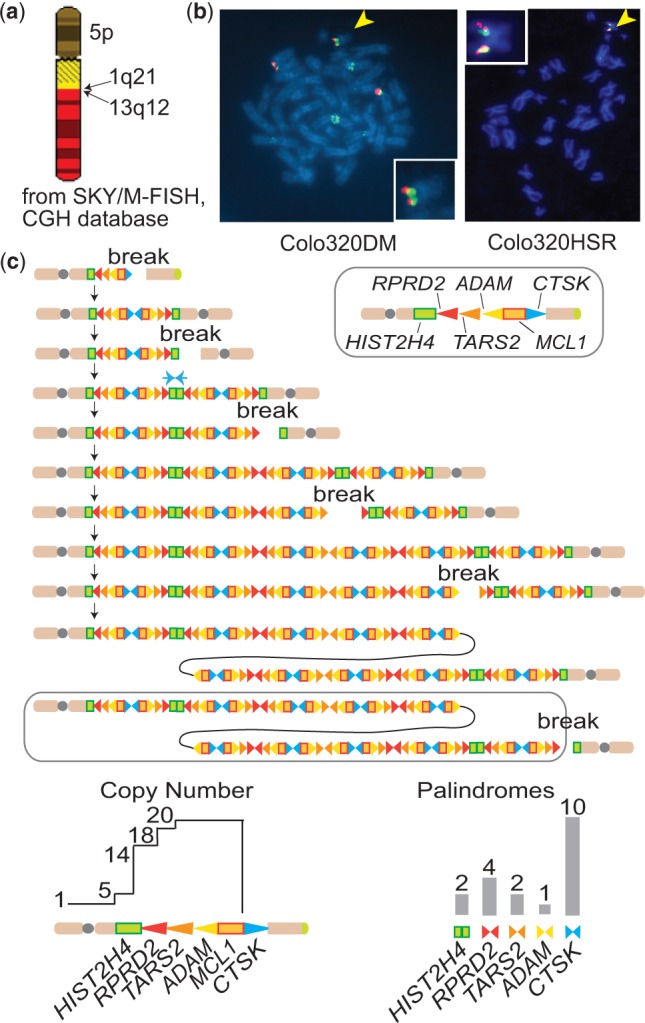
Breakage-fusion-bridge (BFB) cycle is a series of chromosome breaks and duplications that could lead to the increased copy number of a genomic segment (gene amplification). A critical step of BFB cycles leading to gene amplification is a palindromic fusion of sister chromatids following the rupture of a dicentric chromosome during mitosis. It is currently unknown how sister chromatid fusion is produced from a mitotic break. To delineate the process, we took an integrated genomic, cytogenetic and molecular approach for the recurrent MCL1 amplicon at chromosome 1 in human tumor cells. A newly developed next-generation sequencing-based approach identified a cluster of palindromic fusions within the amplicon at ∼50-kb intervals, indicating a series of breaks and fusions by BFB cycles. The physical location of the amplicon (at the end of a broken chromosome) further indicated BFB cycles as underlying processes. Three palindromic fusions were mediated by the homologies between two nearby inverted Alu repeats, whereas the other two fusions exhibited microhomology-mediated events. Such breakpoint sequences indicate that homology-mediated fold-back capping of broken ends followed by DNA replication is an underlying mechanism of sister chromatid fusion. Our results elucidate nucleotide-level events during BFB cycles and end processing for naturally occurring mitotic breaks.
断裂-融合-桥(BFB)循环是一系列染色体断裂和重复的过程,可能导致基因组片段(基因扩增)的拷贝数增加。BFB 循环导致基因扩增的关键步骤是在有丝分裂过程中,二联体染色体断裂后姐妹染色单体的回文融合。目前尚不清楚有丝分裂断裂如何产生姐妹染色单体融合。为了阐明这一过程,我们对人类肿瘤细胞中 1 号染色体上反复出现的 MCL1 扩增子进行了综合基因组、细胞遗传学和分子方法的研究。一种新开发的基于下一代测序的方法在约 50kb 的间隔内鉴定出扩增子内的一系列回文融合,表明 BFB 循环的一系列断裂和融合。扩增子的物理位置(在断裂染色体的末端)进一步表明 BFB 循环是潜在的过程。三个回文融合是由两个附近的反向 Alu 重复之间的同源性介导的,而另外两个融合则表现出微同源介导的事件。这些断裂点序列表明,同源介导的断裂末端回折帽和随后的 DNA 复制是姐妹染色单体融合的潜在机制。我们的结果阐明了 BFB 循环和自然发生的有丝分裂断裂的末端加工过程中的核苷酸水平事件。