De Franceschi P, Stegmeir T, Cabrera A, van der Knaap E, Rosyara U R, Sebolt A M, Dondini L, Dirlewanger E, Quero-Garcia J, Campoy J A, Iezzoni A F
Dipartimento di Scienze Agrarie, Università degli Studi di Bologna, Bologna, Italy.
Mol Breed. 2013;32(2):311-326. doi: 10.1007/s11032-013-9872-6. Epub 2013 Apr 30.
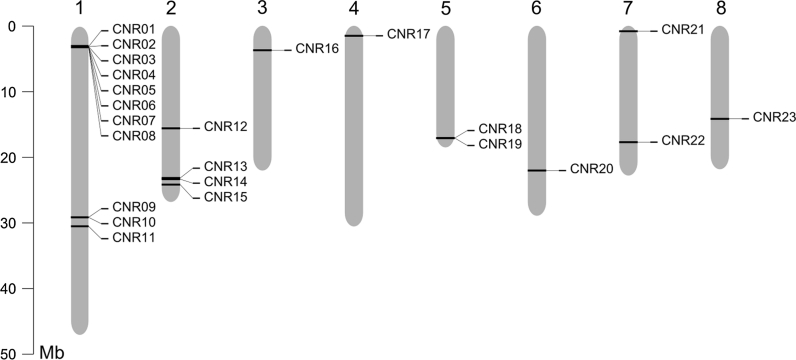
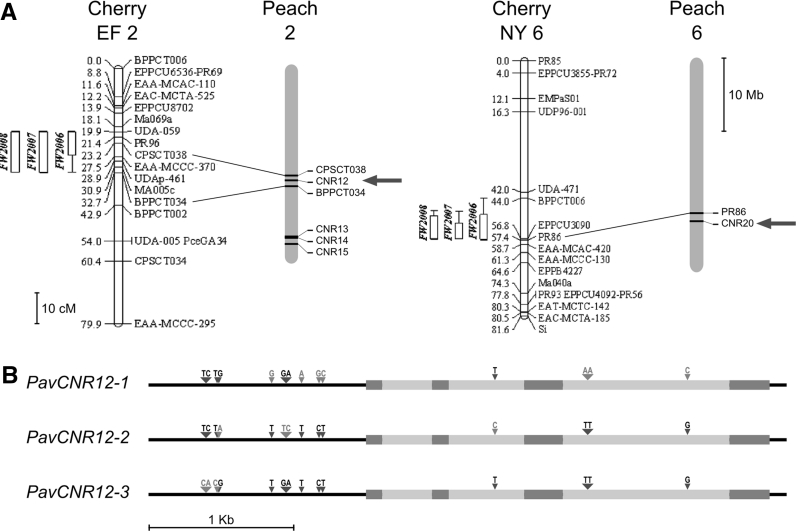
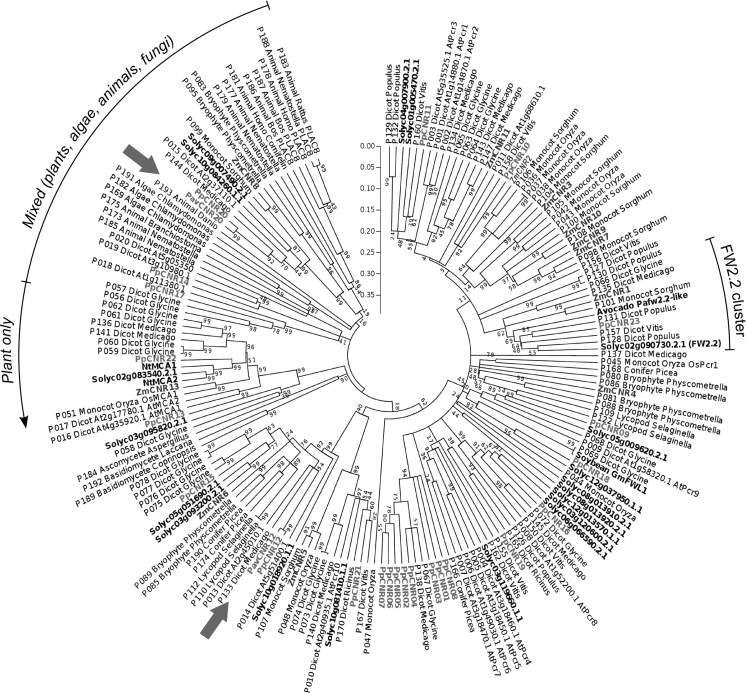
Striking increases in fruit size distinguish cultivated descendants from small-fruited wild progenitors for fleshy fruited species such as (tomato) and spp. (peach, cherry, plum, and apricot). The first fruit weight gene identified as a result of domestication and selection was the tomato gene. Members of the gene family in corn () have been named (Cell Number Regulator) and two of them exert their effect on organ size by modulating cell number. Due to the critical roles of genes in regulating cell number and organ size, this family provides an excellent source of candidates for fruit size genes in other domesticated species, such as those found in the genus. A total of 23 family members were identified in the peach genome, spanning the eight chromosomes. Two of these were located within confidence intervals of major quantitative trait loci (QTL) previously discovered on linkage groups 2 and 6 in sweet cherry (), named and , respectively. An analysis of haplotype, sequence, segregation and association with fruit size strongly supports a role of in the sweet cherry linkage group 2 fruit size QTL, and this QTL is also likely present in sour cherry (). The finding that the increase in fleshy fruit size in both tomato and cherry associated with domestication may be due to changes in members of a common ancestral gene family supports the notion that similar phenotypic changes exhibited by independently domesticated taxa may have a common genetic basis.
对于像番茄和李属物种(桃、樱桃、李子和杏)这样的肉质果实物种而言,果实大小的显著增加使其栽培后代有别于小果实的野生祖先。作为驯化和选择的结果而鉴定出的首个果实重量基因是番茄的fw2.2基因。玉米(Zea mays)中fw2.2基因家族的成员已被命名为CNR(细胞数量调节因子),其中两个成员通过调节细胞数量对器官大小产生影响。由于fw2.2基因在调节细胞数量和器官大小方面的关键作用,该家族为其他驯化物种(如李属中发现的物种)的果实大小基因提供了绝佳的候选基因来源。在桃基因组中总共鉴定出23个fw2.2家族成员,分布在八条染色体上。其中两个成员分别位于先前在甜樱桃(Prunus avium)的连锁群2和6上发现的主要数量性状位点(QTL)的置信区间内,分别命名为PavCNR1和PavCNR2。对单倍型、序列、分离情况以及与果实大小的关联性分析有力地支持了PavCNR1在甜樱桃连锁群2果实大小QTL中的作用,并且这个QTL也可能存在于酸樱桃(Prunus cerasus)中。番茄和樱桃中与驯化相关的肉质果实大小增加可能归因于一个共同祖先基因家族成员的变化,这一发现支持了这样一种观点,即独立驯化的分类群所表现出的相似表型变化可能具有共同的遗传基础。