Division of Plastic & Reconstructive Surgery, Department of Surgery, Keck School of Medicine, University of Southern California, Los Angeles, California, United States of America.
PLoS One. 2013 Aug 14;8(8):e71628. doi: 10.1371/journal.pone.0071628. eCollection 2013.
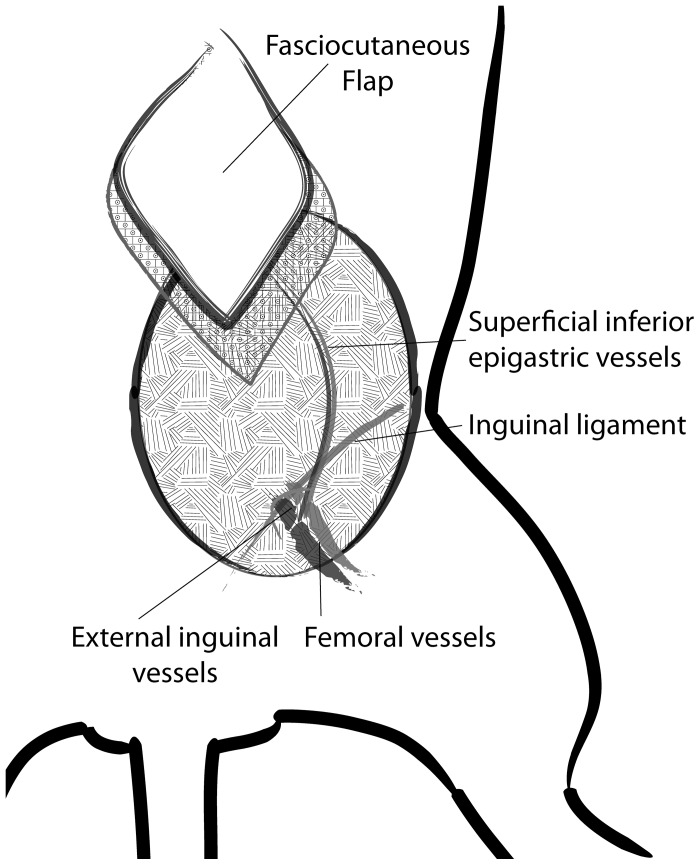
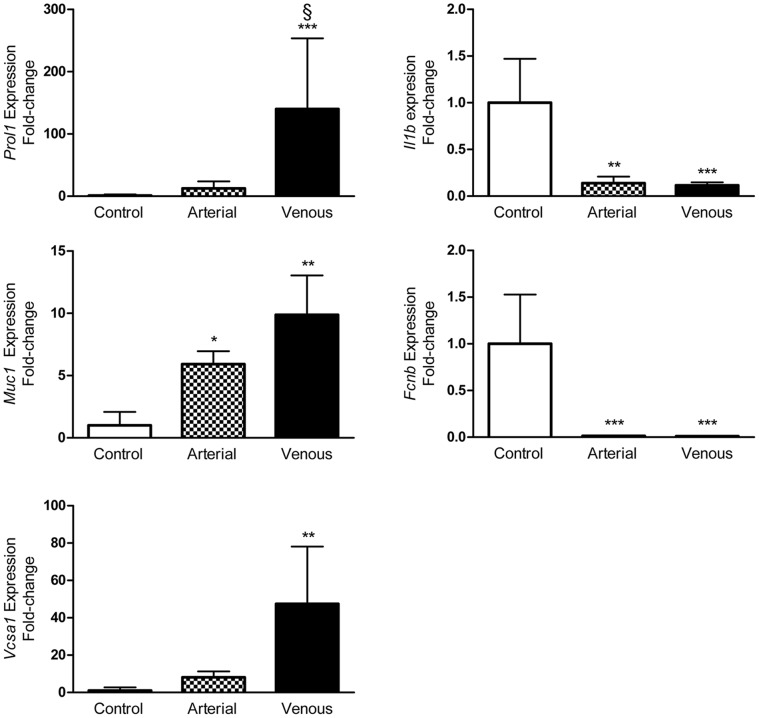
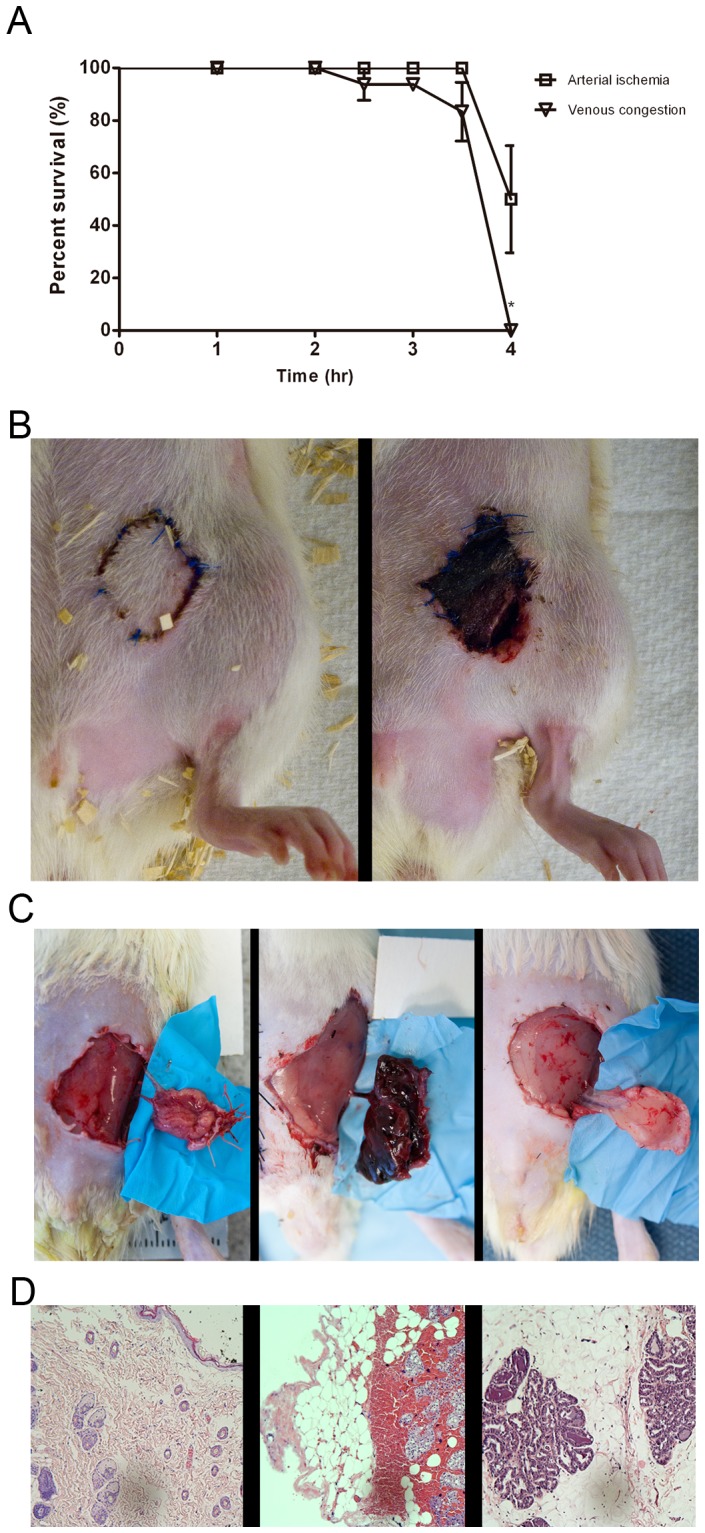
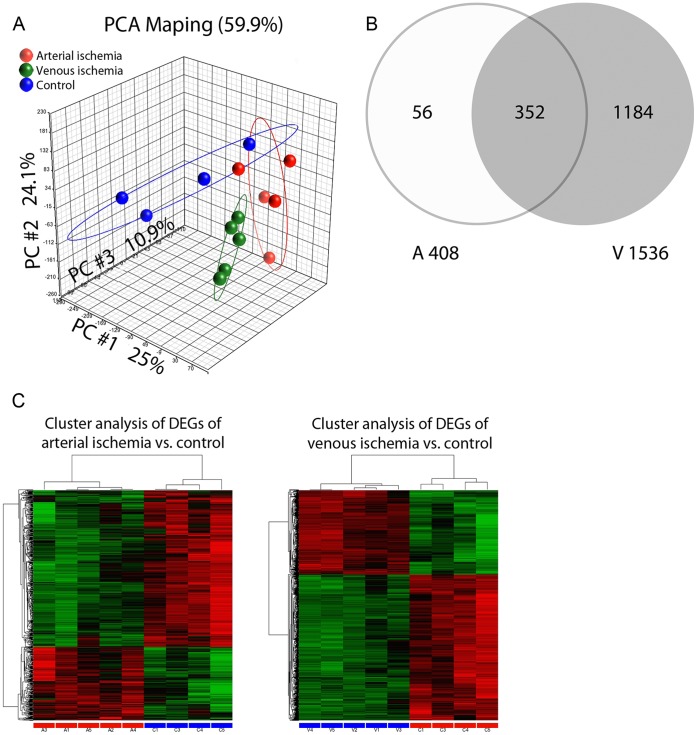
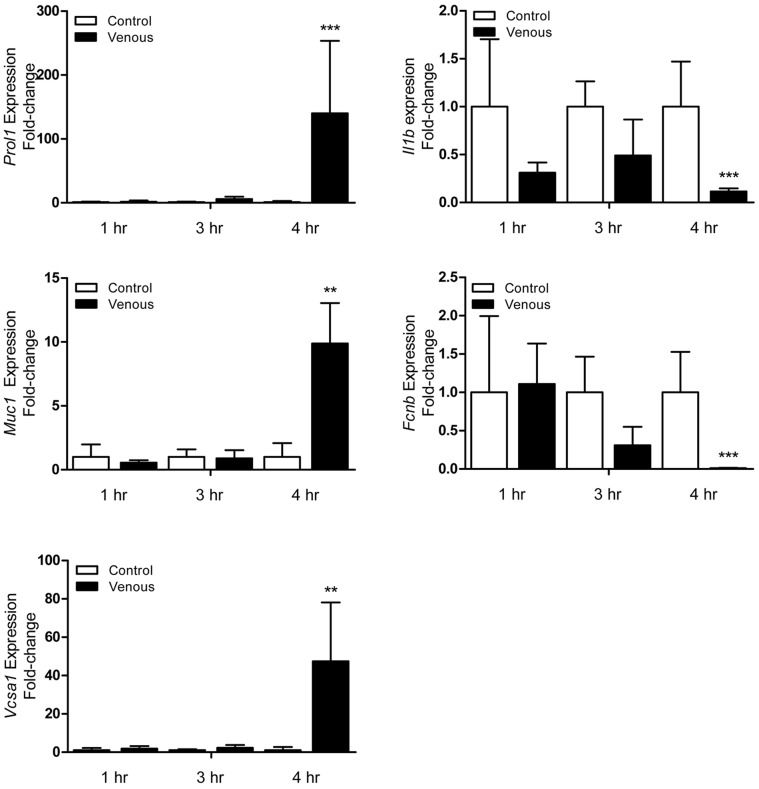
The field of reconstructive microsurgery is experiencing tremendous growth, as evidenced by recent advances in face and hand transplantation, lower limb salvage after trauma, and breast reconstruction. Common to all of these procedures is the creation of a nutrient vascular supply by microsurgical anastomosis between a single artery and vein. Complications related to occluded arterial inflow and obstructed venous outflow are not uncommon, and can result in irreversible tissue injury, necrosis, and flap loss. At times, these complications are challenging to clinically determine. Since early intervention with return to the operating room to re-establish arterial inflow or venous outflow is key to flap salvage, the accurate diagnosis of early stage complications is essential. To date, there are no biochemical markers or serum assays that can predict these complications. In this study, we utilized a rat model of flap ischemia in order to identify the transcriptional signatures of venous congestion and arterial ischemia. We found that the critical ischemia time for the superficial inferior epigastric fasciocutaneus flap was four hours and therefore performed detailed analyses at this time point. Histolgical analysis confirmed significant differences between arterial and venous ischemia. The transcriptome of ischemic, congested, and control flap tissues was deciphered by performing Affymetrix microarray analysis and verified by qRT-PCR. Principal component analysis revealed that arterial ischemia and venous congestion were characterized by distinct transcriptomes. Arterial ischemia and venous congestion was characterized by 408 and 1536>2-fold differentially expressed genes, respectively. qRT-PCR was used to identify five candidate genes Prol1, Muc1, Fcnb, Il1b, and Vcsa1 to serve as biomarkers for flap failure in both arterial ischemia and venous congestion. Our data suggests that Prol1 and Vcsa1 may be specific indicators of venous congestion and allow clinicians to both diagnose and successfully treat microvascular complications before irreversible tissue damage and flap loss occurs.
重建显微外科领域正在经历巨大的发展,这一点可以从最近面部和手部移植、创伤后下肢挽救以及乳房重建等方面的进展中得到证明。所有这些手术的共同点是通过显微吻合术在单一动脉和静脉之间创建营养血管供应。动脉流入受阻和静脉流出受阻相关的并发症并不少见,可能导致不可逆转的组织损伤、坏死和皮瓣丧失。有时,这些并发症难以在临床上确定。由于早期干预返回手术室重新建立动脉流入或静脉流出对于皮瓣挽救至关重要,因此早期并发症的准确诊断至关重要。迄今为止,没有生化标志物或血清检测可以预测这些并发症。在这项研究中,我们使用了皮瓣缺血的大鼠模型,以确定静脉充血和动脉缺血的转录特征。我们发现,腹壁下动脉皮瓣的临界缺血时间为 4 小时,因此在此时点进行了详细分析。组织学分析证实了动脉和静脉缺血之间存在显著差异。通过进行 Affymetrix 微阵列分析,对缺血、充血和对照皮瓣组织的转录组进行了破译,并通过 qRT-PCR 进行了验证。主成分分析显示,动脉缺血和静脉充血具有不同的转录组特征。动脉缺血和静脉充血分别有 408 个和 1536 个>2 倍差异表达基因。qRT-PCR 用于鉴定五个候选基因 Prol1、Muc1、Fcnb、Il1b 和 Vcsa1,作为动脉缺血和静脉充血中皮瓣失败的生物标志物。我们的数据表明,Prol1 和 Vcsa1 可能是静脉充血的特异性指标,使临床医生能够在不可逆的组织损伤和皮瓣丧失发生之前诊断和成功治疗微血管并发症。