Hoppenbrouwers Sylco S, Nazeri Arash, de Jesus Danilo R, Stirpe Tania, Felsky Daniel, Schutter Dennis J L G, Daskalakis Zafiris J, Voineskos Aristotle N
Department of Experimental Psychology, Utrecht University, Utrecht, Utrecht, The Netherlands.
PLoS One. 2013 Aug 20;8(8):e72375. doi: 10.1371/journal.pone.0072375. eCollection 2013.
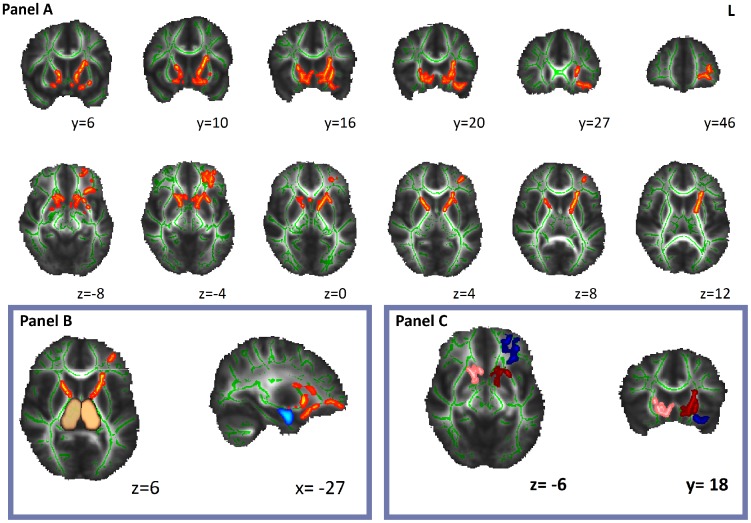
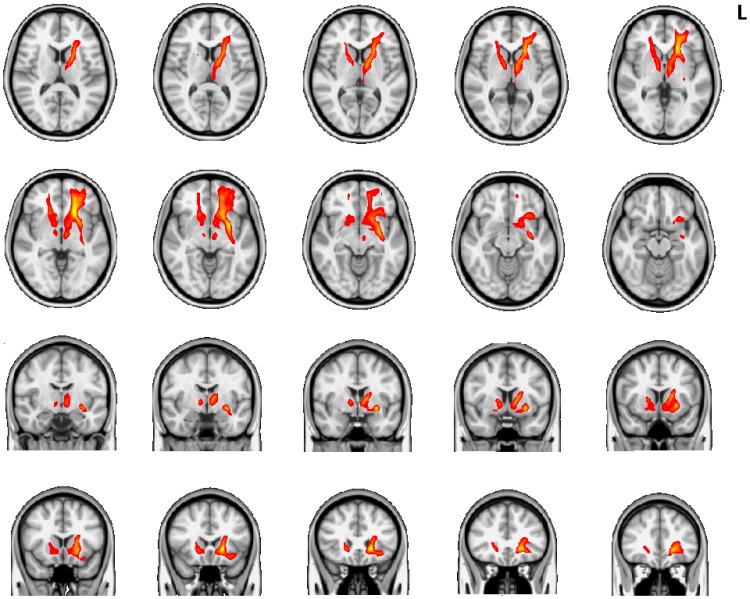
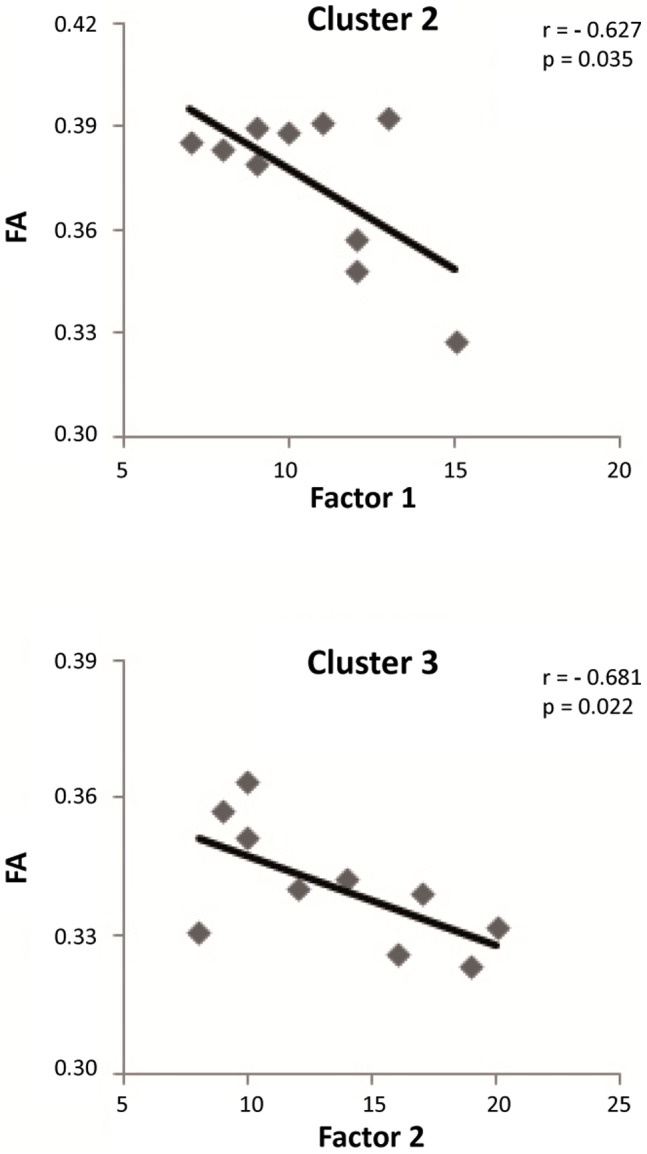
Psychopathic offenders show a persistent pattern of emotional unresponsivity to the often horrendous crimes they perpetrate. Recent studies have related psychopathy to alterations in white matter. Therefore, diffusion tensor imaging followed by tract-based spatial statistics (TBSS) analysis in 11 psychopathic offenders matched to 11 healthy controls was completed. Fractional anisotropy was calculated within each voxel and comparisons were made between groups using a permutation test. Any clusters of white matter voxels different between groups were submitted to probabilistic tractography. Significant differences in fractional anisotropy were found between psychopathic offenders and healthy controls in three main white matter clusters. These three clusters represented two major networks: an amygdalo-prefrontal network, and a striato-thalamo-frontal network. The interpersonal/affective component of the PCL-R correlated with white matter deficits in the orbitofrontal cortex and frontal pole whereas the antisocial component correlated with deficits in the striato-thalamo-frontal network. In addition to replicating earlier work concerning disruption of an amygdala-prefrontal network, we show for the first time that white matter integrity in a striato-thalamo-frontal network is disrupted in psychopathic offenders. The novelty of our findings lies in the two dissociable white matter networks that map directly onto the two major factors of psychopathy.
患有精神疾病的罪犯对他们所犯下的常常令人发指的罪行表现出持续的情感无反应模式。最近的研究将精神疾病与白质改变联系起来。因此,对11名患有精神疾病的罪犯和11名健康对照者进行了扩散张量成像,并随后进行了基于纤维束的空间统计(TBSS)分析。计算每个体素内的分数各向异性,并使用置换检验在组间进行比较。将组间不同的白质体素簇提交给概率纤维束成像。在三个主要的白质簇中发现患有精神疾病的罪犯和健康对照者之间的分数各向异性存在显著差异。这三个簇代表两个主要网络:一个杏仁核-前额叶网络和一个纹状体-丘脑-前额叶网络。PCL-R的人际/情感成分与眶额皮质和额极的白质缺陷相关,而反社会成分与纹状体-丘脑-前额叶网络的缺陷相关。除了重复早期关于杏仁核-前额叶网络破坏的研究工作外,我们首次表明患有精神疾病的罪犯的纹状体-丘脑-前额叶网络中的白质完整性受到破坏。我们研究结果的新颖之处在于两个可分离的白质网络,它们直接映射到精神疾病的两个主要因素上。