Matsunaga Masahiro, Bai Yu, Yamakawa Kaori, Toyama Asako, Kashiwagi Mitsuyoshi, Fukuda Kazuyuki, Oshida Akiko, Sanada Kazue, Fukuyama Seisuke, Shinoda Jun, Yamada Jitsuhiro, Sadato Norihiro, Ohira Hideki
Department of Health and Psychosocial Medicine, Aichi Medical University School of Medicine, Aichi, Japan.
PLoS One. 2013 Aug 20;8(8):e72523. doi: 10.1371/journal.pone.0072523. eCollection 2013.
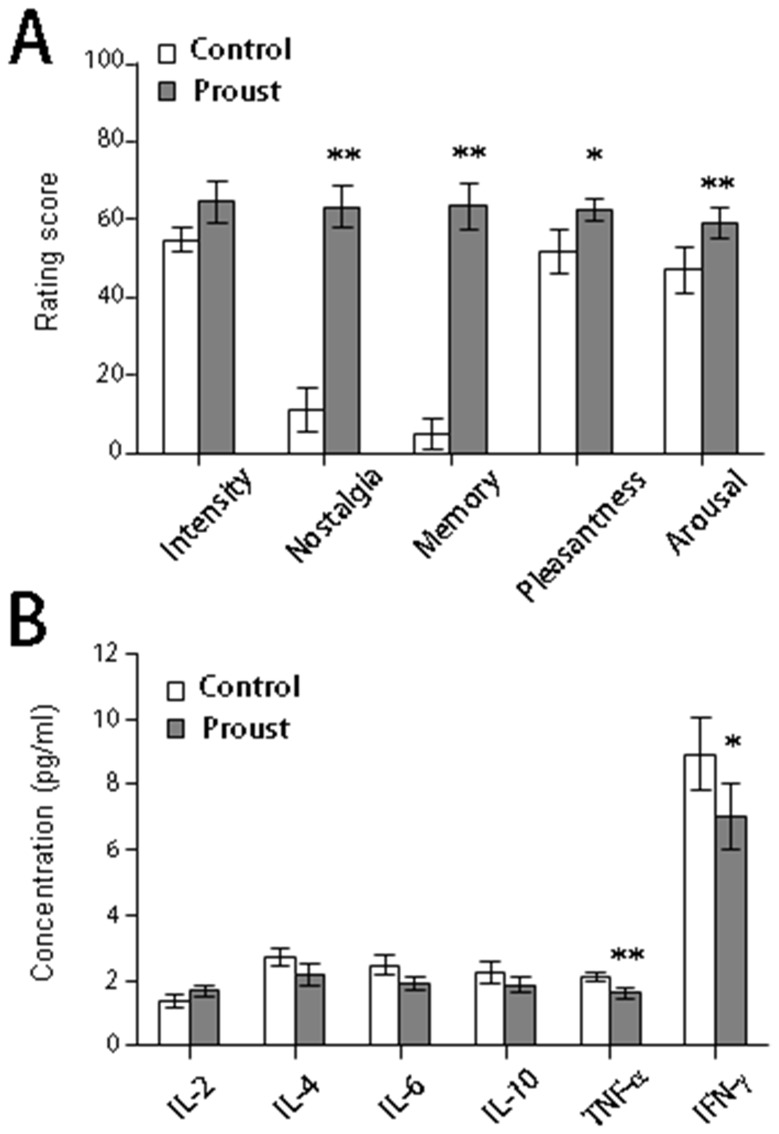
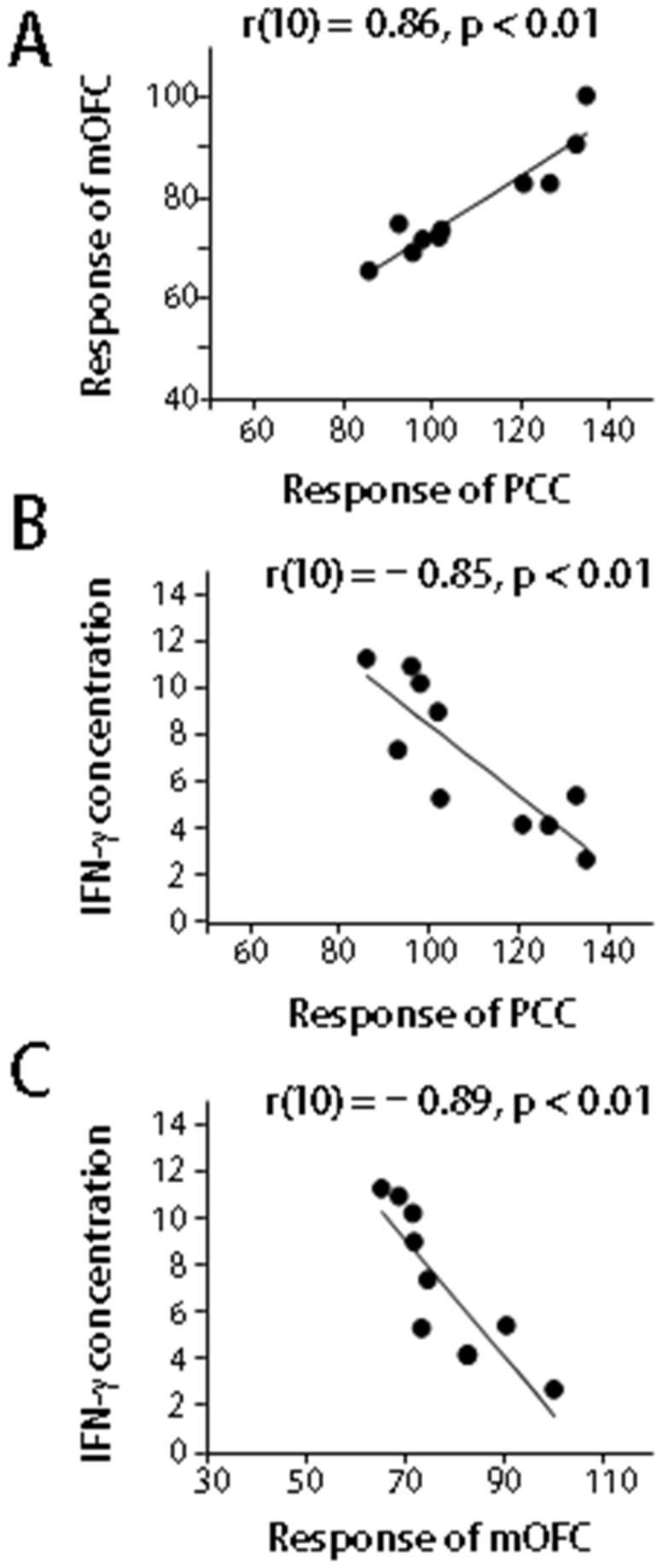
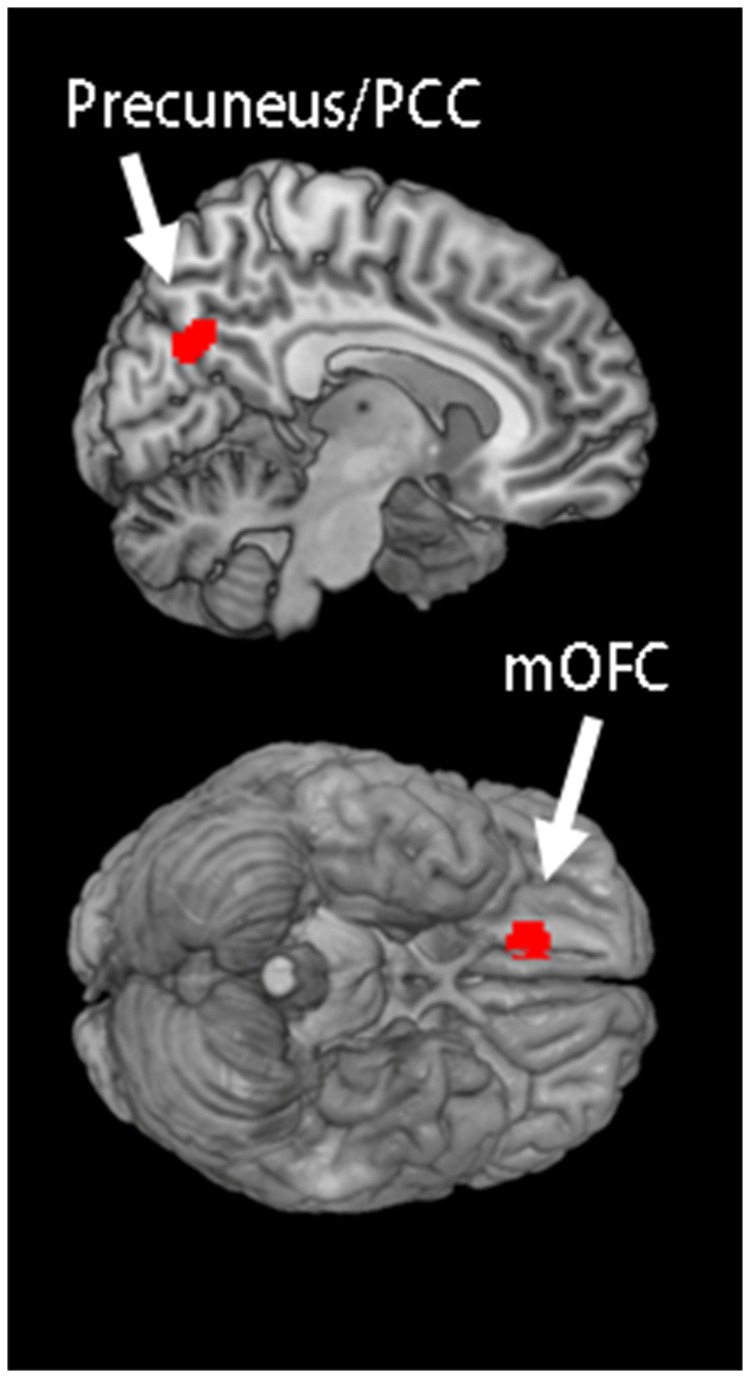
The phenomenon in which a certain smell evokes a specific memory is known as the Proust phenomenon. Odor-evoked autobiographic memories are more emotional than those elicited by other sensory stimuli. The results of our previous study indicated that odor-evoked autobiographic memory accompanied by positive emotions has remarkable effects on various psychological and physiological activities, including the secretion of cytokines, which are immune-signaling molecules that modulate systemic inflammation. In this study, we aimed to clarify the neural substrates associated with the interaction between odor-evoked autobiographic memory and peripheral circulating cytokines. We recruited healthy male and female volunteers and investigated the association between brain responses and the concentration of several cytokines in the plasma by using positron emission tomography (PET) recordings when an autographic memory was evoked in participants by asking them to smell an odor that was nostalgic to them. Participants experienced positive emotions and autobiographic memories when nostalgic odors were presented to them. The levels of peripheral proinflammatory cytokines, such as the tumor necrosis factor-α (TNF-α) and interferon-γ (IFN-γ), were significantly reduced after experiencing odor-evoked autobiographic memory. Subtraction analysis of PET images indicated that the medial orbitofrontal cortex (mOFC) and precuneus/posterior cingulate cortex (PCC) were significantly activated during experiences of odor-evoked autobiographic memory. Furthermore, a correlation analysis indicated that activities of the mOFC and precuneus/PCC were negatively correlated with IFN-γ concentration. These results indicate that the neural networks including the precuneus/PCC and mOFC might regulate the secretion of peripheral proinflammatory cytokines during the experience of odor-evoked autobiographic memories accompanied with positive emotions.
某种气味唤起特定记忆的现象被称为普鲁斯特现象。气味诱发的自传体记忆比其他感官刺激引发的记忆更具情感性。我们之前的研究结果表明,伴有积极情绪的气味诱发自传体记忆对各种心理和生理活动有显著影响,包括细胞因子的分泌,细胞因子是调节全身炎症的免疫信号分子。在本研究中,我们旨在阐明与气味诱发自传体记忆和外周循环细胞因子之间相互作用相关的神经基础。我们招募了健康的男性和女性志愿者,当通过让参与者闻一种能唤起他们怀旧之情的气味来诱发自传体记忆时,利用正电子发射断层扫描(PET)记录来研究大脑反应与血浆中几种细胞因子浓度之间的关联。当向参与者呈现怀旧气味时,他们会体验到积极情绪和自传体记忆。在经历气味诱发自传体记忆后,外周促炎细胞因子如肿瘤坏死因子-α(TNF-α)和干扰素-γ(IFN-γ)的水平显著降低。PET图像的减法分析表明,在气味诱发自传体记忆的过程中,内侧眶额皮质(mOFC)和楔前叶/后扣带回皮质(PCC)显著激活。此外,相关性分析表明,mOFC和楔前叶/PCC的活动与IFN-γ浓度呈负相关。这些结果表明,包括楔前叶/PCC和mOFC在内的神经网络可能在伴有积极情绪的气味诱发自传体记忆过程中调节外周促炎细胞因子的分泌。