Li Quanhai, Kawamura Kiyoko, Yang Shan, Okamoto Shinya, Kobayashi Hiroshi, Tada Yuji, Sekine Ikuo, Takiguchi Yuichi, Shingyouji Masato, Tatsumi Koichiro, Shimada Hideaki, Hiroshima Kenzo, Tagawa Masatoshi
Division of Pathology and Cell Therapy, Chiba Cancer Center Research Institute, Chiba, Japan.
PLoS One. 2013 Aug 16;8(8):e72709. doi: 10.1371/journal.pone.0072709. eCollection 2013.
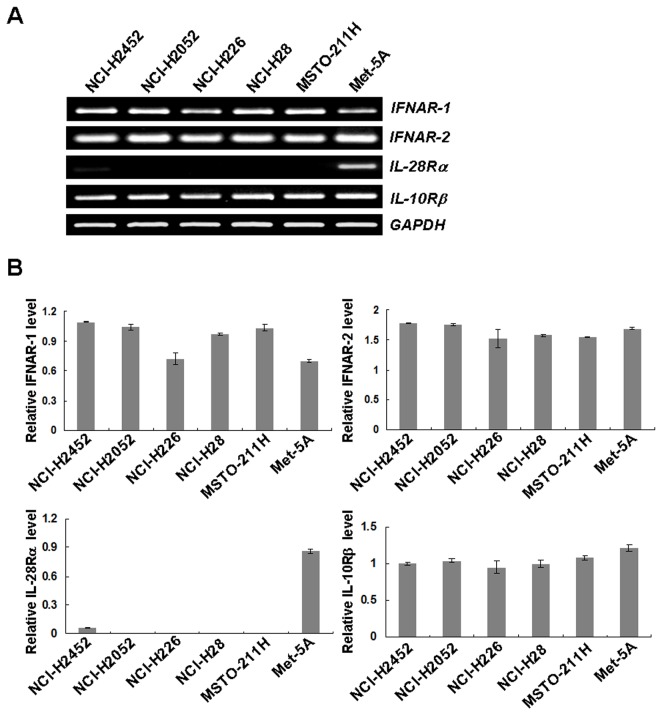
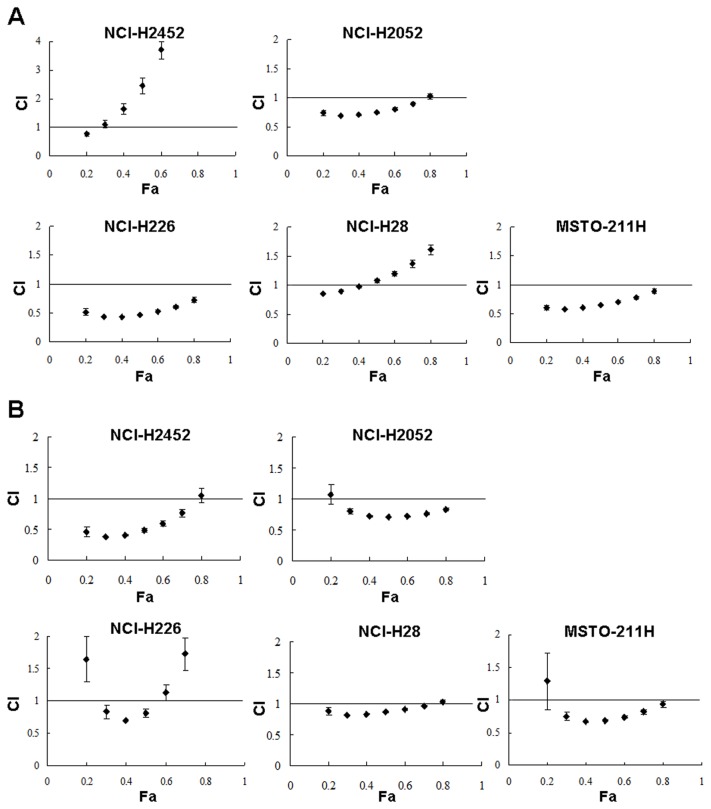
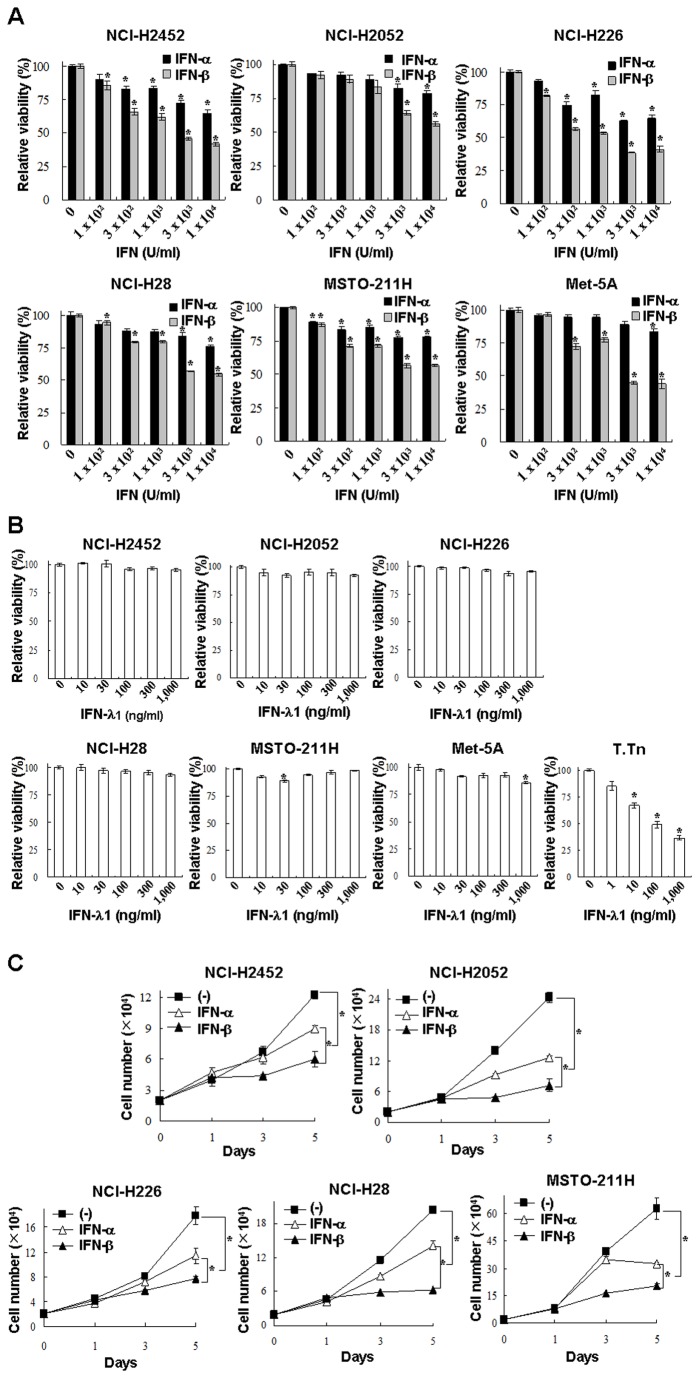
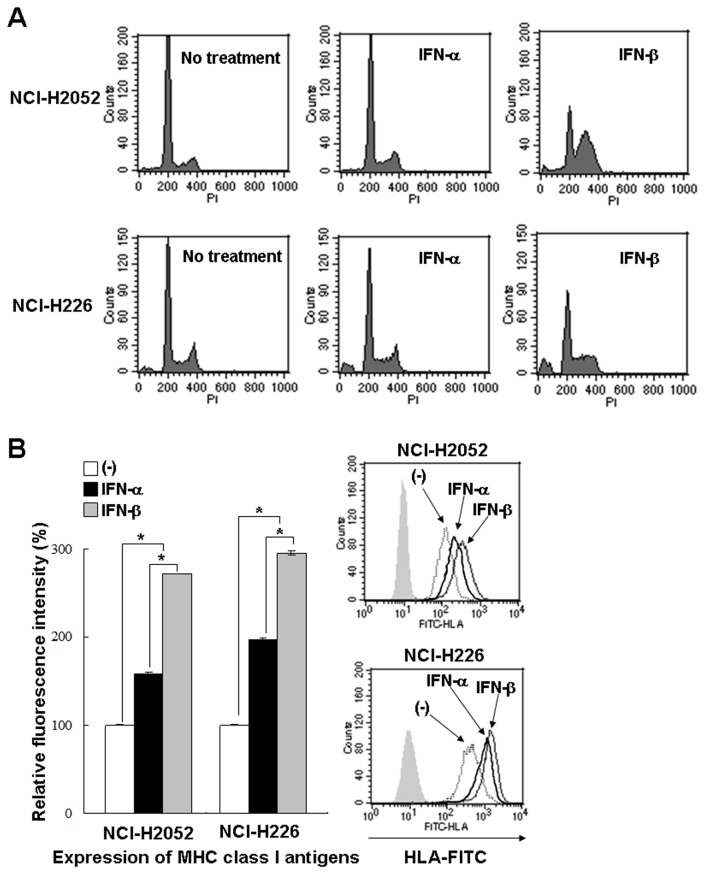
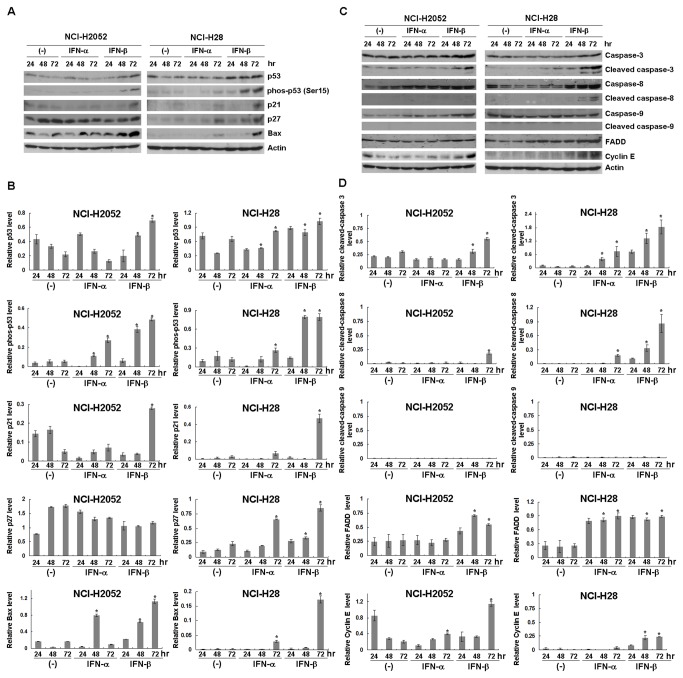
Interferons (IFNs) have been tested for the therapeutic effects in various types of malignancy, but mechanisms of the anti-tumors effects and the differential biological activities among IFN members are dependent on respective cell types. In this study, we examined growth inhibitory activities of type I and III IFNs on 5 kinds of human mesothelioma cells bearing wild-type p53 gene, and showed that type I IFNs but not type III IFNs decreased the cell viabilities. Moreover, growth inhibitory activities and up-regulated expression levels of the major histocompatibility complexes class I antigens were greater with IFN-β than with IFN-α treatments. Cell cycle analyses demonstrated that type I IFNs increased S- and G2/M-phase populations, and subsequently sub-G1-phase fractions. The cell cycle changes were also greater with IFN-β than IFN-α treatments, and these data collectively showed that IFN-β had stronger biological activities than IFN-α in mesothelioma. Type I IFNs-treated cells increased p53 expression and the phosphorylation levels, and activated apoptotic pathways. A combinatory use of IFN-β and cisplatin or pemetrexed, both of which are the current first-line chemotherapeutic agents for mesothelioma, produced synergistic anti-tumor effects, which were also evidenced by increased sub-G1-phase fractions. These data demonstrated firstly to our knowledge that IFN-β produced synergistic anti-tumor effects with cisplatin or pemetrexed on mesothelioma through up-regulated p53 expression.
干扰素(IFNs)已在多种恶性肿瘤中进行了治疗效果测试,但抗肿瘤作用机制以及IFN成员之间不同的生物学活性取决于各自的细胞类型。在本研究中,我们检测了I型和III型IFNs对5种携带野生型p53基因的人恶性间皮瘤细胞的生长抑制活性,结果显示I型IFNs可降低细胞活力,而III型IFNs则无此作用。此外,与IFN-α处理相比,IFN-β处理的主要组织相容性复合体I类抗原的生长抑制活性和上调表达水平更高。细胞周期分析表明,I型IFNs增加了S期和G2/M期细胞群,随后增加了亚G1期细胞比例。与IFN-α处理相比,IFN-β处理引起的细胞周期变化也更大,这些数据共同表明在间皮瘤中IFN-β比IFN-α具有更强的生物学活性。I型IFNs处理的细胞增加了p53表达及其磷酸化水平,并激活了凋亡途径。IFN-β与顺铂或培美曲塞(二者均为目前治疗间皮瘤的一线化疗药物)联合使用产生了协同抗肿瘤作用,亚G1期细胞比例增加也证明了这一点。据我们所知,这些数据首次证明IFN-β通过上调p53表达与顺铂或培美曲塞对间皮瘤产生协同抗肿瘤作用。