Kubota Daisuke, Yoshida Akihiko, Tsuda Hitoshi, Suehara Yoshiyuki, Okubo Taketo, Saito Tsuyoshi, Orita Hajime, Sato Koichi, Taguchi Takahiro, Yao Takashi, Kaneko Kazuo, Katai Hitoshi, Kawai Akira, Kondo Tadashi
Division of Pharmacoproteomics, National Cancer Centre Research Institute, Tokyo, Japan.
PLoS One. 2013 Aug 19;8(8):e73896. doi: 10.1371/journal.pone.0073896. eCollection 2013.
Prognostic biomarkers are required for risk stratification therapy in the patients with gastrointestinal stromal tumor (GIST). In this study, we aimed to identify prognostic biomarkers in GIST. We assessed the prognostic value of E twenty-six variant 1 (ETV1), a recently identified transcription factor unique to GIST. We also examined the clinical utility and functions of its downstream gene, potassium channel tetramerization domain containing protein 10 (KCTD10).
The levels of ETV1 and KCTD10 were evaluated immunohistochemically in 112 patients with GIST treated at two hospitals. The functional properties of KCTD10 were examined by gene silencing assay in cultured GIST cells.
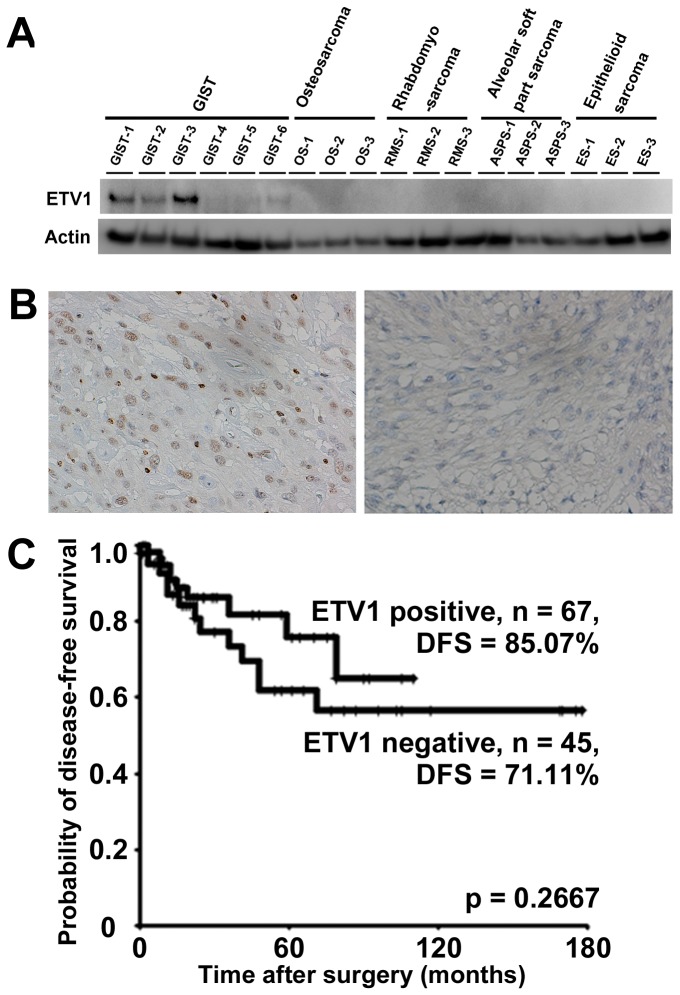
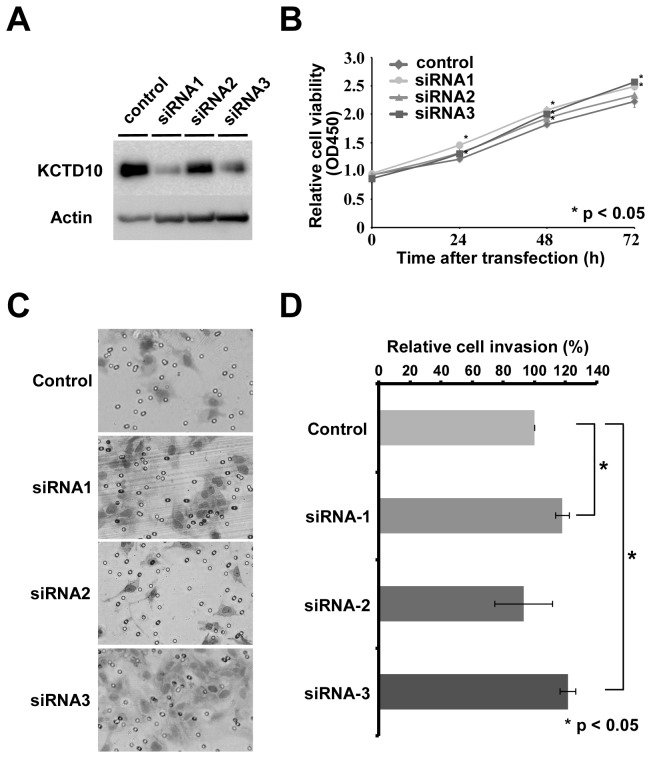
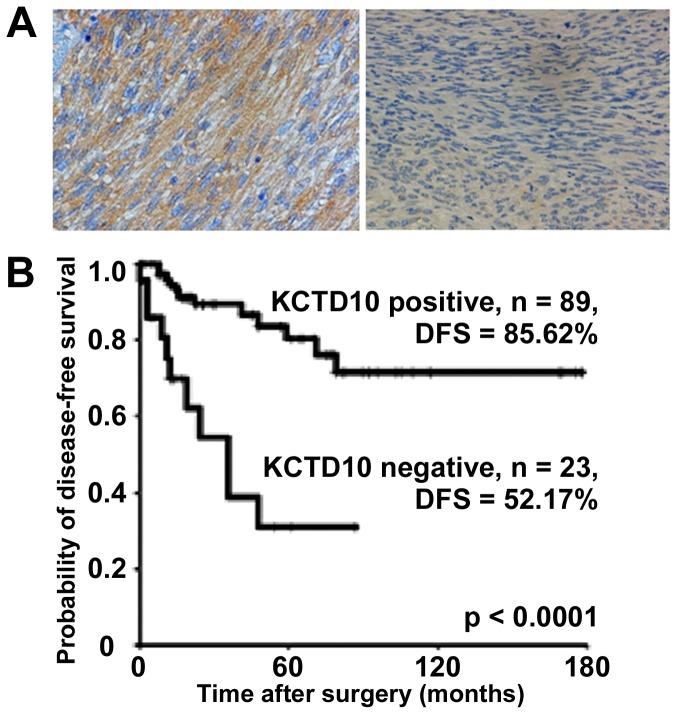
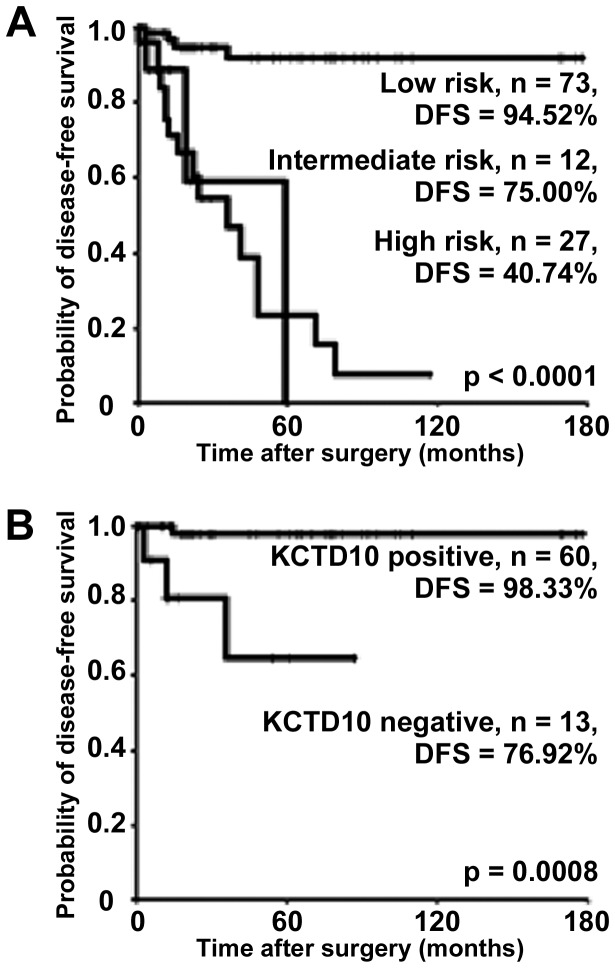
Immunohistochemistry revealed that ETV1 expression in GIST had no prognostic significance. In contrast, the disease-free survival rate was 88.5% in patients with KCTD10-positive tumors and 55.8% in those with KCTD10-negative tumors (p <0.0001). KCTD10 was an independent prognostic factor (p <0.05). In the low-risk classification group, KCTD10 was significantly associated with favorable prognosis (p = 0.0008). Gene silencing of KCTD10 increased cell proliferation and invasion, suggesting that KCTD10 has a tumor-suppressive function.
The GIST-specific transcription factor ETV1 may have no prognostic potential, whereas its downstream gene KCTD10 is associated with a favorable prognosis. Our study indicated the novel prognostic utility of KCTD10 in GIST, and suggested its tumor-suppressive effects on GIST cells. Further validation studies of KCTD10 for clinical applications, and functional verification of KCTD10 for better understanding of molecular basis of malignant phenotypes are worth challenging in GIST.
胃肠道间质瘤(GIST)患者的风险分层治疗需要预后生物标志物。在本研究中,我们旨在鉴定GIST中的预后生物标志物。我们评估了E26变异体1(ETV1)的预后价值,ETV1是一种最近发现的GIST特有的转录因子。我们还研究了其下游基因含钾通道四聚化结构域蛋白10(KCTD10)的临床实用性和功能。
采用免疫组织化学方法评估了两家医院治疗的112例GIST患者中ETV1和KCTD10的水平。通过基因沉默试验在培养的GIST细胞中检测KCTD10的功能特性。
免疫组织化学显示,GIST中ETV1表达无预后意义。相比之下,KCTD10阳性肿瘤患者的无病生存率为88.5%,KCTD10阴性肿瘤患者为55.8%(p<0.0001)。KCTD10是一个独立的预后因素(p<0.05)。在低风险分类组中,KCTD10与良好预后显著相关(p=0.0008)。KCTD10基因沉默增加了细胞增殖和侵袭,表明KCTD10具有肿瘤抑制功能。
GIST特异性转录因子ETV1可能没有预后潜力,而其下游基因KCTD10与良好预后相关。我们的研究表明KCTD10在GIST中具有新的预后实用性,并提示其对GIST细胞的肿瘤抑制作用。对KCTD10进行进一步的临床应用验证研究,以及对KCTD1