Department of Brain Science, Daegu Gyeongbuk Institute of Science and Technology, Daegu 711-873, Korea.
BMB Rep. 2013 Aug;46(8):383-90. doi: 10.5483/bmbrep.2013.46.8.164.
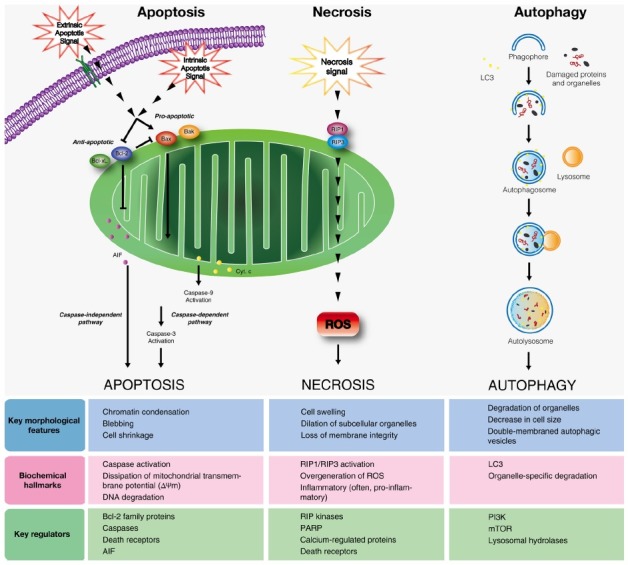
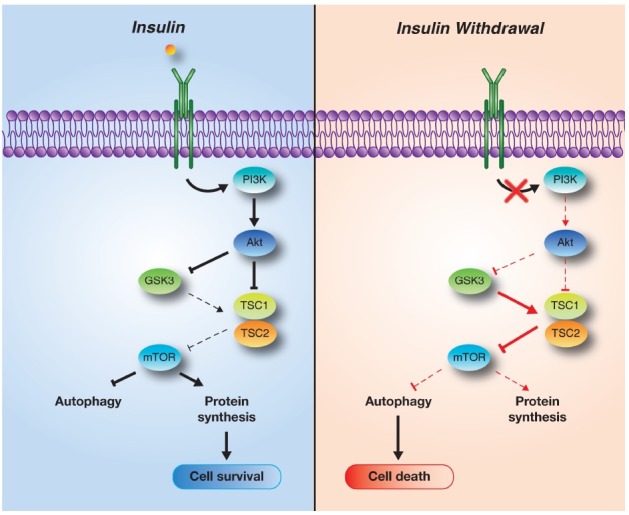
Mammalian neural stem cells (NSCs) are of particular interest because of their role in brain development and function. Recent findings suggest the intimate involvement of programmed cell death (PCD) in the turnover of NSCs. However, the underlying mechanisms of PCD are largely unknown. Although apoptosis is the best-defined form of PCD, accumulating evidence has revealed a wide spectrum of PCD encompassing apoptosis, autophagic cell death (ACD) and necrosis. This mini-review aims to illustrate a unique regulation of PCD in NSCs. The results of our recent studies on autophagic death of adult hippocampal neural stem (HCN) cells are also discussed. HCN cell death following insulin withdrawal clearly provides a reliable model that can be used to analyze the molecular mechanisms of ACD in the larger context of PCD. More research efforts are needed to increase our understanding of the molecular basis of NSC turnover under degenerating conditions, such as aging, stress and neurological diseases. Efforts aimed at protecting and harnessing endogenous NSCs will offer novel opportunities for the development of new therapeutic strategies for neuropathologies.
哺乳动物神经干细胞(NSCs)因其在大脑发育和功能中的作用而备受关注。最近的发现表明,程序性细胞死亡(PCD)在 NSCs 的更替中起着重要作用。然而,PCD 的潜在机制在很大程度上尚不清楚。尽管细胞凋亡是最明确的 PCD 形式,但越来越多的证据表明,PCD 包括凋亡、自噬性细胞死亡(ACD)和坏死等多种形式。这篇综述旨在阐述 NSCs 中 PCD 的独特调控机制。还讨论了我们最近关于成年海马神经干细胞(HCN)细胞自噬性死亡的研究结果。胰岛素剥夺后 HCN 细胞死亡为分析 ACD 在更大的 PCD 背景下的分子机制提供了一个可靠的模型。需要更多的研究努力来增加我们对衰老、应激和神经退行性疾病等退化条件下 NSC 更替的分子基础的理解。保护和利用内源性 NSCs 的努力将为神经病理学的新治疗策略的发展提供新的机会。