*MRC Mitochondrial Biology Unit, Wellcome Trust/MRC Building, Hills Road, Cambridge CB2 0XY, U.K.
Biochem J. 2013 Nov 15;456(1):139-46. doi: 10.1042/BJ20130606.
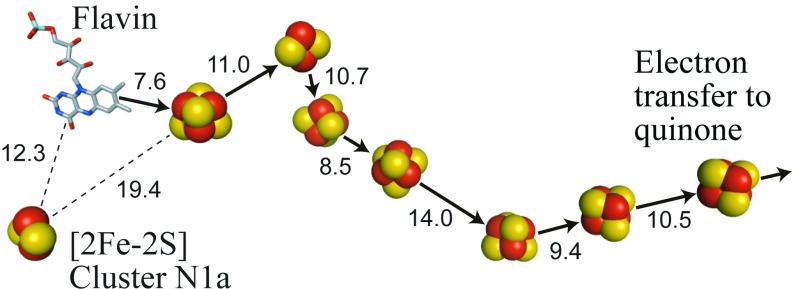
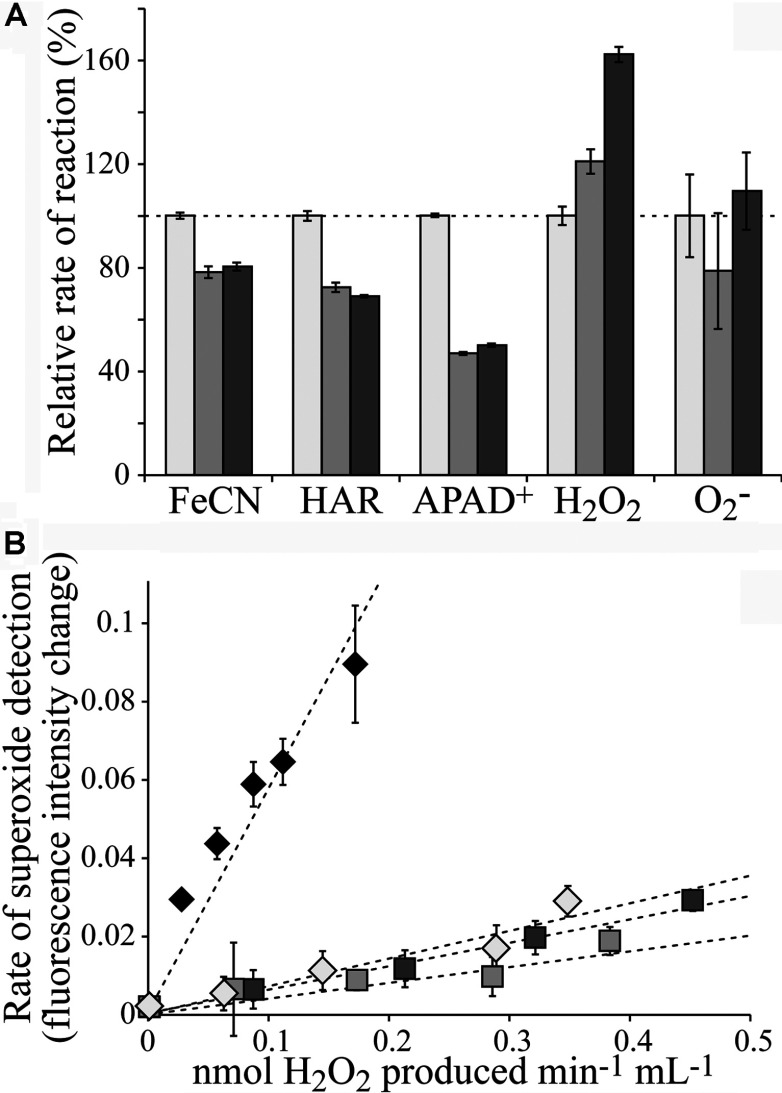
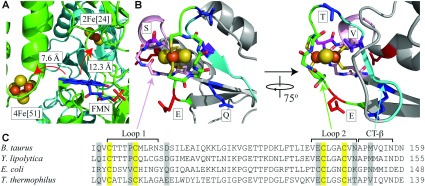
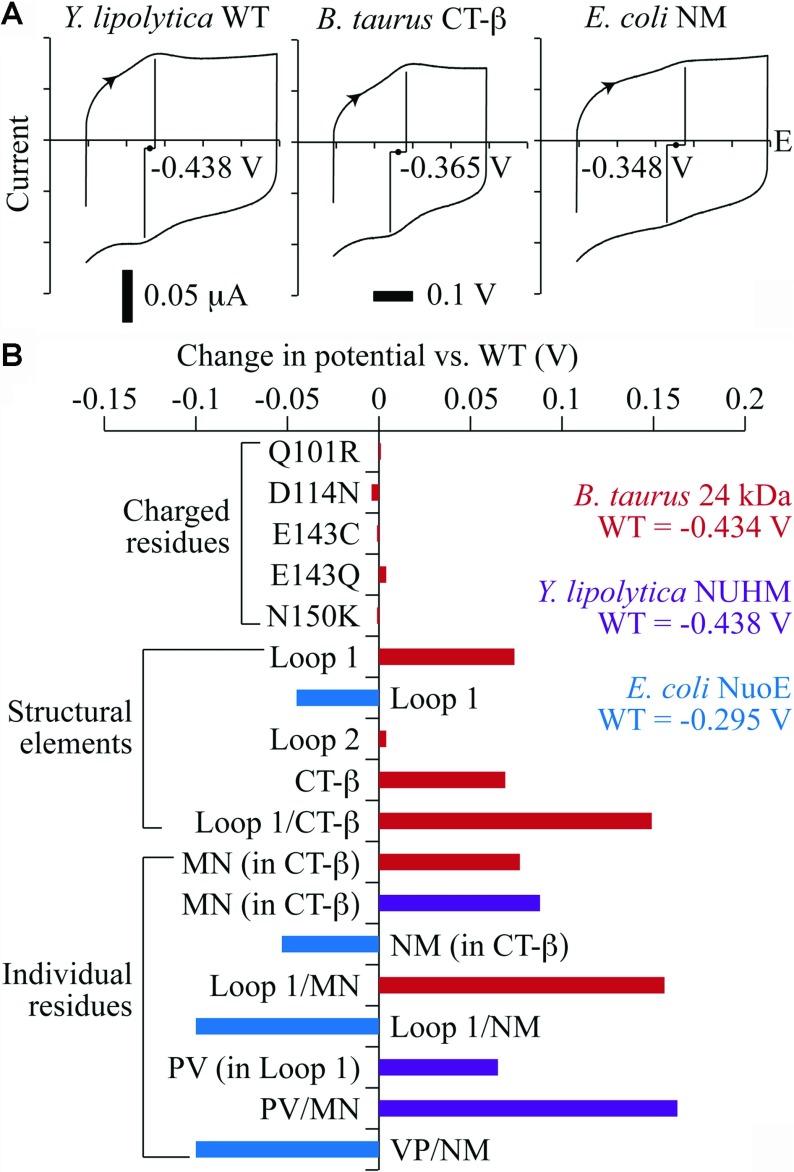
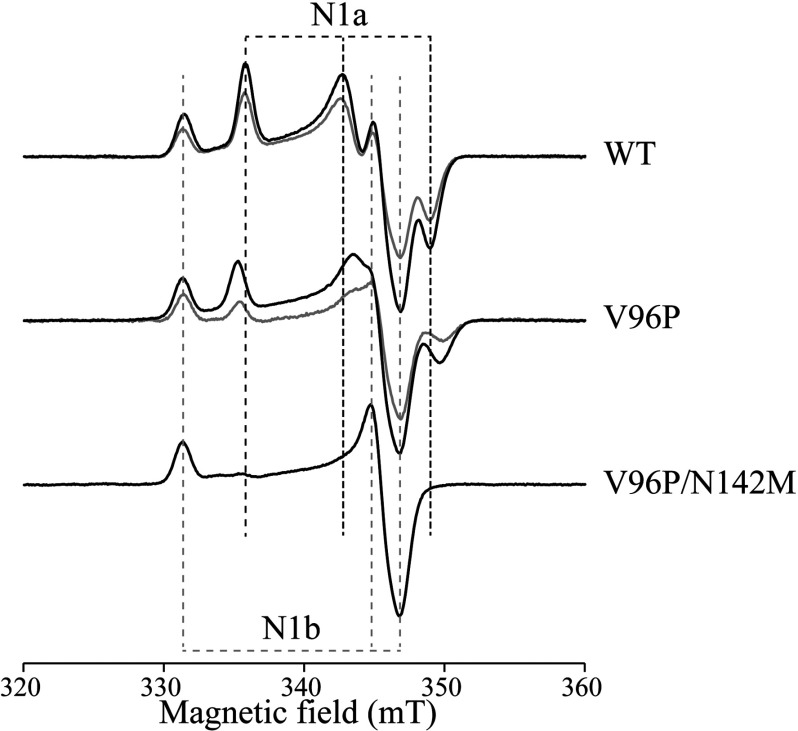
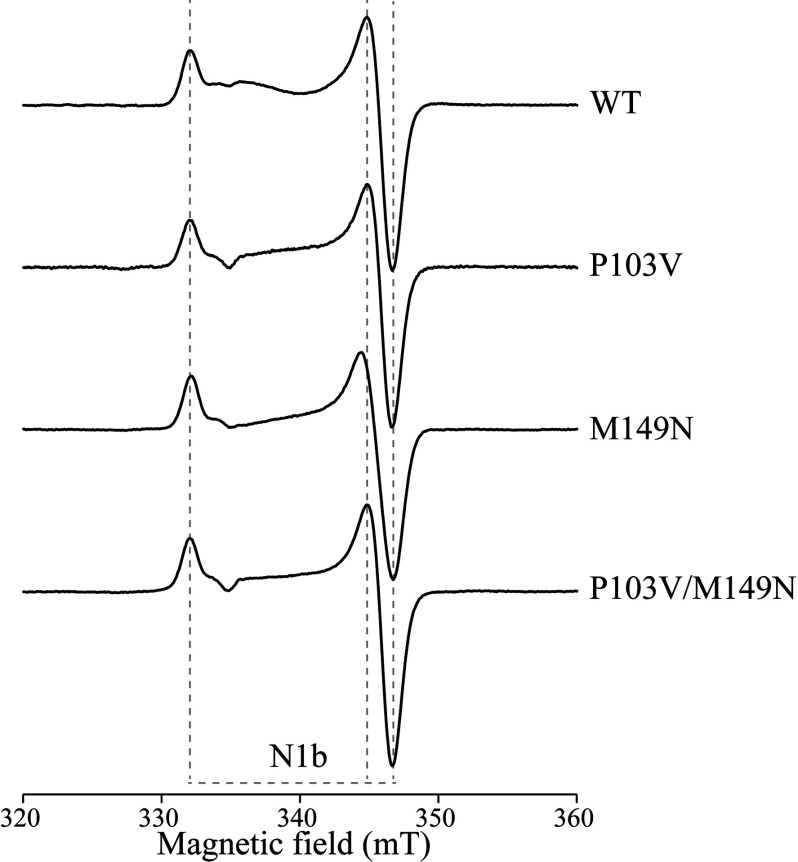
quinone oxidoreductase (complex I) couples NADH oxidation and quinone reduction to proton translocation across an energy-transducing membrane. All complexes I contain a flavin to oxidize NADH, seven iron-sulfur clusters to transfer electrons from the flavin to quinone and an eighth cluster (N1a) on the opposite side of the flavin. The role of cluster N1a is unknown, but Escherichia coli complex I has an unusually high-potential cluster N1a and its reduced flavin produces H2O2, not superoxide, suggesting that cluster N1a may affect reactive oxygen species production. In the present study, we combine protein film voltammetry with mutagenesis in overproduced N1a-binding subunits to identify two residues that switch N1a between its high- (E. coli, valine and asparagine) and low- (Bos taurus and Yarrowia lipolytica, proline and methionine) potential forms. The mutations were incorporated into E. coli complex I: cluster N1a could no longer be reduced by NADH, but H2O2 and superoxide production were unaffected. The reverse mutations (that increase the potential by ~0.16 V) were incorporated into Y. lipolytica complex I, but N1a was still not reduced by NADH. We conclude that cluster N1a does not affect reactive oxygen species production by the complex I flavin; it is probably required for enzyme assembly or stability.
醌氧化还原酶(复合物 I)将烟酰胺腺嘌呤二核苷酸氧化和醌还原与质子跨能量转换膜转运偶联。所有复合物 I 都含有一个黄素来氧化烟酰胺腺嘌呤二核苷酸,七个铁硫簇将电子从黄素转移到醌,并在黄素的另一侧有一个第八个簇(N1a)。N1a 簇的作用尚不清楚,但大肠杆菌复合物 I 具有异常高电位的 N1a 簇,其还原的黄素产生 H2O2,而不是超氧化物,表明 N1a 簇可能影响活性氧物质的产生。在本研究中,我们结合蛋白质膜伏安法和过量产生的 N1a 结合亚基的突变,确定了两个残基,它们在 N1a 的高(大肠杆菌、缬氨酸和天冬酰胺)和低(牛和假丝酵母)电势形式之间切换。这些突变被整合到大肠杆菌复合物 I 中:N1a 簇不能再被烟酰胺腺嘌呤二核苷酸还原,但 H2O2 和超氧化物的产生不受影响。将反向突变(将电势增加约 0.16V)整合到假丝酵母复合物 I 中,但 NADH 仍不能还原 N1a。我们得出结论,N1a 簇不会影响复合物 I 黄素产生的活性氧物质;它可能是酶组装或稳定所必需的。