Department of Mechanical and Biomedical Engineering, City University of Hong Kong, Hong Kong 999077, China.
Sci Rep. 2013;3:2515. doi: 10.1038/srep02515.
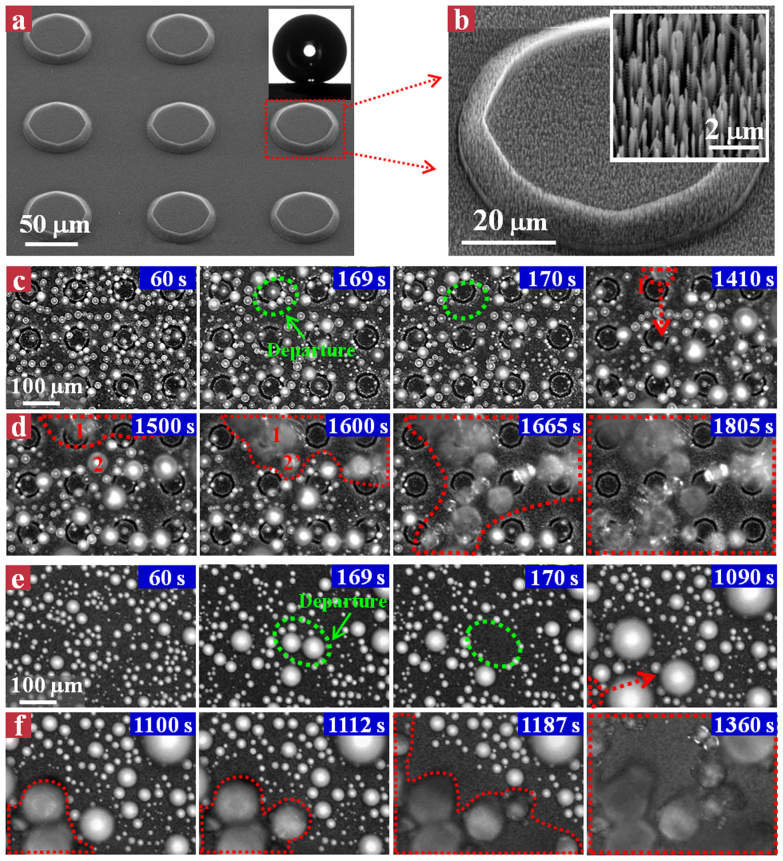
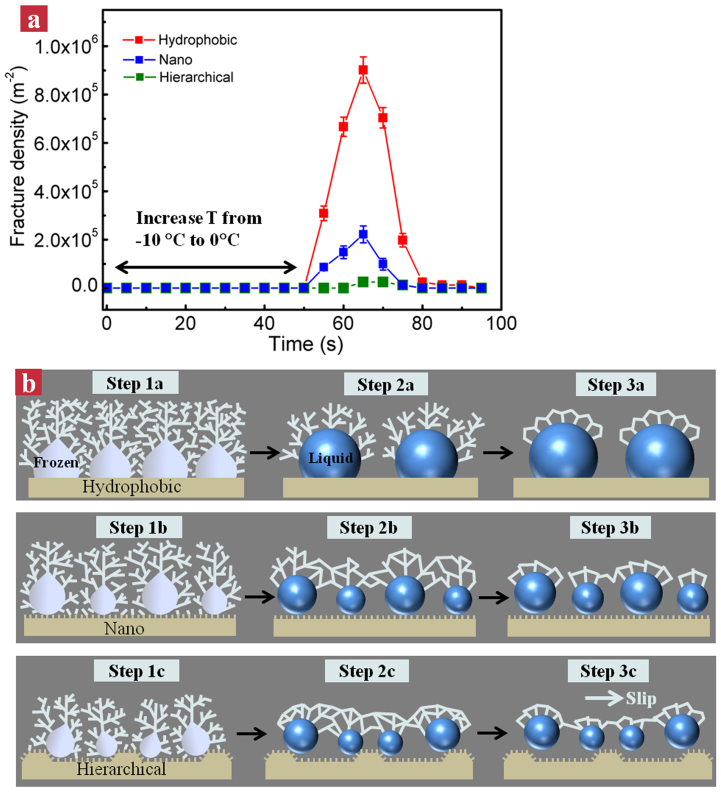
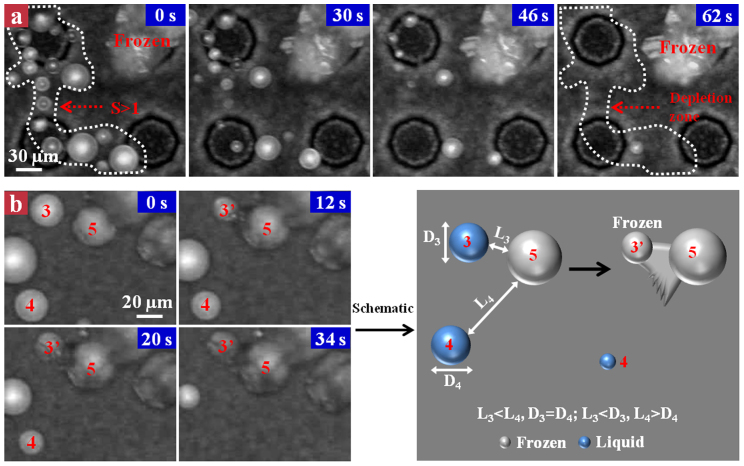
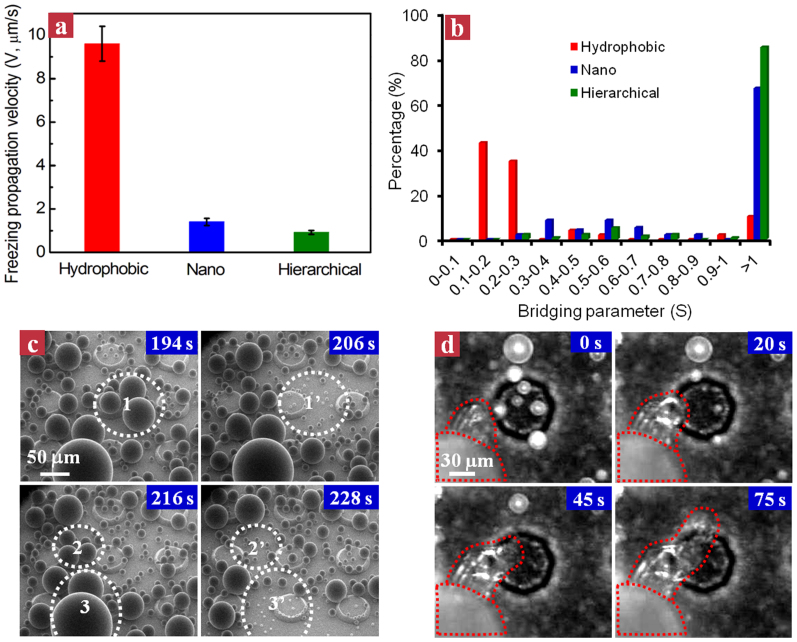
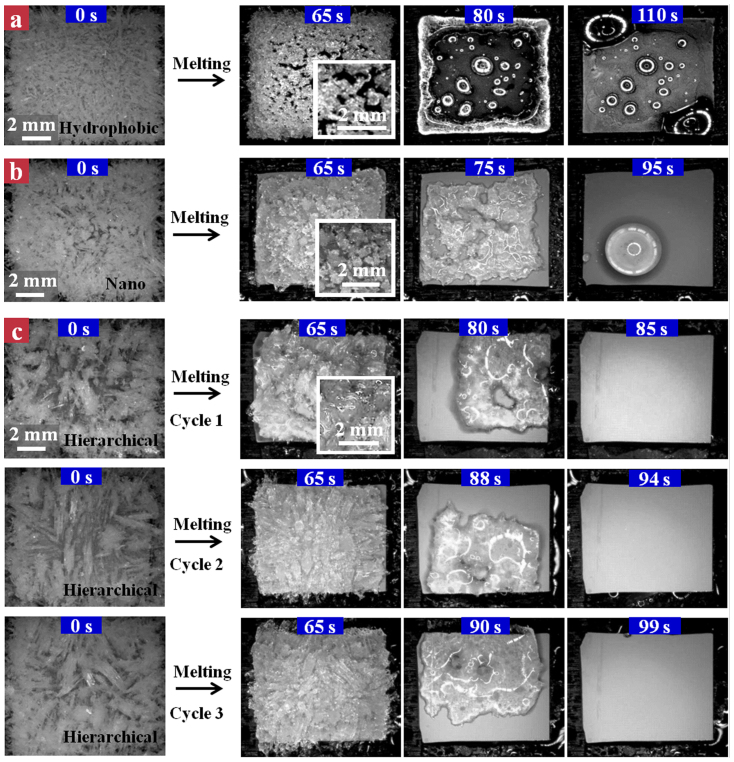
Despite extensive progress, current icephobic materials are limited by the breakdown of their icephobicity in the condensation frosting environment. In particular, the frost formation over the entire surface is inevitable as a result of undesired inter-droplet freezing wave propagation initiated by the sample edges. Moreover, the frost formation directly results in an increased frost adhesion, posing severe challenges for the subsequent defrosting process. Here, we report a hierarchical surface which allows for interdroplet freezing wave propagation suppression and efficient frost removal. The enhanced performances are mainly owing to the activation of the microscale edge effect in the hierarchical surface, which increases the energy barrier for ice bridging as well as engendering the liquid lubrication during the defrosting process. We believe the concept of harnessing the surface morphology to achieve superior performances in two opposite phase transition processes might shed new light on the development of novel materials for various applications.
尽管取得了广泛的进展,但目前的抗冰材料仍受到冷凝结霜环境中抗冰性能破坏的限制。特别是,由于样品边缘引发的不希望的液滴间冻结波传播,整个表面的霜形成是不可避免的。此外,霜的形成直接导致霜附着增加,这对后续的除霜过程构成了严峻挑战。在这里,我们报告了一种分层表面,该表面可以抑制液滴间冻结波的传播并实现高效除霜。性能的增强主要归因于分层表面中微尺度边缘效应的激活,这增加了冰桥接的能量势垒,并在除霜过程中产生液体润滑。我们相信,利用表面形态在两个相反的相变过程中实现卓越性能的概念,可能为各种应用的新型材料的开发提供新的思路。