Department of Oncology, Oxford NIHR Biomedical Research Centre, Cancer Research UK-Medical Research Council Gray Institute for Radiation Oncology & Biology, University of Oxford, Oxford, Oxfordshire, OX3 7DQ, United Kingdom.
Int J Cancer. 2014 Mar 15;134(6):1495-503. doi: 10.1002/ijc.28454. Epub 2013 Nov 14.
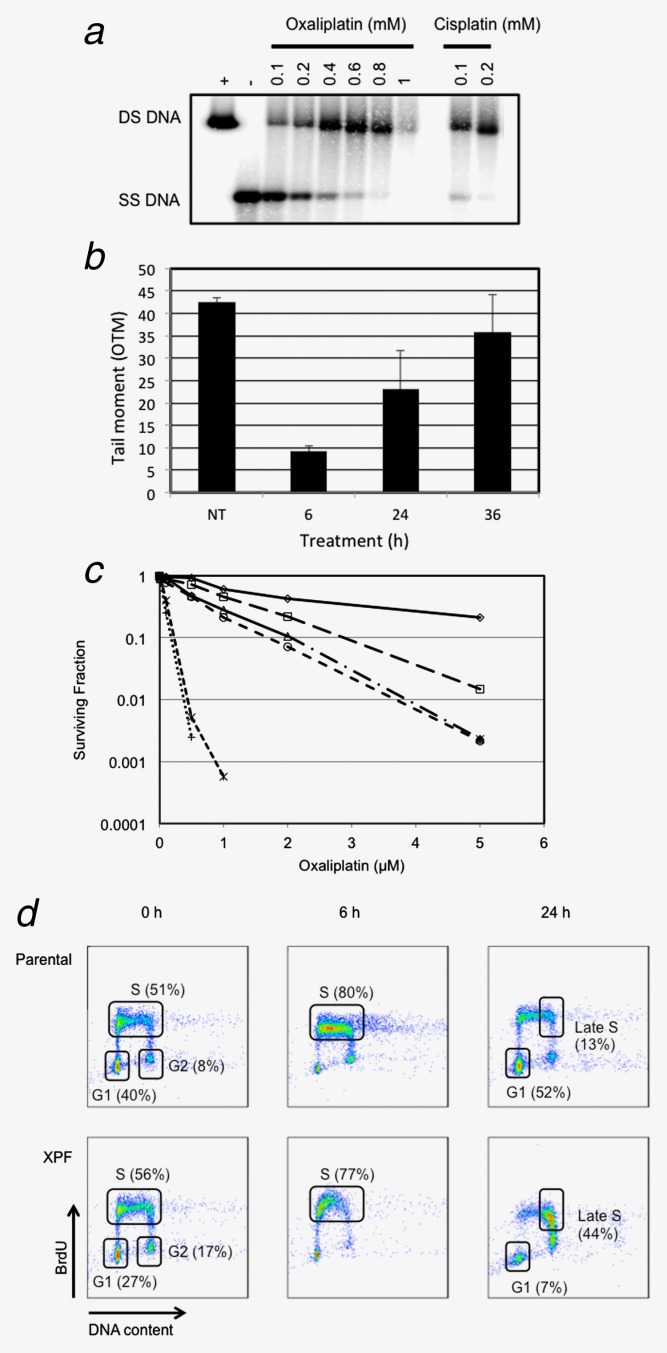
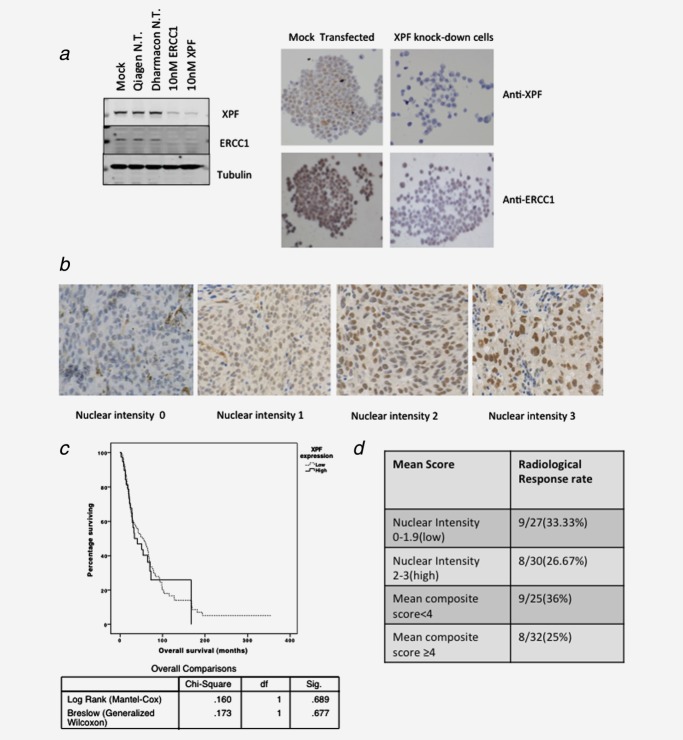
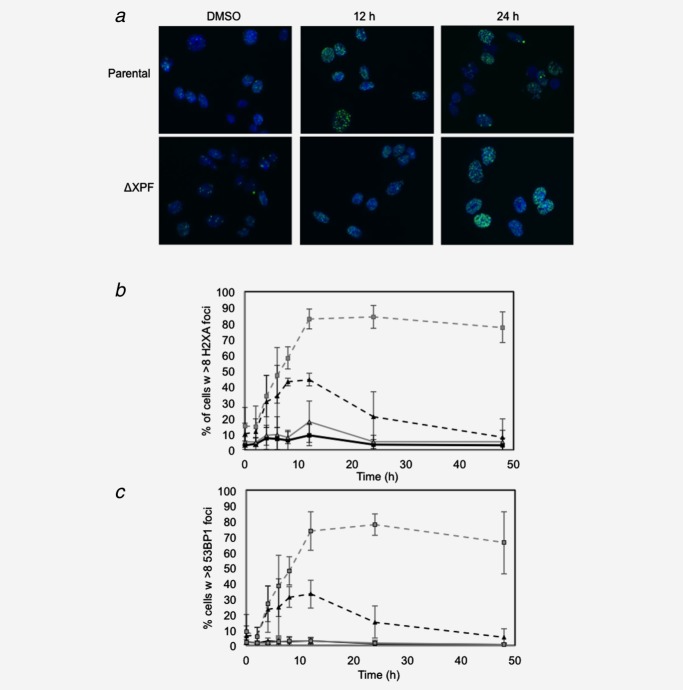
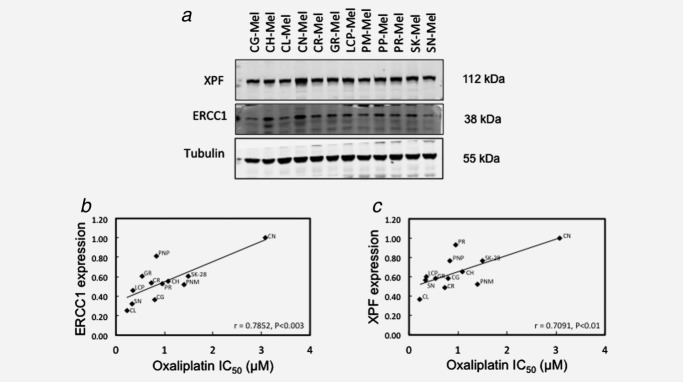
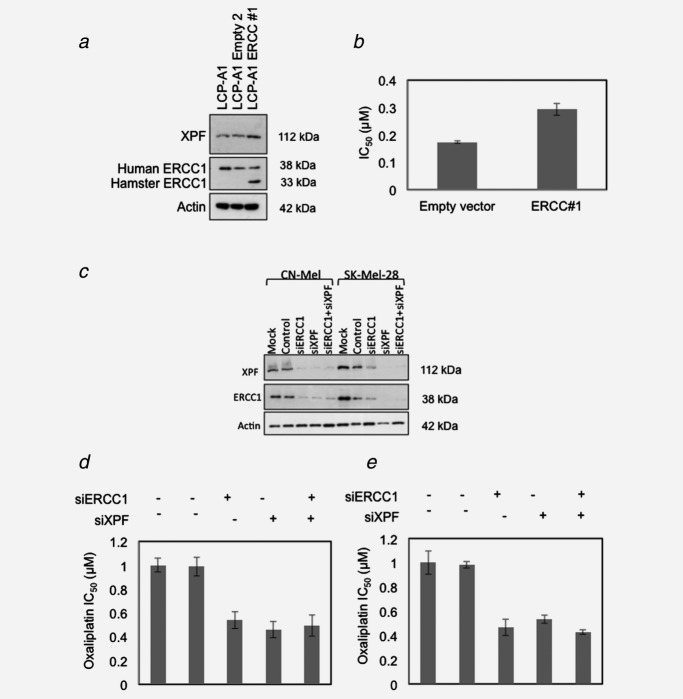
As the options for systemic treatment of malignant melanoma (MM) increase, the need to develop biomarkers to identify patients who might benefit from cytotoxic chemotherapy becomes more apparent. In preclinical models, oxaliplatin has activity in cisplatin-resistant cells. In this study, we have shown that oxaliplatin forms interstrand crosslinks (ICLs) in cellular DNA and that loss of the heterodimeric structure-specific endonuclease XPF-ERCC1 causes hypersensitivity to oxaliplatin in mammalian cells. XPF deficiency resulted in late S-phase arrest and persistence of double-strand breaks following oxaliplatin treatment. In a panel of 12 MM cell lines, oxaliplatin sensitivity correlated with XPF and ERCC1 protein levels. The knockdown of ERCC1 and XPF protein levels by RNA interference increased sensitivity of cancer cells to oxaliplatin; overexpression of exogenous ERCC1 significantly decreased drug sensitivity. Following immunohistochemical optimization, XPF protein levels were quantified in MM tissue samples from 183 patients, showing variation in expression and no correlation with prognosis. In 57 patients with MM treated with cisplatin or carboplatin, XPF protein levels did not predict the likelihood of clinical response. We propose that oxaliplatin should not be discarded as a potential treatment for MM on the basis of the limited activity of cisplatin in unselected patients. Moreover, we show that XPF-ERCC1 protein levels are a key determinant of the sensitivity of melanoma cells to oxaliplatin in vitro. Immunohistochemical detection of XPF appears suitable for development as a tissue biomarker for potentially selecting patients for oxaliplatin treatment in a prospective clinical trial.
随着恶性黑色素瘤(MM)系统治疗选择的增加,开发生物标志物以识别可能受益于细胞毒性化疗的患者变得更加重要。在临床前模型中,奥沙利铂在顺铂耐药细胞中具有活性。在这项研究中,我们已经表明奥沙利铂在细胞 DNA 中形成链间交联(ICLs),并且异二聚体结构特异性内切酶 XPF-ERCC1 的缺失导致哺乳动物细胞对奥沙利铂的敏感性增加。XPF 缺陷导致奥沙利铂治疗后晚期 S 期停滞和双链断裂的持续存在。在 12 种 MM 细胞系的小组中,奥沙利铂的敏感性与 XPF 和 ERCC1 蛋白水平相关。通过 RNA 干扰降低 ERCC1 和 XPF 蛋白水平会增加癌细胞对奥沙利铂的敏感性;外源性 ERCC1 的过表达显著降低了药物敏感性。经过免疫组织化学优化后,在 183 名 MM 患者的组织样本中定量了 XPF 蛋白水平,显示表达存在差异,与预后无关。在 57 名接受顺铂或卡铂治疗的 MM 患者中,XPF 蛋白水平不能预测临床反应的可能性。我们提出,鉴于顺铂在未经选择的患者中的有限活性,不应将奥沙利铂排除在 MM 的潜在治疗方法之外。此外,我们表明 XPF-ERCC1 蛋白水平是黑色素瘤细胞对奥沙利铂体外敏感性的关键决定因素。XPF 的免疫组织化学检测似乎适合开发作为潜在选择奥沙利铂治疗患者的组织生物标志物,用于前瞻性临床试验。