Sweeney Justin M, Lebovitz Jonathon J, Eller Jorge L, Coppens Jeroen R, Bucholz Richard D, Abdulrauf Saleem I
Center for Cerebrovascular and Skull Base Surgery, Saint Louis University School of Medicine, Saint Louis, Missouri.
Skull Base Rep. 2011 May;1(1):39-46. doi: 10.1055/s-0031-1275257. Epub 2011 Apr 14.
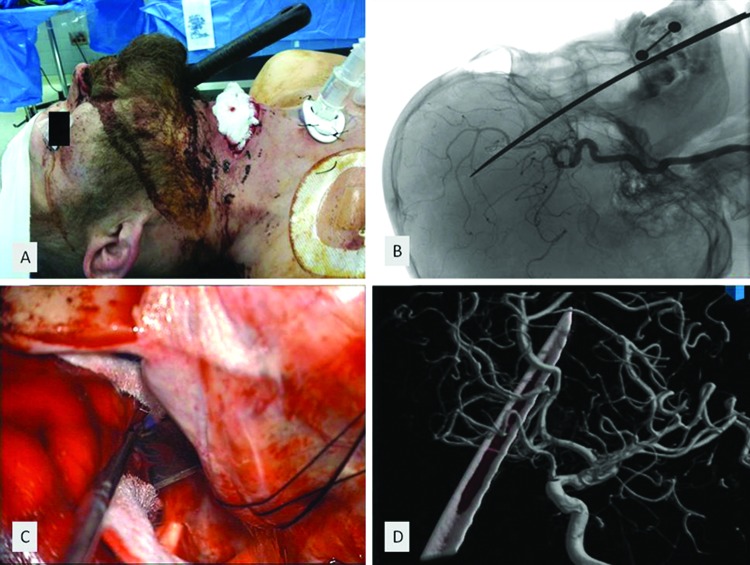
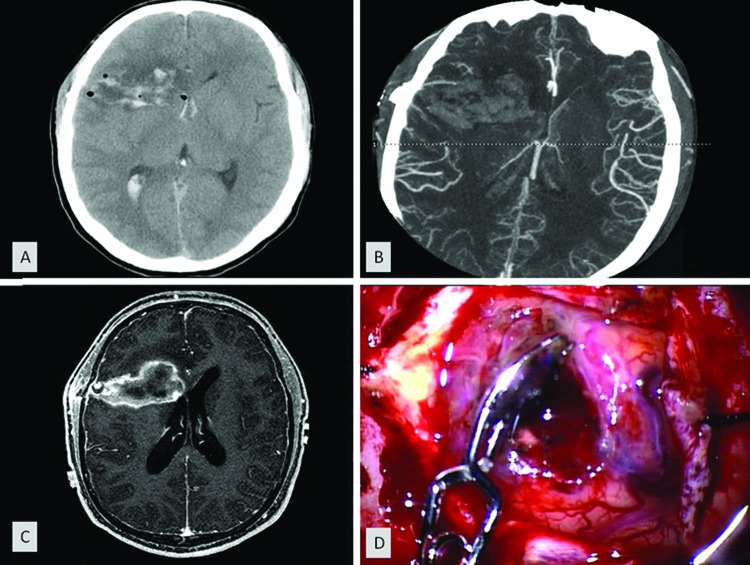
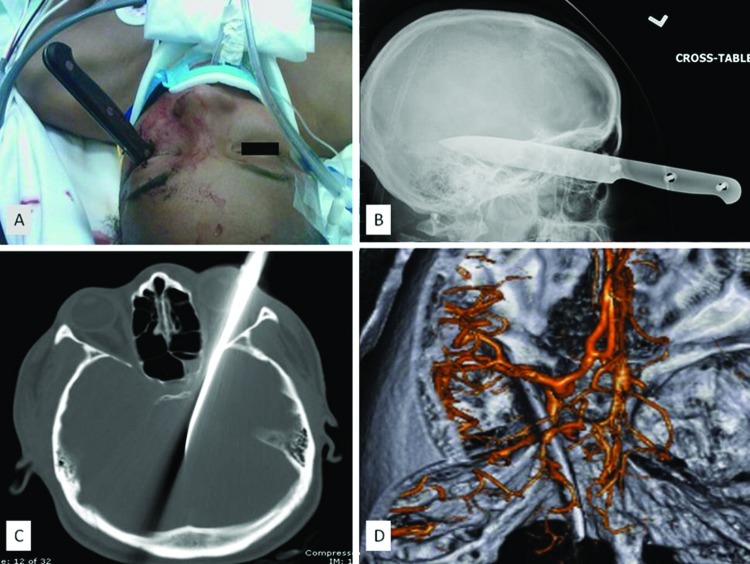
Nonmissile penetrating intracranial injuries are uncommon events in modern times. Most reported cases describe trajectories through the orbit, skull base foramina, or areas of thin bone such as the temporal squama. Patients who survive such injuries and come to medical attention often require foreign body removal. Critical neurovascular structures are often damaged or at risk of additional injury resulting in further neurological deterioration, life-threatening hemorrhage, or death. Delayed complications can also be significant and include traumatic pseudoaneurysms, arteriovenous fistulas, vasospasm, cerebrospinal fluid leak, and infection. Despite this, given the rarity of these lesions, there is a paucity of literature describing the management of neurovascular injury and skull base repair in this setting. The authors describe three cases of nonmissile penetrating brain injury and review the pertinent literature to describe the management strategies from a contemporary cerebrovascular and skull base surgery perspective.
非导弹性穿透性颅脑损伤在现代并不常见。大多数报道的病例描述的是穿过眼眶、颅底孔或颞鳞等薄骨区域的轨迹。此类损伤后存活并就医的患者通常需要取出异物。关键的神经血管结构常受损或有进一步损伤的风险,从而导致神经功能进一步恶化、危及生命的出血或死亡。延迟性并发症也可能很严重,包括创伤性假性动脉瘤、动静脉瘘、血管痉挛、脑脊液漏和感染。尽管如此,鉴于这些损伤的罕见性,描述这种情况下神经血管损伤处理和颅底修复的文献很少。作者描述了三例非导弹性穿透性脑损伤病例,并回顾相关文献,从当代脑血管和颅底手术的角度描述处理策略。