Laboratory of General Pathology and Immunology, Department of Surgical and Morphological Sciences, University of Insubria Varese, Italy.
Front Microbiol. 2013 Aug 22;4:234. doi: 10.3389/fmicb.2013.00234. eCollection 2013.
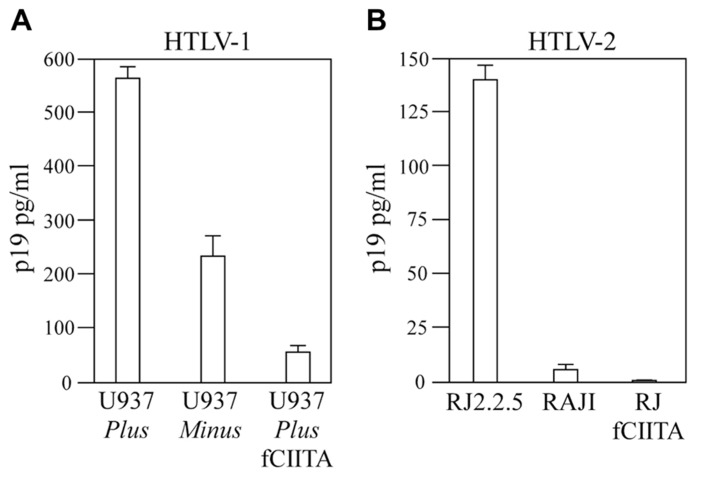
The activation of CD4(+) T helper cells is strictly dependent on the presentation of antigenic peptides by MHC class II (MHC-II) molecules. MHC-II expression is primarily regulated at the transcriptional level by the AIR-1 gene product CIITA (class II transactivator). Thus, CIITA plays a pivotal role in the triggering of the adaptive immune response against pathogens. Besides this well known function, we recently found that CIITA acts as an endogenous restriction factor against HTLV-1 (human T cell lymphotropic virus type 1) and HTLV-2 oncogenic retroviruses by targeting their viral transactivators Tax-1 and Tax-2, respectively. Here we review our findings on CIITA-mediated inhibition of viral replication and discuss similarities and differences in the molecular mechanisms by which CIITA specifically counteracts the function of Tax-1 and Tax-2 molecules. The dual function of CIITA as a key regulator of adaptive and intrinsic immunity represents a rather unique example of adaptation of host-derived factors against pathogen infections during evolution.
CD4(+)T 辅助细胞的激活严格依赖于 MHC Ⅱ类(MHC-II)分子对抗原肽的呈递。MHC-II 的表达主要在转录水平上受到 AIR-1 基因产物 CIITA(Ⅱ类转激活物)的调节。因此,CIITA 在触发针对病原体的适应性免疫反应中起着关键作用。除了这个众所周知的功能,我们最近发现 CIITA 通过分别针对其病毒转录激活子 Tax-1 和 Tax-2,作为针对 HTLV-1(人类 T 细胞嗜淋巴细胞病毒 1 型)和 HTLV-2 致癌逆转录病毒的内源性限制因子发挥作用。在这里,我们回顾了我们关于 CIITA 介导的病毒复制抑制的发现,并讨论了 CIITA 特异性拮抗 Tax-1 和 Tax-2 分子功能的分子机制中的相似性和差异。CIITA 作为适应性和固有免疫的关键调节剂的双重功能代表了在进化过程中宿主来源因子针对病原体感染的适应的一个相当独特的例子。