Shenzhen Institutes of Advanced Technology, The Shenzhen Key Laboratory for Low-cost Healthcare, Shenzhen University Town, 1068 Xueyuan Avenue, Shenzhen 518055, PR China.
Biomed Eng Online. 2013 Aug 29;12:83. doi: 10.1186/1475-925X-12-83.
Most hemiplegic patients have difficulties in their balance and posture control while walking because of the asymmetrical posture and the abnormal body balance. The assessment of rehabilitation of hemiplegic gait is usually made by doctors using clinical scale, but it is difficult and could not be used frequently. It is therefore needed to quantitatively analyze the characteristics of hemiplegic gait. Thus the assessment would be simple, and real-time evaluation of rehabilitation could be carried out.
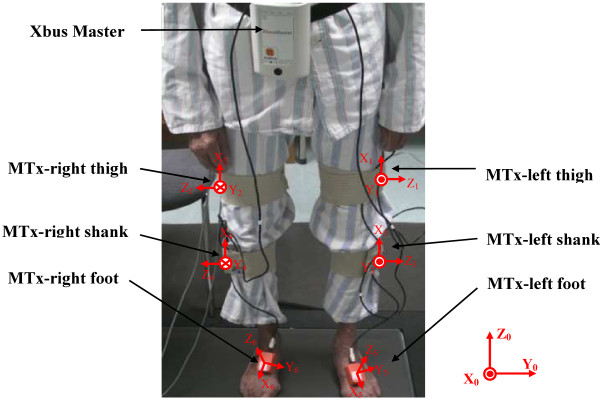
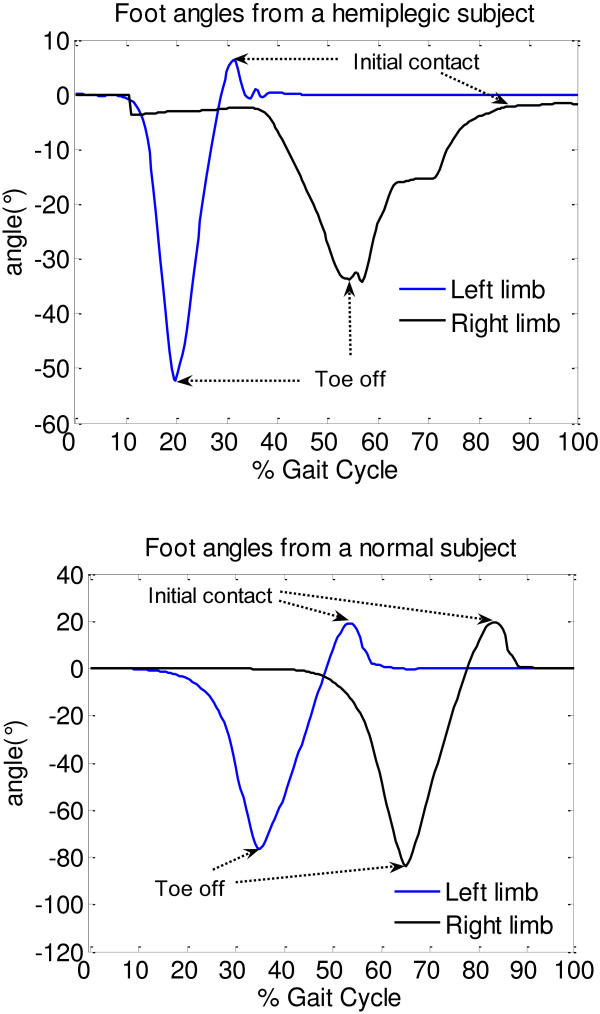
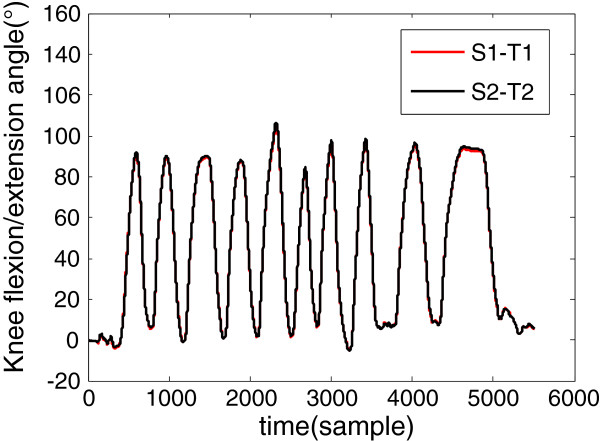
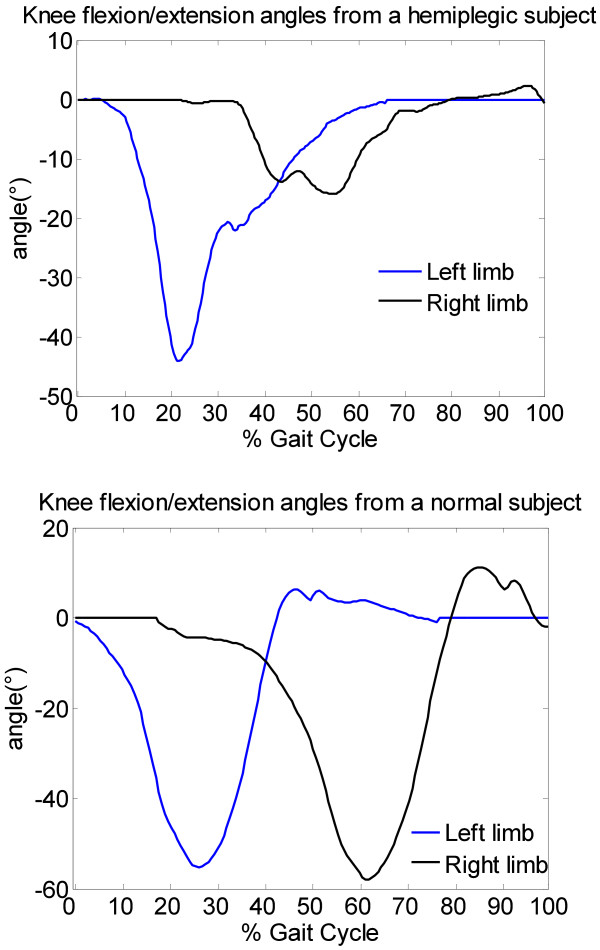
Twenty subjects (ten hemiplegic patients, ten normal subjects) were recruited. The subjects walked straight for five meters at their self-selected comfortable speed towards a target line on the floor.Xsens MTx motion trackers were used for acquiring gestures of body segments to estimate knee joint angles and identify gait cycles. A practical method for data acquisition that does not need to obtain accurate distances between a knee joint and its corresponding sensors is presented.
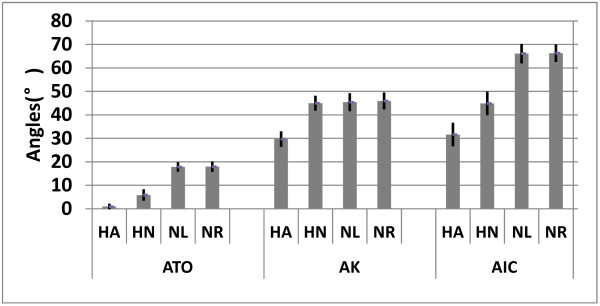
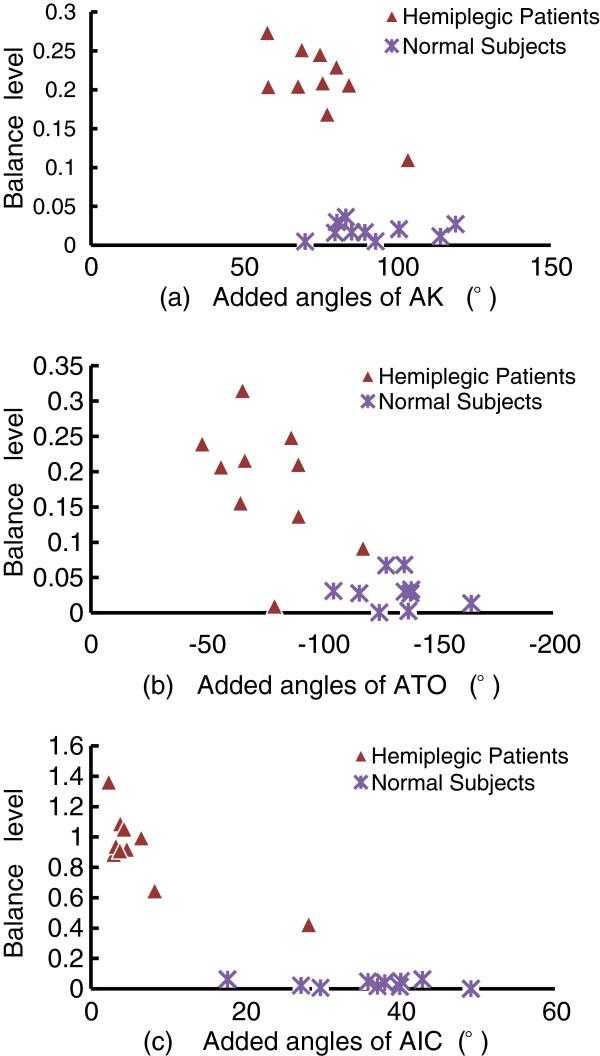
The results showed that there were significant differences between the two groups in the three nominated angle amplitudes. The mean values of balance level of each parameter in hemiplegic gait and normal gait were: 0.21 versus 0.01, 0.18 versus 0.03, and 0.92 versus 0.03, respectively. The mean values of added angles of each parameter in hemiplegic gait and normal gait were: 74.64 versus 91.31, -76.48 versus -132.4, and 6.77 versus 35.74.
It was concluded that the wearable bio-motion acquisition platform provided a practical approach that was effective in discriminating gait symptoms between hemiplegic and asymptomatic subjects. The extensibility of hemiplegic patients' lower limbs was significantly lower than that of normal subjects, and the hemiplegic gait had worse balance level compared with normal gait. The effect of rehabilitation training of hemiplegic gait could be quantitatively analyzed.
大多数偏瘫患者在行走时由于姿势不对称和身体平衡异常而在平衡和姿势控制方面存在困难。偏瘫步态的康复评估通常由医生使用临床量表进行,但评估既困难又不能频繁进行。因此,需要定量分析偏瘫步态的特征。这样评估就会简单,并且可以实时评估康复效果。
招募了 20 名受试者(10 名偏瘫患者,10 名正常受试者)。受试者以自身舒适的速度向地板上的目标线自行选择直线行走 5 米。Xsens MTx 运动跟踪器用于获取身体各部位的运动轨迹以估计膝关节角度并识别步态周期。提出了一种不需要获取膝关节与其相应传感器之间准确距离的数据采集实用方法。
结果表明,两组在三个指定角度幅度上有显著差异。偏瘫步态和正常步态中每个参数的平衡水平的平均值分别为:0.21 对 0.01、0.18 对 0.03 和 0.92 对 0.03;偏瘫步态和正常步态中每个参数的附加角度的平均值分别为:74.64 对 91.31、-76.48 对-132.4 和 6.77 对 35.74。
研究表明,可穿戴式生物运动采集平台提供了一种实用的方法,可有效区分偏瘫和无症状受试者的步态症状。偏瘫患者下肢的伸展能力明显低于正常受试者,偏瘫步态的平衡水平明显低于正常步态。可以对偏瘫步态的康复训练效果进行定量分析。